ٹی ٹری آئل
₨ 700
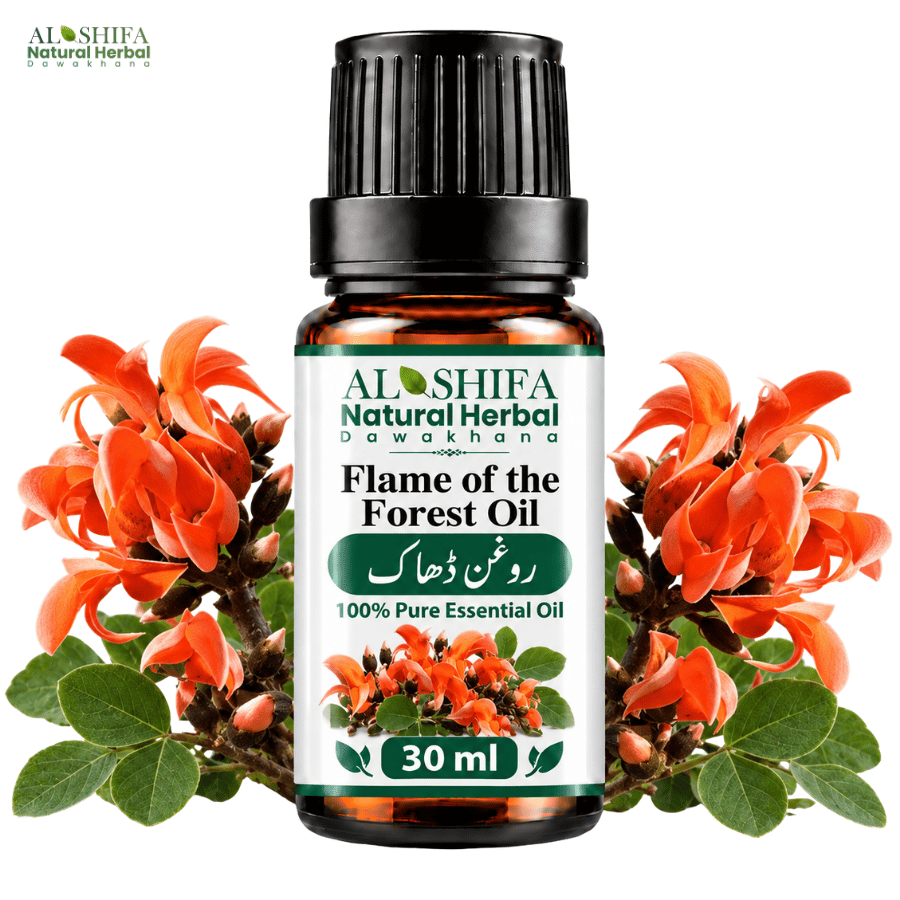
Flame of the Forest Essential Oil / Roghan Dhak / Roghan Palashpapra is a botanical oil associated with Butea monosperma, commonly known as Flame of the Forest, Palash and Dhak. It is suitable for massage blends, hair and scalp formulations, skin-care products, soaps and cosmetics.
Al Shifa Flame of the Forest Oil is carefully selected for botanical identity, quality, freshness, clean handling and protective packaging.
Key Features:
Usage: Use at a suitable concentration according to the product type. Concentrated aromatic oil should be appropriately diluted before topical use.
Important Note: Palash Oil and Roghan Dhak may refer to different preparations. Palash seed oil, infused Palash oil and concentrated aromatic oil are not the same product, so the plant part and extraction method should be considered before use.
Flame of the Forest Essential Oil / Roghan Dhak / Roghan Palashpapra – روغن ڈهاک / روغن پلاس پاپڑہ is a botanical aromatic oil associated with Butea monosperma, the spectacular flowering tree commonly known as Flame of the Forest, Palash, Dhak, Palas and Bengal Kino. The plant belongs to the Fabaceae family and is native across the Indian subcontinent and parts of South and Southeast Asia.
Butea monosperma is particularly famous for its brilliant orange to scarlet-red flowers, which can cover much of the tree during the flowering season and create the fiery appearance responsible for the English name “Flame of the Forest.”
An important product distinction is necessary with Palash oils. The name Roghan Dhak, Palash Oil or Flame of the Forest Oil can be used commercially for different preparations. A genuine volatile aromatic preparation should not automatically be considered the same as Butea monosperma seed oil, flower-infused carrier oil, herbal extract or fragrance oil. The actual plant part, ingredients and extraction method should therefore be confirmed for the individual product.
At Al Shifa Natural Herbal Dawakhana, Flame of the Forest Oil is selected with attention to its botanical identity, genuine Butea monosperma source, product quality, freshness, clean handling and protective packaging.
Flame of the Forest Oil is a botanical oil associated with Butea monosperma, one of the best-known flowering trees of the South Asian region.
The plant is commonly known as:
Different parts of Butea monosperma—including its flowers, seeds, bark, leaves, roots and gum—have been used for different traditional and commercial purposes.
Because these plant parts have different chemical compositions, information relating to one preparation should not automatically be applied to another.
Product Name: Flame of the Forest Essential Oil / Roghan Dhak / Roghan Palashpapra – روغن ڈهاک / روغن پلاس پاپڑہ
English Name: Flame of the Forest Oil / Palash Oil / Dhak Oil
Urdu Name: روغن ڈهاک / روغن پلاس پاپڑہ
Roman Name: Flame of the Forest Oil / Roghan Dhak / Roghan Palashpapra
Scientific Name: Butea monosperma (Lam.) Kuntze
Common Botanical Synonym: Butea frondosa Roxb. ex Willd.
Plant Family: Fabaceae
Plant Type: Deciduous Flowering Tree
Common Names: Flame of the Forest / Palash / Palas / Dhak / Tesu / Bengal Kino
Native Region: Indian Subcontinent and parts of South & Southeast Asia
Product Category: Botanical Aromatic / Herbal Oil
Important Identification: Commercial “Palash Oil” may refer to different preparations; plant part, ingredients and extraction method should be checked for the individual product.
Butea monosperma is a deciduous tree recognized for its striking seasonal flowers.
It is naturally distributed across a broad region that includes:
The tree has cultural, botanical and traditional importance throughout much of South Asia.
Its brilliant flowering display is the feature most strongly associated with the common name Flame of the Forest.
The flowers of Butea monosperma are among the most recognizable characteristics of the plant.
They are generally:
The flowers contain a variety of naturally occurring plant constituents, particularly flavonoids and other phenolic compounds.
Palash, Dhak and Flame of the Forest generally refer to the same botanical species, Butea monosperma.
Regional names include:
Commercial oil names may include:
However, the commercial name alone does not establish how the oil was produced.
Butea monosperma has a long history in South Asian herbal traditions.
Different parts of the tree have been used separately, including:
Traditional preparations may include:
These preparations are chemically different and should not be treated as interchangeable.
Traditional literature surrounding Butea monosperma is extensive, but much of it concerns the whole plant, flowers, seeds, bark, gum or extracts rather than a standardized volatile essential oil.
This distinction is important when describing Roghan Dhak commercially.
A traditional oil preparation may be produced by infusing plant material into a carrier oil, whereas a fixed seed oil is obtained from the seeds.
A product marketed specifically as an essential oil should have its plant part and extraction method clearly identified.
The name Palash Oil can describe products made by different methods.
These may include:
Seed Oil: A fixed fatty oil obtained from Butea monosperma seeds.
Infused Oil: A carrier oil in which Palash plant material has been infused.
Botanical Extract in Oil: An oil-based formulation containing a Palash extract.
Aromatic Oil: A preparation intended primarily for fragrance or aromatic applications.
Essential Oil: A volatile aromatic fraction, which should be identified by its specific plant part and extraction method.
These products should not automatically be treated as identical.
Butea monosperma seeds contain a genuine fixed oil that has been chemically investigated.
Published analysis of Palash seed oil has reported fatty acids including:
These are characteristic lipid components of a fixed seed oil, not evidence of an essential-oil composition.
Therefore:
Butea monosperma Seed Oil ≠ Flame of the Forest Essential Oil
Essential oils and fixed oils are fundamentally different botanical products.
Essential Oil: Primarily contains volatile aromatic constituents.
Fixed Seed Oil: Primarily contains triglycerides and fatty acids and does not evaporate like a volatile essential oil.
Therefore:
Flame of the Forest Essential Oil ≠ Palash Seed Fixed Oil
The distinction should be based on the actual extraction method and plant part.
A Palash-infused oil is generally produced by allowing plant material to infuse into a carrier oil.
The finished product therefore contains the carrier oil together with oil-soluble constituents transferred from the botanical material.
An essential oil is a different type of concentrated volatile aromatic preparation.
Therefore:
Flame of the Forest Essential Oil ≠ Palash-Infused Carrier Oil
Butea monosperma is also known as Bengal Kino because the tree produces a gum-like exudate traditionally known by this name.
Bengal Kino is not an essential oil.
Therefore:
Flame of the Forest Oil ≠ Bengal Kino Gum
Although both originate from Butea monosperma, they represent completely different botanical materials.
Butea monosperma has been extensively investigated for its naturally occurring plant constituents.
Research on the flowers has identified flavonoids and related compounds such as:
The composition varies according to:
An important distinction must be maintained:
Compounds identified in Palash flowers or extracts are not automatically present at the same concentrations in an oil product.
Butein is a naturally occurring chalcone-type plant constituent reported from Butea monosperma.
It has attracted scientific interest in laboratory research.
However:
Presence of Butein in the Plant ≠ Proof of a Specific Medical Effect from Palash Oil
Research on an isolated constituent cannot automatically be applied to the complete oil product.
Butrin and isobutrin are flavonoid-related compounds associated particularly with Butea monosperma flowers.
They contribute to the distinctive phytochemical profile of the plant.
However:
Flower Constituents ≠ Essential-Oil Composition
Their presence in flower extracts should not be used to make unsupported claims about the composition or medicinal effects of a commercial oil.
When supplied as an aromatic botanical oil, Flame of the Forest Oil may be incorporated into compatible aromatic formulations.
Potential applications can include:
The appropriate amount depends on the actual composition and concentration of the product.
When appropriate for topical use and suitably diluted where necessary, Flame of the Forest Oil may be incorporated into botanical massage formulations.
Compatible carrier oils can include:
The appropriate dilution depends on whether the individual product is a concentrated aromatic oil, an infused oil or a fixed oil.
Palash-derived botanical ingredients have a long history of traditional use, and modern research has also investigated Butea monosperma flowers and extracts.
For cosmetic applications, an appropriately formulated Palash oil may be incorporated into:
The properties of the finished formulation depend on the actual oil type, concentration and other ingredients.
Roghan Dhak may be incorporated into compatible botanical hair-care formulations.
Possible applications include:
Traditional use should not be interpreted as proof that the oil treats hair-loss disorders.
For scalp applications, the actual product composition should be considered carefully.
When using a concentrated aromatic preparation:
The product should not be presented as a proven treatment for scalp infections, alopecia or other scalp diseases.
When compatible with the intended formulation, Flame of the Forest Oil may be incorporated into botanical or fragranced soap products.
Potential applications include:
The appropriate amount depends on the oil type and complete formulation.
Depending on its exact composition, Palash Oil may be incorporated into compatible:
Formulators should identify whether the ingredient is an essential oil, seed oil, infused oil or another Palash preparation before determining the appropriate concentration.
Butea monosperma has been studied extensively in laboratory and experimental research.
Different preparations of its flowers, seeds and other plant parts have been investigated for areas including:
However, the majority of these findings relate to plant extracts, isolated constituents or specific experimental preparations.
They should not automatically be attributed to Flame of the Forest Oil.
Butea monosperma flowers contain phenolic and flavonoid compounds that have been investigated for antioxidant activity.
However:
Laboratory Antioxidant Activity ≠ Proven Treatment for Disease
Antioxidant findings from flower extracts do not establish a commercial Palash oil as a treatment for skin disease, internal disease or another medical condition.
Different Butea monosperma preparations and isolated plant constituents have been investigated experimentally for inflammatory pathways.
However:
Experimental Anti-Inflammatory Activity ≠ Proven Clinical Treatment
Results from extracts or isolated compounds should not automatically be applied to an essential oil, infused oil or seed oil.
Butea monosperma preparations have also been investigated for antimicrobial activity under laboratory conditions.
Laboratory findings do not establish Palash Oil as a proven treatment for:
Medical infections require appropriate diagnosis and treatment.
Research involving Butea monosperma should always be interpreted according to the actual preparation studied.
Important distinctions include:
Laboratory Research ≠ Proven Clinical Treatment
Research on Palash Flowers ≠ Evidence for the Same Effect from Palash Oil
Research on a Plant Extract ≠ Evidence for the Same Effect from an Essential Oil
Research on Seed Oil ≠ Evidence for the Same Effect from Flower Preparations
Research on an Isolated Compound ≠ Evidence for the Same Effect from the Complete Oil
The plant part, extraction method, concentration, formulation, route of administration and study design all matter.
Several different Butea monosperma products may be sold under similar names.
The extraction method determines which types of plant constituents are concentrated in a botanical product.
For example:
Seed pressing or solvent extraction produces a fatty seed oil rich in triglycerides and fatty acids.
Herbal infusion transfers selected oil-soluble plant constituents into a carrier oil.
Solvent or hydroalcoholic extraction produces an extract containing a different range of phytochemicals.
Volatile-oil distillation, when applicable to the specific aromatic material, concentrates volatile compounds.
For accurate product information, the extraction method supplied for the individual Flame of the Forest Oil should therefore be considered essential.
Botanical oils and concentrated aromatic ingredients can cause sensitivity in susceptible individuals.
For topical use:
Possible sensitivity reactions can include:
There is insufficient product-specific clinical evidence to establish unrestricted medicinal use of concentrated Flame of the Forest Oil during pregnancy or breastfeeding.
During pregnancy and breastfeeding:
Botanical oils, particularly concentrated aromatic preparations, require additional caution around children.
For children:
Flame of the Forest Oil should not automatically be considered suitable for oral consumption.
Unless the individual product is specifically manufactured, tested and labelled for appropriate internal or food use:
Essential Oil Grade ≠ Food Grade
At Al Shifa Natural Herbal Dawakhana, Flame of the Forest Oil is selected with attention to:
Botanical Identity – Butea monosperma.
Plant Identity – Genuine Flame of the Forest / Palash / Dhak botanical source.
Product Identity – Attention to the actual type and composition of the supplied oil.
Quality – Carefully selected botanical oil.
Freshness – Selected and packed with attention to product condition.
Massage Applications – Suitable when compatible with the product type and appropriately diluted where required.
Hair & Scalp Applications – Suitable for compatible external formulations.
Skin-Care Applications – Suitable for appropriately formulated cosmetic products.
Soap Applications – Suitable for compatible botanical formulations.
Clean Handling – Carefully handled during packing.
Protective Packaging – Helps protect the product from unnecessary heat, light, air and contamination.
Al Shifa Natural Herbal Dawakhana, established in 1999, supplies carefully selected herbal oils, essential oils and botanical materials throughout Pakistan.
Our focus for Flame of the Forest Oil includes:
For Massage: Use according to the product type. Concentrated aromatic oil should be appropriately diluted in a suitable carrier oil before topical application.
For Hair: Incorporate at a suitable concentration into compatible botanical hair-oil formulations.
For Scalp: Use in an appropriately formulated scalp product and avoid severely irritated or damaged skin.
For Skin & Body Care: Incorporate at a suitable concentration into compatible cosmetic formulations.
For Soap Making: Use according to the requirements of the complete formulation and the exact type of Palash oil supplied.
For Cosmetic Formulations: Select the concentration according to whether the product is a concentrated aromatic oil, infused oil, fixed oil or another botanical preparation.
Flame of the Forest Essential Oil / Roghan Dhak / Roghan Palashpapra – روغن ڈهاک / روغن پلاس پاپڑہ is associated with Butea monosperma, the South Asian tree commonly known as Flame of the Forest, Palash and Dhak.
The commercial names Palash Oil, Dhak Oil and Roghan Dhak can refer to different oil preparations. For accurate identification, the plant part, ingredients and extraction method of the individual product should be confirmed.
It should not automatically be confused with Butea monosperma seed fixed oil, Palash-infused carrier oil, flower extract, powdered Palash, Bengal Kino gum or synthetic fragrance oil.
Traditional use and experimental research involving Butea monosperma do not establish Flame of the Forest Oil as a proven treatment for infections, inflammatory diseases, skin diseases, hair loss or other medical conditions.
For best quality:
Flame of the Forest Essential Oil / Roghan Dhak / Roghan Palashpapra – روغن ڈهاک / روغن پلاس پاپڑہ is a botanical oil associated with Butea monosperma, the famous flowering tree widely known as Flame of the Forest, Palash, Palas, Dhak, Tesu and Bengal Kino.
Depending on its exact preparation and formulation, Palash Oil can be used in compatible massage oils, hair and scalp formulations, botanical skin-care products, soaps, personal-care products and cosmetic formulations.
Customers searching for Flame of the Forest Essential Oil, Flame of the Forest Oil, Palash Oil, Palas Oil, Dhak Oil, Roghan Dhak, Roghan Palash, Roghan Palashpapra, Butea monosperma Oil, Tesu Oil, Palash Oil for Hair, Dhak Oil for Hair, Palash Oil for Scalp, Palash Oil for Massage, Palash Oil for Skin, Palash Oil for Soap, Flame of the Forest Oil Pakistan, Palash Oil Pakistan, Roghan Dhak Pakistan, Dhak Oil Pakistan, Palash Oil Lahore, Roghan Dhak Lahore, Flame of the Forest Oil price in Pakistan, Palash Oil price in Pakistan, Roghan Dhak price in Pakistan or buy Palash Oil online Pakistan can choose Al Shifa Natural Herbal Dawakhana for carefully selected quality.
Since 1999, Al Shifa Natural Herbal Dawakhana has focused on supplying herbal oils, essential oils and botanical materials with attention to correct botanical identity, product quality, freshness, clean handling, responsible product information, protective packaging and proper storage.
Product Name: Flame of the Forest Essential Oil / Roghan Dhak / Roghan Palashpapra – روغن ڈهاک / روغن پلاس پاپڑہ
English Name: Flame of the Forest Oil / Palash Oil / Dhak Oil
Urdu Name: روغن ڈهاک / روغن پلاس پاپڑہ
Roman Name: Flame of the Forest Oil / Roghan Dhak / Roghan Palashpapra
Scientific Name: Butea monosperma (Lam.) Kuntze
Common Botanical Synonym: Butea frondosa Roxb. ex Willd.
Plant Family: Fabaceae
Plant Type: Deciduous Flowering Tree
Common Names: Flame of the Forest / Palash / Palas / Dhak / Tesu / Bengal Kino
Native Region: Indian Subcontinent and parts of South & Southeast Asia
Product Category: Botanical Aromatic / Herbal Oil
Primary Applications: Compatible Aromatic Products, Massage Formulations, Hair & Scalp Products, Skin-Care Formulations, Soaps & Cosmetics
Important Note: The commercial names Flame of the Forest Oil, Palash Oil and Roghan Dhak can describe different preparations. Butea monosperma seed oil is a fixed fatty oil and is not the same as an essential oil. The plant part, ingredients and extraction method should be confirmed for the individual product before assigning a specific oil type.
روغن ڈھاک ڈھاک کے درخت کے پھولوں یا دوسرے منتخب حصوں سے تیار کیا جانے والا جڑی بوٹیوں والا روغن ہے۔ ڈھاک کو پلاس، ٹیسو، کیسودا اور پلاس پاپڑہ کے ناموں سے بھی جانا جاتا ہے۔ اس کا سائنسی نام بیوٹیا مونوسپرما ہے۔
ڈھاک درمیانے قد کا مشہور درخت ہے۔ موسم بہار میں اس پر شوخ نارنجی، سرخ اور آگ جیسے رنگ کے پھول بڑی تعداد میں کھلتے ہیں۔ پھولوں سے بھرا درخت دور سے شعلوں جیسا دکھائی دیتا ہے، اسی وجہ سے اسے شعلہ نما جنگلی درخت کے معنی والا نام بھی دیا جاتا ہے۔
ڈھاک کے پھول، بیج، چھال، گوند اور دوسرے حصے حکمت اور برصغیر کے جڑی بوٹیوں کے استعمال میں الگ الگ مقاصد کے لیے استعمال کیے جاتے ہیں۔ روغن ڈھاک زیادہ تر بیرونی استعمال، جسمانی مالش، جلد اور بالوں کے روغنی آمیزوں کے لیے تیار کیا جاتا ہے۔
اردو: ڈھاک، پلاس، پلاس پاپڑہ، روغن ڈھاک، روغن پلاس
پنجابی: ڈھاک، چھچھرا، پلاس
ہندی: ڈھاک، پلاش، ٹیسو، کیسودا
فارسی: پلاس
عربی: ڈھاک اور پلاس کے لیے الگ مشہور مستند عربی نام عام استعمال میں واضح نہیں، اس لیے غیر ثابت نام شامل نہیں کیا جاتا۔
انگریزی نام: فلیم آف دی فاریسٹ، پلاش ٹری، بنگال کینو
سائنسی نام: بیوٹیا مونوسپرما
خاندان: فیبیسی
استعمال ہونے والے حصے: پھول، بیج، چھال، گوند اور پتے
روغن کے لیے اہم حصہ: پھول یا مطلوبہ استعمال کے مطابق منتخب حصہ
روغن کی قسم: ڈھاک کے منتخب حصوں سے بنیادی روغن میں تیار کیا جانے والا جڑی بوٹیوں والا روغن
ڈھاک درمیانے قد کا پت جھڑ درخت ہے۔
اس کا تنا کھردرا اور چھال بھوری یا سرمئی مائل ہوتی ہے۔
اس کے پتے بڑے ہوتے ہیں اور عام طور پر تین پتوں کا مجموعہ دکھائی دیتا ہے۔
ڈھاک کی سب سے نمایاں پہچان اس کے شوخ نارنجی اور سرخ پھول ہیں۔
پھول گھنے گچھوں میں کھلتے ہیں۔
پھولوں کے موسم میں درخت پر پتے کم اور پھول زیادہ نمایاں نظر آتے ہیں۔
اس کے پھول اپنی خاص رنگت کی وجہ سے دور سے آسانی سے پہچانے جاتے ہیں۔
درخت سے قدرتی گوند بھی حاصل ہوتی ہے۔
اچھے ڈھاک کے پھول:
خشک پھول خریدتے وقت ان کی قدرتی رنگت، صفائی اور تازگی کو دیکھیں۔
ڈھاک کے پھول اس درخت کی سب سے نمایاں پہچان ہیں۔
یہ شوخ نارنجی، نارنجی سرخ یا آگ جیسے رنگ کے ہوتے ہیں۔
ان پھولوں کو جڑی بوٹیوں والے استعمال، قدرتی رنگ اور بیرونی روغنی آمیزوں میں استعمال کیا جاتا ہے۔
پھول خشک ہونے کے بعد بھی اپنی نمایاں نارنجی مائل رنگت رکھتے ہیں۔
ڈھاک کے پھل چپٹی پھلی کی شکل میں ہوتے ہیں۔
ان میں بیج موجود ہوتا ہے۔
ڈھاک کے بیج پھولوں سے الگ حصہ ہیں اور ان کا طبی استعمال بھی الگ ہے۔
بیجوں کو خود سے اندرونی طور پر استعمال نہ کریں۔
کسی بیماری کے لیے اندرونی طبی استعمال معالج سے پوچھ کر کریں۔
ڈھاک کے درخت سے قدرتی گوند نکلتی ہے۔
یہ خشک ہونے پر سرخی مائل یا گہری رنگت اختیار کرتی ہے۔
گوند کا استعمال پھول اور بیج سے الگ ہے۔
روغن ڈھاک خریدتے وقت یہ دیکھیں کہ روغن پھولوں سے تیار کیا گیا ہے یا درخت کے کسی دوسرے حصے سے۔
ڈھاک عام خوشبودار جڑی بوٹیوں کی طرح زیادہ مقدار میں بھاپ سے خالص خوشبودار روغن دینے والا درخت نہیں ہے۔
روغن ڈھاک تیار کرنے کے لیے اس کے صاف پھول یا دوسرے منتخب حصے بنیادی روغن میں شامل کیے جاتے ہیں۔
اس مقصد کے لیے روغن تل، روغن ناریل، روغن زیتون یا دوسرے اچھے بنیادی روغن استعمال کیے جاتے ہیں۔
ڈھاک کے منتخب حصوں کے اجزا بنیادی روغن میں شامل ہونے کے بعد روغن کو چھان کر صاف کیا جاتا ہے۔
اس طرح تیار روغن کو جلد، جسمانی مالش یا بالوں کے بیرونی استعمال میں استعمال کیا جاتا ہے۔
روغن ڈھاک کو لیونڈر، پودینہ، یوکلپٹس یا روزمیری کی طرح بھاپ سے حاصل ہونے والا عام خوشبودار روغن نہ سمجھیں۔
بیوٹیا مونوسپرما کے نام سے خالص بھاپ والا روغن عام تجارتی شکل نہیں ہے۔
بازار میں ڈھاک کے نام سے ملنے والا تیل زیادہ تر ڈھاک کے پھول یا دوسرے حصے بنیادی روغن میں شامل کر کے تیار کیا جاتا ہے۔
اس لیے خریدتے وقت استعمال ہونے والا حصہ، بنیادی روغن اور تیار کرنے کا طریقہ دیکھیں۔
پاکستان اور برصغیر میں پڑھی جانے والی حکمت کی کتب مفردات میں ڈھاک کے مختلف حصوں کو الگ طبی خصوصیات کے ساتھ بیان کیا جاتا ہے۔
ڈھاک کے پھول کا مزاج سرد اور خشک بیان کیا جاتا ہے۔
ڈھاک کے بیج، گوند اور دوسرے حصوں کی طبی نوعیت پھول سے الگ ہوتی ہے، اس لیے ایک حصے کا مزاج پورے درخت کے ہر حصے یا اس سے تیار ہر روغن پر لاگو نہیں کیا جاتا۔
بنیادی روغن میں پھول شامل کر کے تیار کیے گئے روغن ڈھاک کا الگ مستند حکیمی درجہ واضح طور پر مقرر نہیں ہے۔
کسی بیماری کے لیے اندرونی طبی استعمال معالج سے پوچھ کر کریں۔
ڈھاک برصغیر میں معروف درخت ہے اور اس کے مختلف حصے جڑی بوٹیوں والی ادویات میں استعمال کیے جاتے ہیں۔
حکمت میں اس کے پھول، بیج، چھال اور گوند کو الگ الگ استعمال کیا جاتا ہے۔
ڈھاک کے پھول بیرونی جڑی بوٹیوں والے روغنوں اور جلد کی دیکھ بھال کے آمیزوں میں شامل کیے جاتے ہیں۔
بیجوں کا استعمال پھولوں سے الگ ہے اور اندرونی طبی استعمال معالج سے پوچھ کر کریں۔
ڈھاک کے پھولوں میں کئی قدرتی اجزا پائے جاتے ہیں، جن میں نمایاں یہ ہیں:
یہ اجزا ڈھاک کے پھولوں کی خاص رنگت اور جڑی بوٹیوں والی خصوصیات میں اہم جگہ رکھتے ہیں۔
بیوٹین ڈھاک کے پھولوں میں پایا جانے والا قدرتی جز ہے۔
یہ فلیونوئڈ گروپ سے تعلق رکھتا ہے اور ڈھاک کے پھولوں کی قدرتی ساخت کا حصہ ہے۔
بیوٹین ٹرین بھی بیوٹیا مونوسپرما کے پھولوں سے جڑا قدرتی جز ہے۔
ڈھاک کے پھولوں پر ہونے والی جدید تحقیق میں اسے نمایاں اجزا میں شمار کیا جاتا ہے۔
روغن ڈھاک کو جسمانی مالش میں استعمال کیا جاتا ہے۔
اسے کندھوں، بازوؤں، ہاتھوں، ٹانگوں اور پاؤں پر نرم ہاتھ سے لگایا جاتا ہے۔
اگر روغن پہلے ہی بنیادی روغن میں ڈھاک کے پھول شامل کر کے تیار کیا گیا ہے تو اسے تھوڑی مقدار میں استعمال کریں۔
جسمانی تھکن کے بعد روغن ڈھاک سے بازوؤں، ٹانگوں اور پاؤں کی نرم مالش کی جاتی ہے۔
جڑی بوٹیوں والے دوسرے مالش کے روغنوں میں بھی اسے شامل کیا جاتا ہے۔
روغن ڈھاک کو جسمانی کھنچاؤ والی جگہ کی نرم مالش کے لیے استعمال کیا جاتا ہے۔
روغن کی تھوڑی مقدار ہاتھ پر لے کر مطلوبہ حصے پر آہستہ مالش کریں۔
شدید درد یا کسی بیماری کے لیے طبی استعمال معالج سے پوچھ کر کریں۔
روغن ڈھاک کو جلد کی روغنی دیکھ بھال میں استعمال کیا جاتا ہے۔
اسے خشک جلد اور جسم کے خشک حصوں کے لیے تیار جڑی بوٹیوں والے روغنوں میں شامل کیا جاتا ہے۔
پہلی بار استعمال سے پہلے جلد کے چھوٹے حصے پر تھوڑی مقدار آزمائیں۔
خشک جلد کے روغنی آمیزوں میں ڈھاک کے پھولوں سے تیار روغن شامل کیا جاتا ہے۔
اگر اس میں روغن تل، روغن ناریل، روغن زیتون یا دوسرا بنیادی روغن شامل ہو تو یہ جلد کو روغنی نرمی بھی دیتا ہے۔
روغن ڈھاک کو ہاتھوں پر تھوڑی مقدار میں لگا کر نرم مالش کی جاتی ہے۔
خشک ہاتھوں کے جڑی بوٹیوں والے روغنوں میں بھی اسے شامل کیا جاتا ہے۔
کٹے یا کھلے زخم پر استعمال نہ کریں۔
روغن ڈھاک کو پاؤں کی مالش کے لیے استعمال کیا جاتا ہے۔
تھوڑی مقدار پاؤں پر لگا کر نرم ہاتھ سے مالش کریں۔
روغن ڈھاک کو جڑی بوٹیوں والے بالوں کے روغنوں میں شامل کیا جاتا ہے۔
اسے روغن ناریل، روغن تل، روغن بادام یا دوسرے بنیادی روغن کے ساتھ استعمال کیا جاتا ہے۔
ڈھاک کے پھولوں سے تیار روغن کو سر کی جلد کے جڑی بوٹیوں والے روغنوں میں شامل کیا جاتا ہے۔
پہلی بار استعمال سے پہلے جلد کے چھوٹے حصے پر آزمائیں۔
سر کی جلد کے امراض میں طبی استعمال معالج سے پوچھ کر کریں۔
ڈھاک کے پھول اور بیج ایک جیسے استعمال نہیں رکھتے۔
پھول نارنجی یا سرخ رنگ کے ہوتے ہیں اور درخت پر گچھوں میں کھلتے ہیں۔
بیج چپٹی پھلی کے اندر پایا جاتا ہے۔
پھولوں سے تیار بیرونی روغن اور بیجوں سے تیار ادویات کو ایک چیز نہ سمجھیں۔
خریدتے وقت استعمال ہونے والا حصہ واضح ہونا ضروری ہے۔
ڈھاک اور پلاس بیوٹیا مونوسپرما کے مشہور نام ہیں۔
مختلف علاقوں میں اسے ڈھاک، پلاش، ٹیسو اور کیسودا بھی کہا جاتا ہے۔
پلاس پاپڑہ کے نام سے فروخت ہونے والی خشک جڑی بوٹی کی اصل قسم خریدتے وقت ضرور دیکھیں۔
پلاس پاپڑہ کا نام جڑی بوٹیوں کی تجارت میں استعمال کیا جاتا ہے۔
ناموں کے مقامی استعمال کی وجہ سے خریدتے وقت صرف نام پر انحصار نہ کریں۔
اگر مطلوبہ چیز ڈھاک ہے تو سائنسی نام بیوٹیا مونوسپرما دیکھیں۔
اس سے اصل درخت کی درست پہچان آسان ہوتی ہے۔
روغن تل، روغن ناریل، روغن بادام اور روغن زیتون بنیادی روغن ہیں۔
ڈھاک کے پھول یا دوسرے منتخب حصے ان روغنوں میں شامل کر کے روغن ڈھاک تیار کیا جاتا ہے۔
اس لیے روغن خریدتے وقت بنیادی روغن کا نام بھی دیکھیں۔
اصل جڑی بوٹیوں والا روغن ڈھاک بیوٹیا مونوسپرما کے منتخب حصوں سے تیار کیا جاتا ہے۔
صرف خوشبو یا رنگ ملا ہوا تیل اصل جڑی بوٹیوں والا روغن ڈھاک نہیں ہوتا۔
خریدتے وقت اصل درخت، استعمال ہونے والا حصہ اور بنیادی روغن کی معلومات دیکھیں۔
روغن ڈھاک کی رنگت استعمال ہونے والے پھول اور بنیادی روغن کے مطابق زرد، سنہری، نارنجی یا سرخی مائل نظر آتی ہے۔
ڈھاک کے پھول قدرتی طور پر شوخ رنگ رکھتے ہیں۔
صرف روغن کی رنگت دیکھ کر خالص ہونے کا فیصلہ نہ کریں۔
اصل درخت اور تیار کرنے کا طریقہ بھی دیکھیں۔
روغن ڈھاک کی خوشبو اس میں استعمال ہونے والے پھول اور بنیادی روغن کے مطابق ہوتی ہے۔
یہ لیونڈر، گلاب یا پودینہ جیسے تیز خوشبودار روغن کی طرح نہیں ہوتا۔
قدرتی جڑی بوٹیوں جیسی ہلکی مہک اس کی عام پہچان ہے۔
روغن ڈھاک کی تھوڑی مقدار جلد پر لگائیں۔
پہلی بار استعمال سے پہلے جلد کے چھوٹے حصے پر آزمائیں۔
خارش، سرخی، سوجن یا جلن پیدا ہو تو استعمال بند کریں۔
آنکھوں اور کھلے زخموں سے دور رکھیں۔
روغن ڈھاک کی تھوڑی مقدار ہاتھ پر لیں۔
کندھوں، بازوؤں، ہاتھوں، ٹانگوں یا پاؤں پر نرم ہاتھ سے مالش کریں۔
اگر روغن بہت گاڑھا ہو تو اسے روغن تل، روغن بادام یا روغن ناریل کے ساتھ ملا کر استعمال کریں۔
روغن ڈھاک کو:
کے ساتھ ملا کر جسمانی مالش، جلد اور بالوں کے جڑی بوٹیوں والے روغنوں میں استعمال کیا جاتا ہے۔
حساس جلد پر پہلی بار استعمال سے پہلے روغن ڈھاک کی تھوڑی مقدار جلد کے چھوٹے حصے پر آزمائیں۔
خارش، سرخی، سوجن یا جلن پیدا ہو تو استعمال بند کریں۔
جلدی امراض میں طبی استعمال معالج سے پوچھ کر کریں۔
روغن ڈھاک کو آنکھوں، ہونٹوں، منہ، ناک کے اندرونی حصے اور جسم کے حساس حصوں پر نہ لگائیں۔
کھلے زخم، کٹی یا جلی ہوئی جلد پر خود سے استعمال نہ کریں۔
استعمال کے بعد ہاتھ اچھی طرح دھوئیں۔
بیرونی استعمال کے لیے تیار روغن ڈھاک خود سے نہ پئیں۔
ڈھاک کے پھول، بیج، گوند اور چھال کے اندرونی استعمال کی مقدار اور طریقہ الگ ہے۔
کسی بیماری کے لیے اندرونی طبی استعمال معالج سے پوچھ کر کریں۔
حمل کے دوران روغن ڈھاک کا اندرونی استعمال خود سے نہ کریں۔
بیرونی استعمال سے پہلے جلد کے چھوٹے حصے پر تھوڑی مقدار آزمائیں۔
کسی بیماری کے لیے طبی استعمال معالج سے پوچھ کر کریں۔
دودھ پلانے کے دوران روغن ڈھاک کو چھاتی یا ایسی جگہ نہ لگائیں جہاں سے بچے کے منہ تک پہنچے۔
اندرونی طبی استعمال معالج سے پوچھ کر کریں۔
بچوں کو بیرونی استعمال والا روغن ڈھاک خود سے نہ پلائیں۔
بچوں کی جلد پر استعمال سے پہلے بہت کم مقدار آزمائیں۔
آنکھوں، منہ اور ناک کے قریب نہ لگائیں۔
روغن بچوں کی پہنچ سے دور رکھیں۔
اصل ڈھاک: استعمال ہونے والا درخت بیوٹیا مونوسپرما ہو۔
استعمال ہونے والا حصہ: پھول، بیج یا دوسرے حصے میں سے اصل استعمال ہونے والا حصہ واضح ہو۔
اچھے پھول: صاف، قدرتی رنگت والے اور پھپھوندی سے پاک پھول استعمال کیے گئے ہوں۔
صاف بنیادی روغن: روغن تیار کرنے کے لیے اچھی حالت کا بنیادی روغن استعمال کیا گیا ہو۔
قدرتی رنگت: ڈھاک اور بنیادی روغن سے حاصل قدرتی رنگت رکھتا ہو۔
قدرتی مہک: جڑی بوٹی اور بنیادی روغن کی قدرتی مہک رکھتا ہو۔
تازگی: باسی یا خراب بو نہ رکھتا ہو۔
غیر ضروری ملاوٹ سے پاک: غیر ضروری رنگ، مصنوعی خوشبو اور کم معیار کے دوسرے روغن کی ملاوٹ سے پاک ہو۔
روغن ڈھاک بیوٹیا مونوسپرما کے پھولوں یا دوسرے منتخب حصوں سے تیار کیا جانے والا جڑی بوٹیوں والا روغن ہے۔
ڈھاک کے پھول شوخ نارنجی اور سرخ رنگ کے ہوتے ہیں اور اس درخت کی سب سے نمایاں پہچان ہیں۔
پھولوں میں بیوٹین، بیوٹین ٹرین، آئسوبیوٹرین، کورپسین اور قدرتی فلیونوئڈز جیسے اجزا پائے جاتے ہیں۔
ڈھاک عام بھاپ سے حاصل ہونے والے خوشبودار روغنوں میں شامل نہیں، اس لیے روغن ڈھاک خریدتے وقت استعمال ہونے والا حصہ، بنیادی روغن اور تیار کرنے کا طریقہ دیکھیں۔
اسے جسمانی مالش، جلد کی روغنی دیکھ بھال، خشک جلد، بالوں اور سر کی جلد کے جڑی بوٹیوں والے روغنوں میں استعمال کیا جاتا ہے۔
بیرونی استعمال کے لیے فروخت ہونے والا روغن خود سے نہ پئیں۔
الشفاء نیچرل ہربل دواخانہ میں روغن ڈھاک کے لیے درج ذیل باتوں کو اہمیت دی جاتی ہے:
اصل ڈھاک: بیوٹیا مونوسپرما کے اصل درخت کو اہمیت دی جاتی ہے۔
اچھے پھول: صاف، اچھی حالت اور قدرتی نارنجی سرخ رنگت رکھنے والے پھولوں کو اہمیت دی جاتی ہے۔
استعمال ہونے والا حصہ: روغن میں استعمال ہونے والے پھول یا دوسرے حصے کی واضح معلومات کو اہمیت دی جاتی ہے۔
صاف بنیادی روغن: اچھی حالت کے بنیادی روغن کو اہمیت دی جاتی ہے۔
قدرتی رنگت: ڈھاک کے پھول اور بنیادی روغن سے حاصل قدرتی رنگت کو دیکھا جاتا ہے۔
صاف روغن: پانی، گرد اور غیر ضروری ذرات سے پاک روغن کو اہمیت دی جاتی ہے۔
تازگی: باسی یا خراب بو والے روغن سے بچا جاتا ہے۔
غیر ضروری ملاوٹ سے پاک: غیر ضروری رنگ، مصنوعی خوشبو اور کم معیار کے دوسرے روغن کی ملاوٹ سے پاک ہونے کو اہمیت دی جاتی ہے۔
الشفاء نیچرل ہربل دواخانہ سنہ ۱۹۹۹ سے قدرتی جڑی بوٹیوں، پھولوں، پتوں، جڑوں، پھلوں، بیجوں اور ان سے حاصل ہونے والے روغنوں کی سپلائی کر رہا ہے۔
ہم روغن ڈھاک میں اصل بیوٹیا مونوسپرما، اچھے پھول، استعمال ہونے والے واضح حصے، صاف بنیادی روغن، قدرتی رنگت، تازگی اور غیر ضروری ملاوٹ سے پاک ہونے کو اہمیت دیتے ہیں۔
اچھے روغن ڈھاک کی پہچان اصل درخت، استعمال ہونے والے واضح حصے، صاف روغن، قدرتی رنگت اور تازگی سے کی جاتی ہے۔
روغن ڈھاک کو ٹھنڈی، خشک اور روشنی سے محفوظ جگہ پر کسی جار میں اچھی طرح پیک کر کے رکھیں۔
تیز دھوپ اور زیادہ گرمی سے بچائیں۔
استعمال کے بعد ڈھکن اچھی طرح بند کریں۔
پانی سے محفوظ رکھیں۔
باسی یا خراب بو پیدا ہونے پر استعمال نہ کریں۔
بچوں کی پہنچ سے دور رکھیں۔
روغن ڈھاک کی قسم اور اس میں استعمال ہونے والا درخت کا حصہ واضح ہونا ضروری ہے۔
پہلی بار بیرونی استعمال سے پہلے جلد کے چھوٹے حصے پر تھوڑی مقدار آزمائیں۔
خارش، سرخی، سوجن یا جلن پیدا ہو تو استعمال بند کریں۔
آنکھوں، ہونٹوں، منہ، ناک کے اندرونی حصے اور کھلے زخموں پر نہ لگائیں۔
ڈھاک کے بیج اور بیرونی استعمال والا روغن خود سے نہ پئیں۔
کسی بیماری کے لیے اندرونی طبی استعمال معالج سے پوچھ کر کریں۔
روغن ڈھاک بیوٹیا مونوسپرما کے پھولوں یا دوسرے منتخب حصوں سے تیار کیا جانے والا جڑی بوٹیوں والا روغن ہے۔
ڈھاک کو پلاس، پلاش، ٹیسو اور کیسودا کے ناموں سے بھی جانا جاتا ہے۔
اس کی سب سے نمایاں پہچان شوخ نارنجی اور سرخ رنگ کے پھول ہیں۔
پاکستان اور برصغیر میں پڑھی جانے والی حکمت کی کتب مفردات میں ڈھاک کے پھول کا مزاج سرد اور خشک بیان کیا جاتا ہے۔ بنیادی روغن میں ڈھاک کے پھول شامل کر کے تیار روغن کا الگ مستند حکیمی درجہ واضح طور پر مقرر نہیں ہے۔
روغن ڈھاک کو عام بھاپ سے حاصل ہونے والے خوشبودار روغنوں جیسا نہ سمجھیں۔ اس نام سے ملنے والا جڑی بوٹیوں والا روغن زیادہ تر پھول یا دوسرے منتخب حصے بنیادی روغن میں شامل کر کے تیار کیا جاتا ہے۔
اسے جسمانی مالش، خشک جلد کی روغنی دیکھ بھال، بالوں اور سر کی جلد کے جڑی بوٹیوں والے روغنوں میں استعمال کیا جاتا ہے۔
اچھے روغن ڈھاک کی پہچان اصل بیوٹیا مونوسپرما، استعمال ہونے والے واضح حصے، صاف بنیادی روغن، قدرتی رنگت، تازگی اور غیر ضروری ملاوٹ سے پاک ہونے سے کی جاتی ہے۔