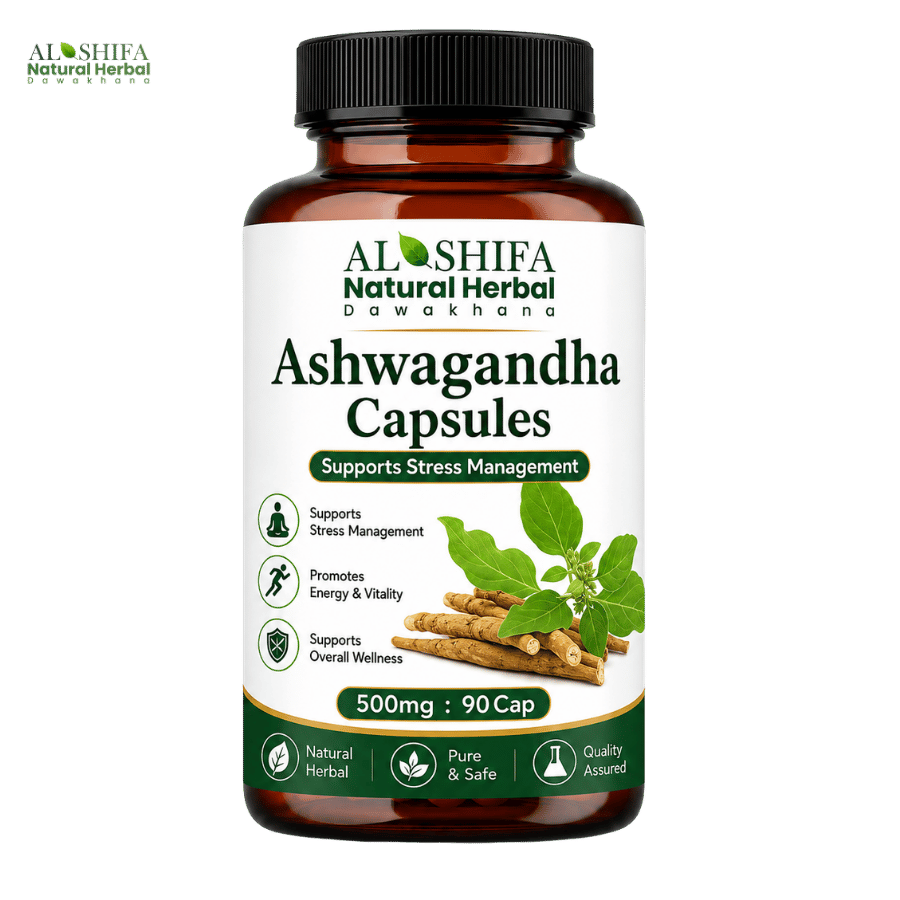
Ashwagandha Capsules / اشوگندھا کیپسول are a herbal dietary supplement prepared from Ashwagandha (Withania somnifera) root, a traditionally valued Ayurvedic herb associated with general vitality, physical strength, stress-related wellbeing, relaxation, sleep wellness, and overall physical resilience.
Suggested Use: Take according to the serving instructions stated on the product label or as advised by an appropriately qualified healthcare professional. The appropriate amount depends on whether the product contains whole-root powder or a concentrated extract and its withanolide content.
Important Note: Ashwagandha Capsules are a herbal dietary supplement and are not intended to diagnose, treat, cure, or prevent disease. Pregnant or breastfeeding women, people with thyroid, liver, autoimmune conditions, those scheduled for surgery, and anyone taking regular medicines should seek appropriate professional advice before use.
Ashwagandha Capsules are a convenient herbal dietary supplement prepared from Ashwagandha (Withania somnifera), one of the best-known botanicals traditionally used in Ayurvedic and South Asian herbal wellness practices. Ashwagandha has a long history of traditional use for general vitality, physical stamina, stress-related wellbeing, mental wellness, restful sleep, and overall strength.
The root is the most commonly used part of the Ashwagandha plant in traditional preparations and modern supplements. It naturally contains several bioactive plant constituents, particularly withanolides, along with alkaloids, flavonoids, and other naturally occurring phytochemicals.
Capsule form provides a simple and measured way to incorporate Ashwagandha into a daily wellness routine without preparing traditional powders, decoctions, or herbal mixtures.
Product Name: Ashwagandha Capsules
Urdu Name: اشوگندھا کیپسول
Herbal Name: Ashwagandha
Alternative Names: Indian Ginseng, Winter Cherry
Scientific Name: Withania somnifera (L.) Dunal
Botanical Name: Withania somnifera (L.) Dunal
Plant Family: Solanaceae
Commonly Used Part: Root
Traditional Systems: Ayurveda and Traditional South Asian Herbal Practice
Product Type: Herbal Dietary Supplement
Form: Capsules
Primary Botanical Ingredient: Ashwagandha Root
Naturally Occurring Constituents: Withanolides, Alkaloids, Flavonoids and Other Naturally Occurring Plant Compounds
Ashwagandha is a medicinal plant traditionally used throughout South Asia and particularly valued in Ayurveda. Its botanical name is Withania somnifera.
The plant is a relatively small shrub, and although different parts have been studied, the root is the principal part traditionally used in many Ashwagandha preparations.
Ashwagandha has traditionally been associated with:
Modern research has investigated several of these traditional applications, although the strength of evidence varies depending on the specific use, extract, dosage, and study population.
Ashwagandha has been used in Ayurvedic practice for centuries and is traditionally classified among herbs associated with rejuvenation and general vitality.
It has historically been incorporated into herbal preparations intended to support:
Traditional use does not necessarily establish a clinical treatment effect, but it provides the historical basis for Ashwagandha’s widespread modern use.
Ashwagandha is commonly described as an adaptogenic herb.
The term adaptogen is generally used for certain botanicals studied or traditionally used for helping the body maintain wellbeing during periods of physical or psychological stress.
Ashwagandha is one of the more extensively researched herbs in this category.
Clinical studies using specific Ashwagandha preparations have investigated outcomes related to perceived stress, anxiety symptoms, sleep, and stress-related biological measures. Results from some studies have been promising, but they should not be interpreted as evidence that every Ashwagandha product will produce the same effect.
Ashwagandha should not replace professional treatment for anxiety disorders, depression, trauma-related conditions, or other mental health conditions.
One of the most common modern uses of Ashwagandha is as part of a routine intended to support stress-related wellbeing.
Research using certain standardized Ashwagandha extracts has explored possible effects on:
Some clinical trials have reported improvements in certain stress-related measures, but results depend on the preparation, dosage, study duration, and participants.
Ashwagandha should therefore be viewed as a potential wellness supplement rather than a guaranteed treatment for chronic stress or anxiety.
Ashwagandha has traditionally been associated with mental and emotional wellbeing.
Modern research has examined its possible effects on:
Evidence for these uses varies considerably, and more research is required to determine which formulations and populations are most likely to benefit.
Healthy cognitive function also depends on adequate sleep, balanced nutrition, physical activity, social engagement, and appropriate management of medical conditions.
Ashwagandha is frequently incorporated into wellness routines designed to promote relaxation.
People may choose it during periods involving:
Its traditional reputation as a restorative botanical has contributed to its popularity for evening and general stress-management routines.
It is not a sedative medicine and should not be used as a substitute for appropriate medical assessment when persistent anxiety or sleep problems are present.
The species name somnifera relates historically to the plant’s association with sleep.
Clinical studies have investigated Ashwagandha preparations for aspects of sleep quality, particularly among adults experiencing stress or sleep difficulties.
Some studies suggest that specific preparations may modestly improve certain measures of sleep, but results should not be generalized to every Ashwagandha supplement.
Persistent insomnia, loud snoring, breathing pauses during sleep, severe daytime sleepiness, or other significant sleep problems require appropriate medical assessment.
Ashwagandha has traditionally been used as a restorative herb associated with physical strength and vitality.
Modern research has investigated certain Ashwagandha supplements in relation to:
Some trials involving resistance training have reported improvements in certain performance measures when Ashwagandha was used alongside structured exercise.
However, Ashwagandha cannot replace:
Individual results can vary substantially.
Ashwagandha is traditionally associated with general vitality rather than acting as a conventional stimulant.
Unlike caffeine-containing products, Ashwagandha does not primarily work by providing an immediate stimulant effect.
Its traditional use is more closely associated with:
People experiencing persistent unexplained fatigue should consider medical evaluation because fatigue can result from anemia, thyroid disorders, sleep problems, nutritional deficiencies, infections, diabetes, medication effects, and many other conditions.
Ashwagandha Capsules may be incorporated into a general wellness routine by physically active adults.
Research has investigated certain preparations alongside resistance training and other exercise programs.
Potential areas of research interest include:
Ashwagandha should be viewed as an optional supplement rather than a substitute for an appropriate exercise and nutrition program.
Ashwagandha has a long traditional association with male vitality and reproductive wellness.
Modern studies have investigated certain Ashwagandha preparations in relation to:
Some studies have reported changes in particular reproductive or hormonal measures in selected populations, but the evidence does not establish Ashwagandha as a treatment for male infertility or testosterone deficiency.
Men with fertility concerns should undergo appropriate medical evaluation rather than relying solely on supplements.
Ashwagandha is frequently promoted as a natural testosterone booster.
This description can be misleading.
Some studies using particular Ashwagandha extracts have reported changes in testosterone levels in certain groups of men, including some participants undergoing resistance training or experiencing reproductive concerns.
However, this does not mean Ashwagandha reliably increases testosterone in every healthy man.
Symptoms suggesting testosterone deficiency should be medically evaluated and confirmed with appropriate laboratory testing.
Traditional herbal practices have associated Ashwagandha with male reproductive vitality.
Research has examined possible effects of particular Ashwagandha preparations on:
Although some findings are encouraging, Ashwagandha should not be considered a proven treatment for infertility.
Male infertility can have numerous causes and may require semen analysis, hormonal testing, physical examination, imaging, or other investigations.
Ashwagandha is not exclusively a men’s herb.
Women may also use Ashwagandha as part of a general wellness routine for traditional purposes associated with:
However, women who are pregnant, trying to conceive, breastfeeding, or receiving hormonal or fertility treatment should seek professional advice before using Ashwagandha supplements.
Ashwagandha has traditionally been associated with reproductive and sexual vitality.
Some clinical research has examined Ashwagandha in relation to sexual wellbeing in both men and women.
Sexual health, however, is influenced by numerous factors, including:
Ashwagandha should not be presented as a guaranteed treatment for erectile dysfunction, premature ejaculation, low libido, or female sexual dysfunction.
Research has explored Ashwagandha particularly in relation to certain aspects of male reproductive health.
However, fertility problems can have many different causes.
Difficulty conceiving may require evaluation of:
Ashwagandha should therefore not replace appropriate fertility assessment or established treatment.
The root of Withania somnifera is the principal botanical material traditionally used in Ashwagandha supplements.
After harvesting, roots may be:
The final composition depends on whether the capsules contain whole-root powder, root extract, or another specifically formulated preparation.
Ashwagandha contains a group of naturally occurring steroidal lactones known collectively as withanolides.
These compounds are among the primary phytochemicals studied in Withania somnifera.
Ashwagandha can naturally contain:
The amount and profile of these compounds can differ considerably depending on:
For standardized extracts, the actual withanolide percentage should be taken from the specific product label.
Ashwagandha contains naturally occurring plant compounds that have demonstrated antioxidant activity in experimental research.
Antioxidant activity describes interactions with oxidative processes under particular experimental conditions.
This does not establish Ashwagandha Capsules as a treatment for diseases associated with oxidative stress.
A balanced diet containing fruits, vegetables, whole grains, legumes, nuts, and seeds remains an important source of diverse dietary antioxidants.
Various constituents of Withania somnifera have also been studied in experimental models involving inflammatory pathways.
Such research is scientifically interesting but should not be interpreted as proof that Ashwagandha Capsules can treat arthritis, inflammatory diseases, autoimmune conditions, or chronic pain.
Anyone with persistent pain, swelling, stiffness, or other inflammatory symptoms should obtain appropriate medical evaluation.
Ashwagandha has been investigated for possible effects on immune-related biological processes.
However, current evidence does not justify using Ashwagandha as a treatment for:
General immune wellness depends on adequate nutrition, sleep, physical activity, vaccination where appropriate, and management of underlying health conditions.
Ashwagandha requires particular caution in people with thyroid conditions.
Some clinical research suggests that Ashwagandha may influence thyroid hormone levels in certain individuals.
For this reason, people with:
should seek medical advice before using Ashwagandha, particularly if they are taking thyroid medication.
It should not be used as a substitute for prescribed thyroid treatment.
Research has investigated possible effects of Ashwagandha on glucose-related metabolic measures.
Because herbal supplements may potentially affect blood glucose, people with diabetes or those taking glucose-lowering medicines should use caution.
Combining supplements with diabetes medication without appropriate monitoring may increase the possibility of blood glucose changes.
Ashwagandha should not replace prescribed diabetes treatment.
Some research has investigated Ashwagandha in relation to cardiovascular and stress-related measures.
People taking medicines for high or low blood pressure should discuss Ashwagandha use with an appropriate healthcare professional because supplements can potentially interact with treatment or influence blood pressure.
Ashwagandha is not a replacement for prescribed blood-pressure medication.
Ashwagandha is sometimes promoted for weight loss.
It should not be regarded as a direct fat-burning or guaranteed weight-loss supplement.
Some research has explored whether stress-related improvements could indirectly influence eating behavior or body weight in certain individuals, but weight management primarily depends on:
No herbal capsule can replace these foundations.
Research has explored Ashwagandha in relation to cognitive functions such as:
Some small studies have reported encouraging findings, but larger and better-controlled research is needed.
Ashwagandha should not be used to treat dementia, neurological disease, attention disorders, or significant memory impairment without appropriate medical care.
Ashwagandha Capsules can contain different forms of the herb.
Whole-root powder is prepared by drying and grinding Ashwagandha root.
It generally provides a less concentrated form of the botanical.
An extract is produced using a process that concentrates selected constituents from the botanical material.
Extracts may vary considerably in concentration.
Some extracts are standardized to provide a specified percentage of withanolides.
For example, if a product claims a particular percentage of withanolides, that value should be based on the actual formulation and appropriate product specifications.
Whole-root powder and concentrated extract should not be assumed to be equivalent milligram for milligram.
Both forms may provide Ashwagandha but differ in convenience.
The quality of either form depends on botanical authenticity, purity, processing, storage, and manufacturing standards.
The appropriate time depends on the specific formulation and product directions.
Some people prefer taking Ashwagandha:
People using Ashwagandha primarily as part of a relaxation or sleep routine may prefer evening use, while others may take it earlier in the day.
Follow the instructions provided on the actual product label.
Take Ashwagandha Capsules according to the serving directions stated on the product packaging or as advised by an appropriately qualified healthcare professional.
The appropriate amount depends on:
Do not assume that a higher amount will provide greater benefits.
Ashwagandha does not generally act like an immediate stimulant.
Studies investigating stress, sleep, or physical performance have commonly evaluated regular use over a period of several weeks.
The time required to notice any effect may vary according to:
Benefits are not guaranteed, and persistent symptoms should be medically assessed rather than simply increasing the amount or duration of supplementation.
Ashwagandha can cause unwanted effects in some people.
Reported effects may include:
Rare but potentially serious liver injury has also been reported in association with Ashwagandha supplements.
Stop using the product and seek prompt medical advice if symptoms such as yellowing of the skin or eyes, unusually dark urine, severe itching, persistent nausea, marked fatigue, or significant upper abdominal discomfort develop.
Ashwagandha supplementation is generally not recommended during pregnancy without specialist medical guidance.
Pregnant women should avoid self-prescribing Ashwagandha because safety has not been adequately established and there are specific concerns surrounding its use during pregnancy.
Women who are pregnant or think they may be pregnant should consult an appropriately qualified healthcare professional before taking this supplement.
There is insufficient high-quality safety information to establish routine Ashwagandha supplementation as appropriate during breastfeeding.
Breastfeeding women should seek professional medical advice before use, particularly when:
Because rare cases of liver injury have been associated with Ashwagandha supplementation, people with existing liver disease should use particular caution and seek medical advice before use.
People with a history of significant liver disease should not assume that a natural supplement is automatically safe.
Ashwagandha may potentially influence immune-related processes.
People with autoimmune conditions should therefore discuss its use with an appropriately qualified healthcare professional, particularly if taking medicines that suppress or modify immune activity.
Do not replace prescribed autoimmune treatment with herbal supplementation.
Ashwagandha may potentially interact with medicines or influence sedation, blood pressure, blood glucose, or other physiological processes.
Anyone scheduled for surgery should inform their healthcare team about all supplements being used.
The healthcare professional can advise whether and when Ashwagandha should be discontinued before the procedure.
Ashwagandha may potentially interact with certain medicines.
Particular caution may be appropriate with:
People taking regular prescription medication should seek professional advice before adding Ashwagandha to their routine.
Never stop prescribed medication in favor of Ashwagandha without appropriate medical guidance.
Professional advice is particularly important for:
Children should not routinely use Ashwagandha Capsules unless specifically recommended by an appropriately qualified healthcare professional.
The quality of Ashwagandha supplements can vary considerably.
Important quality considerations include:
Where available, testing for botanical identity, microbial contamination, heavy metals, pesticides, and other contaminants can provide additional quality assurance.
Proper storage helps maintain capsule quality.
For best results:
Do not use capsules if the packaging is seriously damaged or if there is an unusual change in appearance, smell, or condition.
Our Ashwagandha Capsules / اشوگندھا کیپسول provide a convenient way to incorporate this traditionally valued botanical into a regular herbal wellness routine.
Claims concerning exact capsule strength, extract ratio, withanolide percentage, organic certification, additives, preservatives, or laboratory testing should only be made when confirmed for the actual product.
Product Name: Ashwagandha Capsules
Urdu Name: اشوگندھا کیپسول
Herb: Ashwagandha
Alternative Names: Indian Ginseng, Winter Cherry
Scientific Name: Withania somnifera (L.) Dunal
Botanical Name: Withania somnifera (L.) Dunal
Plant Family: Solanaceae
Plant Part Commonly Used: Root
Product Form: Capsules
Product Category: Herbal Dietary Supplement
Traditional System: Ayurveda and Traditional South Asian Herbal Practice
Naturally Occurring Constituents: Withanolides, Alkaloids, Flavonoids and Other Naturally Occurring Phytochemicals
Traditional Uses: General Vitality, Physical Wellness, Stress-Related Wellbeing, Rest and Relaxation, Sleep Wellness and General Strength
Storage: Keep in a cool, dry place away from direct sunlight, excessive heat and moisture. Keep the container securely closed and out of reach of children.
Ashwagandha Capsules provide a convenient form of Withania somnifera, a traditional botanical that has been valued for centuries in Ayurvedic and South Asian herbal practices.
Ashwagandha is particularly associated with general vitality, physical strength, stress-related wellbeing, relaxation, sleep wellness, mental wellbeing, and overall physical resilience. Its roots naturally contain withanolides and a variety of other naturally occurring plant compounds.
Capsules make it easier to incorporate Ashwagandha into a regular wellness routine without preparing traditional root powder or herbal decoctions.
Important Note: Ashwagandha Capsules are a herbal dietary supplement and are not intended to diagnose, treat, cure, or prevent disease. Pregnant or breastfeeding women, people with thyroid, liver, or autoimmune conditions, those scheduled for surgery, and anyone taking regular medicines should obtain appropriate professional advice before use.
اشوگندھا کیپسول ایک معروف روایتی جڑی بوٹی اشوگندھا سے تیار کیے جاتے ہیں، جس کا نباتاتی نام وتھانیا سومنیفیرا ہے۔ اشوگندھا کو آیوروید اور برصغیر کے روایتی طریقۂ علاج میں صدیوں سے عمومی جسمانی قوت، توانائی، ذہنی و جسمانی دباؤ کے دوران عمومی تندرستی، سکون، بہتر آرام، نیند کی عمومی کیفیت اور مجموعی جسمانی صحت کے لیے استعمال کیا جاتا رہا ہے۔
اشوگندھا کے پودے کی جڑ روایتی طور پر سب سے زیادہ استعمال ہونے والا حصہ ہے۔ اس میں قدرتی طور پر وتھانولائیڈز، نباتاتی الکلائیڈز، فلیونوئیڈز اور دیگر قدرتی نباتاتی مرکبات پائے جاتے ہیں۔
کیپسول کی شکل میں اشوگندھا کا استعمال آسان ہو جاتا ہے کیونکہ جڑ کا سفوف ناپنے، جوشاندہ تیار کرنے یا جڑی بوٹی کے مخصوص ذائقے کو برداشت کرنے کی ضرورت نہیں رہتی۔
پروڈکٹ کا نام: اشوگندھا کیپسول
جڑی بوٹی کا نام: اشوگندھا
متبادل نام: اسگند، اسگند ناگوری
سائنسی نام: وتھانیا سومنیفیرا
نباتاتی نام: وتھانیا سومنیفیرا
نباتاتی خاندان: سولانیسی
عام طور پر استعمال ہونے والا حصہ: جڑ
روایتی طریقۂ استعمال: آیوروید اور برصغیر کی روایتی جڑی بوٹیوں کی طب
پروڈکٹ کی قسم: نباتاتی غذائی ضمیمہ
شکل: کیپسول
بنیادی نباتاتی جزو: اشوگندھا کی جڑ
قدرتی اجزاء: وتھانولائیڈز، نباتاتی الکلائیڈز، فلیونوئیڈز اور دیگر قدرتی نباتاتی مرکبات
اشوگندھا ایک معروف طبی جڑی بوٹی ہے جو برصغیر کے مختلف علاقوں میں روایتی طور پر استعمال ہوتی رہی ہے۔ آیوروید میں اسے اہم جڑی بوٹیوں میں شمار کیا جاتا ہے۔
اگرچہ اس پودے کے مختلف حصوں پر تحقیق کی گئی ہے، لیکن روایتی تیاریوں اور غذائی ضمیموں میں اس کی جڑ سب سے زیادہ استعمال ہوتی ہے۔
روایتی طور پر اشوگندھا کو درج ذیل مقاصد سے منسوب کیا جاتا ہے:
ان روایتی استعمالات کو کسی بیماری کے یقینی علاج یا طبی تشخیص کا متبادل نہیں سمجھنا چاہیے۔
اشوگندھا آیوروید میں طویل عرصے سے استعمال ہونے والی معروف جڑی بوٹی ہے۔
روایتی طور پر اسے ایسی نباتاتی تیاریوں میں شامل کیا جاتا رہا ہے جن کا مقصد جسمانی قوت اور مجموعی تندرستی کو برقرار رکھنے میں معاونت فراہم کرنا ہوتا ہے۔
اس کے روایتی استعمالات میں شامل ہیں:
روایتی استعمال کسی بیماری کے خلاف ثابت شدہ طبی اثر کی ضمانت نہیں ہوتا، تاہم یہی تاریخی استعمال اشوگندھا کی موجودہ مقبولیت کی اہم بنیاد ہے۔
اشوگندھا کو ایسی معروف جڑی بوٹیوں میں شمار کیا جاتا ہے جنہیں روایتی طور پر ذہنی اور جسمانی دباؤ کے دوران عمومی تندرستی برقرار رکھنے کے لیے استعمال کیا جاتا رہا ہے۔
اس حوالے سے اشوگندھا پر جدید تحقیق بھی کی گئی ہے۔
تحقیقی مطالعات میں اس کے مختلف پہلوؤں کا جائزہ لیا گیا ہے، مثلاً:
بعض تحقیقات میں مخصوص اشوگندھا تیاریوں کے حوصلہ افزا نتائج سامنے آئے ہیں، لیکن ہر پروڈکٹ، مقدار اور فرد میں یکساں نتائج کی ضمانت نہیں دی جا سکتی۔
شدید یا مسلسل ذہنی دباؤ، بے چینی یا افسردگی کی صورت میں اسے مناسب طبی علاج کا متبادل نہیں سمجھنا چاہیے۔
اشوگندھا کو روایتی طور پر ذہنی اور جذباتی تندرستی سے بھی منسوب کیا جاتا ہے۔
اس کے مختلف نباتاتی اجزاء پر درج ذیل پہلوؤں کے حوالے سے تحقیق کی گئی ہے:
ان فوائد سے متعلق سائنسی شواہد مختلف نوعیت کے ہیں اور مزید تحقیق کی ضرورت موجود ہے۔
ذہنی کارکردگی کے لیے مناسب نیند، متوازن غذا، جسمانی سرگرمی اور ذہنی سکون بھی بنیادی اہمیت رکھتے ہیں۔
اشوگندھا کو روایتی طور پر سکون اور جسمانی بحالی سے منسوب کیا جاتا ہے۔
یہ خصوصاً ایسے افراد کے نباتاتی معمول کا حصہ بن سکتی ہے جو:
یہ نیند آور دوا نہیں ہے اور مسلسل بے خوابی یا شدید ذہنی بے چینی کی صورت میں طبی معائنے کا متبادل نہیں۔
اشوگندھا کا روایتی تعلق آرام اور نیند سے بھی بیان کیا جاتا ہے۔
جدید تحقیقات میں مخصوص اشوگندھا تیاریوں کے نیند کے مختلف پہلوؤں پر ممکنہ اثرات کا جائزہ لیا گیا ہے، خصوصاً ایسے بالغ افراد میں جنہیں ذہنی دباؤ یا نیند سے متعلق عمومی مشکلات ہوں۔
بعض تحقیقات میں نیند کے کچھ پیمانوں میں معمولی بہتری دیکھی گئی ہے، لیکن ان نتائج کو ہر اشوگندھا پروڈکٹ پر یکساں طور پر لاگو نہیں کیا جا سکتا۔
مسلسل بے خوابی، نیند کے دوران سانس رکنا، بہت زیادہ خراٹے یا دن میں غیر معمولی غنودگی کی صورت میں مناسب طبی معائنہ ضروری ہے۔
اشوگندھا کا روایتی استعمال جسمانی قوت اور عمومی توانائی کے لیے بھی کیا جاتا رہا ہے۔
جدید تحقیق میں مخصوص اشوگندھا تیاریوں کا درج ذیل پہلوؤں کے حوالے سے جائزہ لیا گیا ہے:
بعض تحقیقات میں باقاعدہ ورزش کے ساتھ مخصوص اشوگندھا تیاریوں کے استعمال سے جسمانی کارکردگی کے بعض پیمانوں میں بہتری دیکھی گئی ہے۔
تاہم اشوگندھا درج ذیل بنیادی چیزوں کا متبادل نہیں:
اشوگندھا کو روایتی طور پر جسمانی قوت اور عمومی توانائی سے منسوب کیا جاتا ہے، لیکن یہ عام محرک غذاؤں کی طرح فوری توانائی فراہم کرنے والی جڑی بوٹی نہیں سمجھی جاتی۔
اس کا روایتی استعمال زیادہ تر درج ذیل مقاصد سے وابستہ ہے:
اگر مسلسل اور غیر معمولی تھکن محسوس ہو تو اس کی بنیادی وجہ معلوم کرنا ضروری ہے کیونکہ خون کی کمی، تھائرائڈ کی خرابی، نیند کے مسائل، غذائی کمی، ذیابیطس اور مختلف بیماریوں کی وجہ سے بھی تھکن ہو سکتی ہے۔
جسمانی ورزش اور فعال طرزِ زندگی رکھنے والے بالغ افراد اشوگندھا کو اپنے عمومی نباتاتی معمول میں شامل کر سکتے ہیں۔
مختلف تحقیقات میں ورزش کے ساتھ مخصوص اشوگندھا تیاریوں کا درج ذیل پہلوؤں کے حوالے سے جائزہ لیا گیا ہے:
تاہم بہترین جسمانی کارکردگی کے لیے باقاعدہ ورزش، متوازن غذا، مناسب لحمیات، پانی، نیند اور آرام بنیادی اہمیت رکھتے ہیں۔
اشوگندھا کا مردوں کی عمومی قوت اور تولیدی تندرستی کے ساتھ بھی طویل روایتی تعلق پایا جاتا ہے۔
جدید تحقیق میں مخصوص اشوگندھا تیاریوں کا درج ذیل پہلوؤں کے حوالے سے جائزہ لیا گیا ہے:
بعض مطالعات میں مخصوص افراد میں بعض پیمانوں میں تبدیلی دیکھی گئی ہے، لیکن اسے مردانہ بانجھ پن یا ہارمون کی کمی کا ثابت شدہ علاج نہیں سمجھنا چاہیے۔
اشوگندھا کو بعض اوقات مردانہ ہارمون بڑھانے والی جڑی بوٹی کے طور پر پیش کیا جاتا ہے، لیکن یہ دعویٰ ہر شخص کے لیے درست نہیں۔
بعض تحقیقات میں مخصوص اشوگندھا تیاریوں کے استعمال سے مردوں کے مخصوص گروہوں میں مردانہ ہارمون کی سطح میں تبدیلی دیکھی گئی ہے۔
اس کا مطلب یہ نہیں کہ اشوگندھا ہر صحت مند مرد میں لازماً مردانہ ہارمون بڑھاتی ہے۔
مردانہ ہارمون کی کمی کی علامات کی صورت میں مناسب طبی معائنہ اور خون کی جانچ ضروری ہے۔
روایتی جڑی بوٹیوں کی طب میں اشوگندھا کو مردانہ تولیدی تندرستی سے منسوب کیا جاتا رہا ہے۔
جدید تحقیق میں اس کے درج ذیل پہلوؤں کا جائزہ لیا گیا ہے:
اگرچہ بعض نتائج حوصلہ افزا رہے ہیں، لیکن اشوگندھا کو بانجھ پن کا یقینی علاج نہیں سمجھنا چاہیے۔
اشوگندھا صرف مردوں کے لیے مخصوص جڑی بوٹی نہیں ہے۔
خواتین بھی اسے روایتی طور پر درج ذیل مقاصد کے لیے استعمال کرتی رہی ہیں:
تاہم حاملہ خواتین، دودھ پلانے والی خواتین، حمل کی منصوبہ بندی کرنے والی خواتین یا ہارمون اور تولیدی علاج کروانے والی خواتین کو استعمال سے پہلے مناسب طبی مشورہ حاصل کرنا چاہیے۔
اشوگندھا کو روایتی طور پر تولیدی اور ازدواجی تندرستی سے بھی منسوب کیا جاتا رہا ہے۔
اس حوالے سے مردوں اور خواتین دونوں میں مختلف تحقیقات کی گئی ہیں۔
ازدواجی تندرستی پر متعدد عوامل اثر انداز ہوتے ہیں، مثلاً:
اس لیے اشوگندھا کو ازدواجی کمزوری، رغبت کی کمی یا دیگر ازدواجی مسائل کا یقینی علاج نہیں سمجھنا چاہیے۔
اشوگندھا کے مردانہ تولیدی صحت سے متعلق بعض پہلوؤں پر تحقیق کی گئی ہے، لیکن حمل ٹھہرنے میں دشواری کی متعدد وجوہات ہو سکتی ہیں۔
تولیدی صلاحیت کی جانچ میں ضرورت کے مطابق درج ذیل امور شامل ہو سکتے ہیں:
تولیدی مسئلے کی صورت میں صرف غذائی ضمیمے پر انحصار مناسب نہیں۔
اشوگندھا کی جڑ اس پودے کا بنیادی حصہ ہے جو روایتی طور پر مختلف نباتاتی تیاریوں میں استعمال کیا جاتا ہے۔
حاصل کرنے کے بعد جڑ کو عموماً:
تیار شدہ کیپسول کی اصل نوعیت اس بات پر منحصر ہوتی ہے کہ اس میں مکمل جڑ کا سفوف استعمال ہوا ہے یا مرتکز عرق۔
اشوگندھا میں پائے جانے والے اہم قدرتی نباتاتی مرکبات میں وتھانولائیڈز شامل ہیں۔
یہ قدرتی نباتاتی مرکبات اشوگندھا پر ہونے والی جدید تحقیق کا اہم موضوع ہیں۔
اشوگندھا میں قدرتی طور پر درج ذیل اجزاء پائے جا سکتے ہیں:
ان اجزاء کی مقدار مختلف عوامل کے مطابق تبدیل ہو سکتی ہے، مثلاً:
اشوگندھا میں قدرتی طور پر پائے جانے والے مختلف نباتاتی مرکبات پر ضدِ تکسیدی سرگرمی کے حوالے سے تجرباتی تحقیق کی گئی ہے۔
یہ تحقیق جسم میں ہونے والے بعض تکسیدی عمل اور نباتاتی مرکبات کے باہمی تعلق کو سمجھنے کے لیے کی جاتی ہے۔
تاہم تجربہ گاہ میں ضدِ تکسیدی سرگرمی کا مطلب یہ نہیں کہ اشوگندھا کسی بیماری کو روکنے یا اس کا علاج کرنے کی ضمانت دیتی ہے۔
مجموعی غذائی تندرستی کے لیے پھل، سبزیاں، دالیں، ثابت اناج، بیج اور خشک میوہ جات پر مشتمل متوازن غذا اہم ہے۔
اشوگندھا کے مختلف قدرتی مرکبات پر جسم میں سوزش سے متعلق حیاتیاتی عمل کے حوالے سے بھی تحقیق کی گئی ہے۔
تاہم ایسی تحقیق کو اس بات کا ثبوت نہیں سمجھنا چاہیے کہ اشوگندھا جوڑوں کی بیماری، خودکار مدافعتی امراض، دائمی درد یا دوسری سوزشی بیماریوں کا علاج کر سکتی ہے۔
مسلسل درد، سوجن یا اکڑاؤ کی صورت میں مناسب طبی معائنہ ضروری ہے۔
اشوگندھا کے مختلف نباتاتی اجزاء کا مدافعتی نظام سے متعلق جسمانی عمل پر ممکنہ اثر تحقیق کا موضوع رہا ہے۔
تاہم اسے:
کے علاج کے طور پر استعمال نہیں کرنا چاہیے۔
مدافعتی نظام کی عمومی تندرستی کے لیے متوازن غذا، مناسب نیند، جسمانی سرگرمی اور مجموعی صحت کا خیال رکھنا ضروری ہے۔
تھائرائڈ کے مسائل رکھنے والے افراد کو اشوگندھا کے استعمال میں خاص احتیاط کرنی چاہیے۔
بعض تحقیقات سے ظاہر ہوا ہے کہ اشوگندھا بعض افراد میں تھائرائڈ ہارمونز کی سطح پر اثر انداز ہو سکتی ہے۔
اس لیے جن افراد کو:
ہو، انہیں استعمال سے پہلے طبی مشورہ لینا چاہیے، خصوصاً اگر وہ تھائرائڈ کی دوا استعمال کر رہے ہوں۔
اشوگندھا کے خون میں شکر سے متعلق بعض جسمانی پیمانوں پر ممکنہ اثرات کا بھی مطالعہ کیا گیا ہے۔
ذیابیطس کے مریض یا خون میں شکر کم کرنے والی ادویات استعمال کرنے والے افراد اشوگندھا استعمال کرنے سے پہلے مناسب طبی مشورہ حاصل کریں۔
غذائی ضمیمے اور ذیابیطس کی ادویات ایک ساتھ استعمال کرنے سے بعض افراد میں خون میں شکر کی سطح متاثر ہو سکتی ہے۔
اشوگندھا کے ذہنی دباؤ اور قلبی نظام سے متعلق بعض پیمانوں پر اثرات کے حوالے سے بھی تحقیق کی گئی ہے۔
بلند یا کم فشارِ خون کی ادویات استعمال کرنے والے افراد کو اشوگندھا استعمال کرنے سے پہلے مناسب طبی مشورہ لینا چاہیے۔
اسے تجویز کردہ فشارِ خون کی دوا کا متبادل نہیں سمجھنا چاہیے۔
اشوگندھا کو بعض اوقات وزن کم کرنے کے لیے بھی پیش کیا جاتا ہے، لیکن اسے براہِ راست چربی گھٹانے یا وزن کم کرنے والی جڑی بوٹی نہیں سمجھنا چاہیے۔
وزن کے مناسب انتظام کا بنیادی انحصار درج ذیل عوامل پر ہوتا ہے:
صرف کسی نباتاتی کیپسول پر وزن کم کرنے کے لیے انحصار کرنا مناسب نہیں۔
اشوگندھا پر ذہنی کارکردگی سے متعلق مختلف پہلوؤں کے حوالے سے تحقیق کی گئی ہے، مثلاً:
بعض محدود تحقیقات میں حوصلہ افزا نتائج سامنے آئے ہیں، تاہم مزید وسیع تحقیق کی ضرورت ہے۔
یادداشت کی شدید یا مسلسل خرابی کی صورت میں اسے طبی جانچ کا متبادل نہیں سمجھنا چاہیے۔
اشوگندھا کیپسول مختلف صورتوں میں تیار کیے جا سکتے ہیں۔
اشوگندھا کی خشک جڑ کو باریک پیس کر سفوف تیار کیا جاتا ہے۔
یہ عموماً جڑی بوٹی کی نسبتاً کم مرتکز شکل ہوتی ہے۔
جڑ سے منتخب نباتاتی اجزاء حاصل کرکے انہیں نسبتاً مرتکز شکل میں تیار کیا جاتا ہے۔
بعض تیاریوں میں وتھانولائیڈز کی ایک مخصوص مقدار مقرر کی جاتی ہے۔
ایسی صورت میں اصل مقدار پروڈکٹ کی حقیقی ترکیب اور لیبل کے مطابق ہی بیان کی جانی چاہیے۔
مکمل جڑ کے سفوف اور مرتکز عرق کی یکساں وزنی مقدار کو لازماً ایک جیسا نہیں سمجھنا چاہیے۔
دونوں صورتوں میں بنیادی جڑی بوٹی ایک ہو سکتی ہے لیکن استعمال میں فرق ہوتا ہے۔
دونوں صورتوں کا معیار جڑی بوٹی کی اصلیت، صفائی، تیاری اور محفوظ ذخیرہ پر منحصر ہوتا ہے۔
استعمال کا مناسب وقت پروڈکٹ کی اصل ترکیب اور پیکنگ پر درج ہدایات کے مطابق ہونا چاہیے۔
بعض افراد اشوگندھا کو:
استعمال کرنا پسند کرتے ہیں۔
جو افراد اسے آرام اور نیند کی عمومی تندرستی کے لیے اپنے معمول میں شامل کرتے ہیں وہ شام کے وقت استعمال کو ترجیح دے سکتے ہیں، تاہم اصل پروڈکٹ پر درج ہدایات کو ترجیح دینی چاہیے۔
اشوگندھا کیپسول پروڈکٹ کی پیکنگ پر درج مقدار یا مستند معالج کی ہدایت کے مطابق استعمال کریں۔
مناسب مقدار کا انحصار درج ذیل عوامل پر ہوتا ہے:
زیادہ مقدار کو لازماً زیادہ فائدہ مند نہیں سمجھنا چاہیے۔
اشوگندھا عام طور پر فوری محرک کی طرح کام کرنے والی جڑی بوٹی نہیں سمجھی جاتی۔
ذہنی دباؤ، نیند یا جسمانی کارکردگی سے متعلق تحقیقات میں اکثر اسے کئی ہفتوں تک باقاعدگی سے استعمال کرکے نتائج کا جائزہ لیا گیا ہے۔
کسی بھی ممکنہ اثر کے ظاہر ہونے کا وقت مختلف عوامل پر منحصر ہو سکتا ہے:
ہر فرد میں فائدہ ہونا لازمی نہیں۔
بعض افراد میں اشوگندھا کے استعمال سے مضر اثرات پیدا ہو سکتے ہیں۔
ممکنہ علامات میں شامل ہیں:
اشوگندھا کے غذائی ضمیموں کے استعمال کے ساتھ جگر کو نقصان پہنچنے کے نایاب واقعات بھی رپورٹ ہوئے ہیں۔
اگر درج ذیل علامات پیدا ہوں تو استعمال بند کرکے فوری طبی مشورہ حاصل کریں:
حمل کے دوران اشوگندھا کا خود سے استعمال مناسب نہیں سمجھا جاتا۔
حاملہ خواتین کے لیے اس کے غذائی ضمیموں کی حفاظت مکمل طور پر ثابت نہیں ہے، اس لیے حمل کے دوران اسے مستند طبی مشورے کے بغیر استعمال نہیں کرنا چاہیے۔
اگر حمل ہو یا حمل کا امکان ہو تو استعمال سے پہلے مناسب طبی رہنمائی حاصل کریں۔
دودھ پلانے کے دوران اشوگندھا کے باقاعدہ استعمال کی مکمل حفاظت ثابت کرنے کے لیے کافی اعلیٰ معیار کے شواہد موجود نہیں ہیں۔
دودھ پلانے والی خواتین کو استعمال سے پہلے طبی مشورہ حاصل کرنا چاہیے، خصوصاً اگر:
اشوگندھا کے غذائی ضمیموں سے جگر کو نقصان پہنچنے کے نایاب واقعات رپورٹ ہوئے ہیں۔
اس لیے جگر کی موجودہ بیماری رکھنے والے افراد کو خاص احتیاط کرنی چاہیے اور استعمال سے پہلے مستند طبی مشورہ حاصل کرنا چاہیے۔
قدرتی ہونے کا مطلب یہ نہیں کہ کوئی غذائی ضمیمہ ہر شخص کے لیے مکمل طور پر محفوظ ہے۔
اشوگندھا ممکنہ طور پر مدافعتی نظام سے متعلق بعض جسمانی عمل پر اثر انداز ہو سکتی ہے۔
خودکار مدافعتی بیماری رکھنے والے افراد کو استعمال سے پہلے مناسب طبی مشورہ حاصل کرنا چاہیے، خصوصاً اگر وہ مدافعتی نظام کو دبانے یا تبدیل کرنے والی ادویات استعمال کر رہے ہوں۔
اشوگندھا بعض ادویات کے ساتھ اثر انداز ہو سکتی ہے اور ممکنہ طور پر غنودگی، فشارِ خون، خون میں شکر یا دیگر جسمانی عوامل پر اثر ڈال سکتی ہے۔
کسی جراحی عمل سے پہلے اپنے معالج کو استعمال ہونے والی تمام جڑی بوٹیوں اور غذائی ضمیموں کے بارے میں ضرور آگاہ کریں۔
معالج ضرورت کے مطابق یہ بتا سکتا ہے کہ جراحی عمل سے کتنے عرصے پہلے استعمال بند کرنا چاہیے۔
اشوگندھا بعض ادویات کے ساتھ اثر انداز ہو سکتی ہے۔
خصوصاً درج ذیل ادویات استعمال کرنے والے افراد کو احتیاط کرنی چاہیے:
ڈاکٹر کی تجویز کردہ دوا کو اشوگندھا سے تبدیل یا خود سے بند نہیں کرنا چاہیے۔
درج ذیل افراد اشوگندھا استعمال کرنے سے پہلے مناسب طبی مشورہ حاصل کریں:
بچوں کو مستند طبی مشورے کے بغیر اشوگندھا کیپسول نہیں دینے چاہئیں۔
اشوگندھا کیپسول کا معیار مختلف عوامل پر منحصر ہوتا ہے۔
اہم عوامل میں شامل ہیں:
جہاں ممکن ہو، جڑی بوٹی کی شناخت، جراثیمی آلودگی، بھاری دھاتوں، زرعی ادویات اور دیگر ممکنہ آلودگیوں کی مناسب جانچ معیار کی یقین دہانی میں مدد دے سکتی ہے۔
اشوگندھا کیپسول کا معیار برقرار رکھنے کے لیے انہیں مناسب طریقے سے محفوظ کرنا ضروری ہے۔
بہتر نتائج کے لیے:
اگر پیکنگ شدید خراب ہو یا کیپسول کی شکل، بو یا حالت میں غیر معمولی تبدیلی نظر آئے تو استعمال سے گریز کریں۔
ہمارے اشوگندھا کیپسول اس معروف اور روایتی جڑی بوٹی کو روزمرہ نباتاتی معمول میں شامل کرنے کا آسان طریقہ فراہم کرتے ہیں۔
پروڈکٹ کا نام: اشوگندھا کیپسول
جڑی بوٹی: اشوگندھا
متبادل نام: اسگند، اسگند ناگوری
سائنسی نام: وتھانیا سومنیفیرا
نباتاتی نام: وتھانیا سومنیفیرا
نباتاتی خاندان: سولانیسی
عام طور پر استعمال ہونے والا حصہ: جڑ
پروڈکٹ کی شکل: کیپسول
پروڈکٹ کی قسم: نباتاتی غذائی ضمیمہ
روایتی طریقۂ استعمال: آیوروید اور برصغیر کی روایتی جڑی بوٹیوں کی طب
قدرتی نباتاتی اجزاء: وتھانولائیڈز، نباتاتی الکلائیڈز، فلیونوئیڈز اور دیگر قدرتی نباتاتی مرکبات
روایتی استعمال: عمومی جسمانی قوت، توانائی، ذہنی و جسمانی دباؤ کے دوران عمومی تندرستی، آرام، نیند کی عمومی تندرستی اور مجموعی جسمانی صحت
ذخیرہ: ٹھنڈی اور خشک جگہ پر براہِ راست دھوپ، زیادہ گرمی اور نمی سے محفوظ رکھیں۔ ڈبہ اچھی طرح بند رکھیں اور بچوں کی پہنچ سے دور رکھیں۔
اشوگندھا کیپسول اشوگندھا کی جڑ کو روزمرہ نباتاتی معمول میں شامل کرنے کا ایک آسان طریقہ ہیں۔ اس جڑی بوٹی کا آیوروید اور برصغیر کے روایتی طریقۂ علاج میں طویل عرصے سے استعمال موجود ہے۔
اشوگندھا کو خصوصاً عمومی جسمانی قوت، توانائی، ذہنی و جسمانی دباؤ کے دوران عمومی تندرستی، سکون، آرام، نیند کی عمومی تندرستی، ذہنی تندرستی اور مجموعی جسمانی برداشت سے منسوب کیا جاتا ہے۔ اس کی جڑ میں قدرتی طور پر وتھانولائیڈز اور دیگر نباتاتی مرکبات پائے جاتے ہیں۔
کیپسول کی شکل اشوگندھا کے استعمال کو آسان بناتی ہے اور روایتی سفوف یا جوشاندہ تیار کرنے کی ضرورت کو ختم کرتی ہے۔
اہم احتیاط: اشوگندھا کیپسول ایک نباتاتی غذائی ضمیمہ ہیں، انہیں کسی بیماری کی تشخیص، علاج یا روک تھام کا متبادل نہیں سمجھنا چاہیے۔ حاملہ یا دودھ پلانے والی خواتین، تھائرائڈ، جگر یا خودکار مدافعتی بیماری رکھنے والے افراد، جراحی عمل کی تیاری کرنے والے افراد اور مستقل ادویات استعمال کرنے والے افراد استعمال سے پہلے مناسب طبی مشورہ حاصل کریں۔