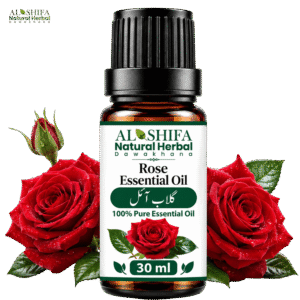
گلاب آئل
Original price was: ₨ 1,800.₨ 1,350Current price is: ₨ 1,350.
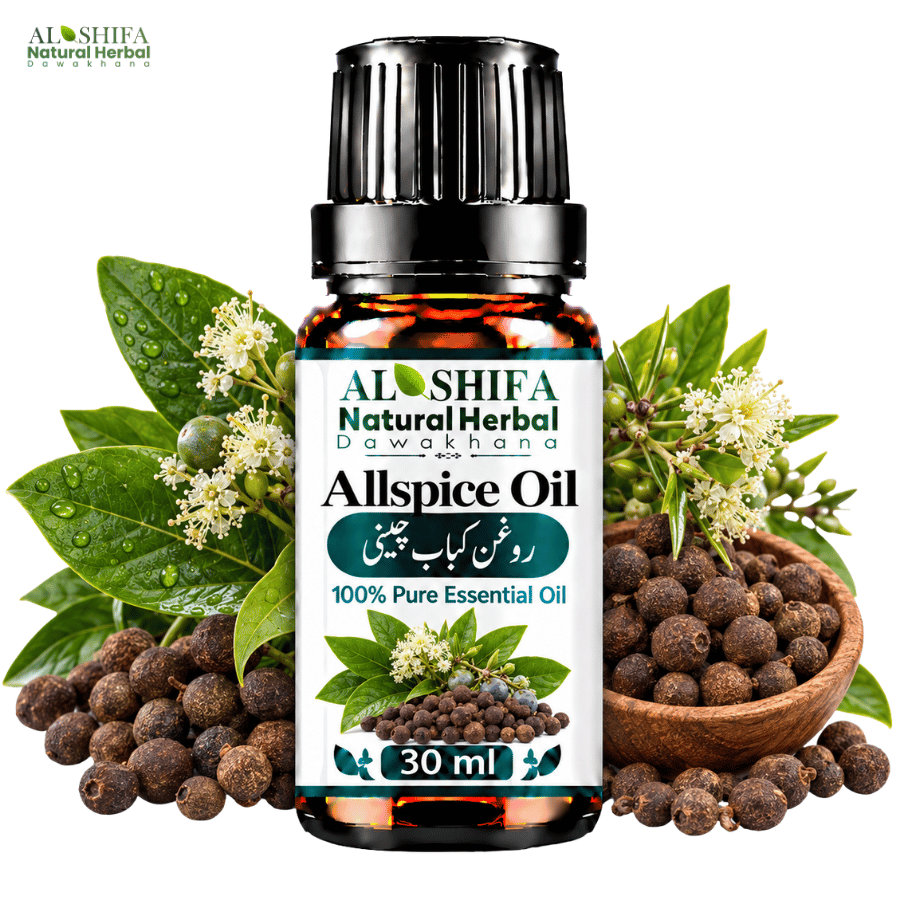
Allspice Oil / Roghan Kabab Chini is a natural aromatic essential oil obtained from Pimenta dioica, commonly from its dried unripe berries. It has a distinctive warm, sweet, spicy, clove-like and woody aroma and is naturally associated with eugenol and other volatile aromatic compounds. It is particularly suitable for aromatherapy, diffusers, natural perfumery, fragrance blends, diluted massage oils, soaps and cosmetic formulations.
Al Shifa Allspice Oil is carefully selected with attention to its genuine Pimenta dioica identity, characteristic spicy aroma, essential-oil quality, freshness, clean handling and protective packaging.
Key Features:
Usage: Add a small amount to a suitable diffuser or fragrance blend, or dilute appropriately in a carrier oil before topical use in massage, body, hair and cosmetic formulations.
Important Note: Allspice Oil is a concentrated volatile essential oil and should be appropriately diluted for topical use. Genuine Allspice is Pimenta dioica; it should not be confused with Cubeb (Piper cubeba), which may also be called Kabab Chini in South Asian herbal markets. Avoid unsupervised internal use.
Allspice Oil / Roghan Kabab Chini – روغن کباب چینی is a warm, spicy and aromatic essential oil obtained from Pimenta dioica (L.) Merr., an evergreen tree belonging to the Myrtaceae family. Genuine Allspice Essential Oil is most commonly produced by steam distillation of the dried unripe berries, although leaf-derived oil also exists and should be identified separately.
Allspice is famous for an aroma reminiscent of a combination of clove, cinnamon, nutmeg and pepper, which explains the English name “Allspice.” Its essential oil is naturally rich in aromatic compounds, particularly eugenol, along with other volatile constituents whose proportions vary according to plant part, geographic origin and distillation.
Allspice Oil is primarily valued in perfumery, aromatherapy, fragrance blends, soaps, diffusers and carefully diluted massage and cosmetic formulations.
At Al Shifa Natural Herbal Dawakhana, Allspice Oil is selected with attention to its correct botanical identity, characteristic spicy aroma, essential-oil quality, freshness, clean handling and protective packaging.
Allspice Oil is a concentrated volatile essential oil obtained from aromatic parts of the Pimenta dioica tree.
Berry oil is generally produced from dried allspice berries through steam distillation.
The resulting oil is a:
Because it is a concentrated essential oil, it should generally be diluted appropriately before topical use.
Product Name: Allspice Oil / Roghan Kabab Chini – روغن کباب چینی
English Name: Allspice Oil / Allspice Essential Oil / Pimento Berry Oil
Urdu Name: روغن کباب چینی / کباب چینی آئل
Roman Name: Allspice Oil / Roghan Kabab Chini
Scientific Name: Pimenta dioica (L.) Merr.
Plant Family: Myrtaceae
Plant Part: Dried Unripe Berries / Fruits for Berry Oil; Leaves for Leaf Oil
Oil Type: Volatile Essential Oil
Common Forms: Allspice Berry Essential Oil / Pimento Berry Oil / Allspice Leaf Essential Oil
Appearance: Pale Yellow to Yellowish-Brown, Depending on Source and Distillation
Aroma: Warm, Spicy, Sweet, Clove-Like, Peppery & Woody
Primary Applications: Perfumery, Aromatherapy, Diffusers, Fragrance Blends, Soaps, Diluted Massage Blends & Cosmetic Formulations
Product Type: Botanical Essential Oil
Pimenta dioica is an aromatic evergreen tree native to the Caribbean and Central American region and is particularly associated with Jamaica.
The tree produces small aromatic berries that are harvested while still unripe and then dried.
The dried berries develop the characteristic fragrance for which allspice is known.
The plant belongs to the Myrtaceae family, which also includes several other aromatic plants.
The name “Allspice” does not mean that the product is a mixture of different spices.
It is a single botanical spice obtained from Pimenta dioica.
Its name developed because its aroma has characteristics reminiscent of several familiar spices, especially:
Therefore:
Allspice ≠ A Blend of All Spices
It is a distinct botanical material.
Allspice Berry Essential Oil is generally obtained through steam distillation.
The process may involve:
The resulting essential oil is considerably more concentrated than the whole spice.
Allspice Berry Oil is distilled from the aromatic fruits or berries.
It generally has a:
Berry-derived oil should be identified clearly when botanical traceability is important.
Essential oil can also be distilled from the leaves of Pimenta dioica.
Allspice Leaf Oil and Allspice Berry Oil originate from the same plant but different plant parts.
Their:
may differ.
Therefore:
Allspice Berry Oil ≠ Allspice Leaf Oil
The plant part should be stated whenever possible.
Good-quality Allspice Oil generally has:
Natural variation can occur according to:
Allspice Essential Oil contains a complex mixture of volatile compounds.
One of its most characteristic constituents is:
Other naturally occurring aromatic compounds may also be present depending on the plant part and oil source.
These can include various:
The exact chemical profile should be determined from the specific batch rather than assumed to be identical across all Allspice oils.
Eugenol is an aromatic phenolic compound responsible for much of the characteristic warm, clove-like fragrance associated with Allspice Oil.
Eugenol is also naturally present in several other aromatic plants, particularly clove.
It contributes to:
However:
Allspice Oil ≠ Pure Eugenol
Genuine essential oil contains a natural mixture of volatile compounds.
Allspice Oil is valued in aromatherapy primarily for its warm and spicy fragrance.
Its aroma can create a:
It may be incorporated into suitable diffuser or aromatic blends.
Aromatherapy use should be understood as aromatic use rather than treatment for disease.
The fragrance of Allspice Oil can be described as:
This distinctive character makes it particularly useful in spicy and oriental-style fragrance compositions.
Allspice Oil can provide warmth and depth to perfume compositions.
It may complement:
Because its aroma is powerful, relatively small quantities may strongly influence a fragrance blend.
A small quantity of Allspice Essential Oil may be added to a suitable diffuser according to the equipment manufacturer’s instructions.
It may be blended aromatically with compatible oils such as:
Good room ventilation remains important.
Allspice Oil may be incorporated into massage products only after appropriate dilution in a suitable carrier oil.
Possible carrier oils include:
Because Allspice Essential Oil can contain substantial amounts of eugenol, conservative topical concentrations are important.
Allspice Oil may be incorporated at appropriately low concentrations into compatible cosmetic products such as:
It should not normally be applied undiluted to the skin.
Individuals with sensitive skin should use additional caution.
Allspice Oil may be used as an aromatic ingredient in properly diluted:
Its primary role in these products is aromatic and formulation-related.
It should not be described as a proven treatment for hair loss or scalp disease.
Allspice Oil may add fragrance to hair and scalp formulations.
However:
Aromatic Hair Care ≠ Proven Hair-Regrowth Treatment
There is insufficient basis to describe Allspice Oil as a guaranteed treatment for:
The warm spicy fragrance of Allspice Oil makes it useful in suitable soap formulations.
It can contribute:
Because the oil can be rich in eugenol, formulation concentration and skin-contact safety should be considered carefully.
Allspice Oil can be incorporated into fragrance combinations where a strong spicy note is desired.
It may pair well aromatically with:
The amount should be controlled because its aroma can easily dominate more delicate fragrance notes.
Allspice Oil and Clove Oil can both contain significant eugenol and may have somewhat similar spicy aromatic characteristics.
However, they are different botanical oils.
Allspice Oil:
Clove Oil:
Therefore:
Allspice Oil ≠ Clove Oil
A similar dominant constituent does not make two essential oils identical.
Allspice aroma may remind people of cinnamon, but Allspice Oil is not Cinnamon Oil.
Cinnamon oils originate from Cinnamomum species in the Lauraceae family.
Allspice Oil comes from Pimenta dioica in the Myrtaceae family.
Therefore:
Allspice Oil ≠ Cinnamon Bark Oil
Allspice Oil ≠ Cinnamon Leaf Oil
The word “spice” and the peppery character of Allspice can also create confusion with Black Pepper.
Black Pepper Essential Oil is obtained from Piper nigrum, a completely different plant.
Therefore:
Allspice Oil ≠ Black Pepper Essential Oil
Genuine Allspice Essential Oil is obtained from botanical material through distillation.
A commercial Allspice fragrance oil may instead contain:
Therefore:
Pure Allspice Essential Oil ≠ Synthetic Allspice Fragrance Oil
The intended use and ingredient identity should always be checked.
The name Kabab Chini requires special attention because South Asian herbal markets may use common names differently.
The English botanical term Allspice specifically refers to Pimenta dioica.
However, the South Asian herbal material commonly called Kabab Chini / Kabab Cheeni can also refer to Cubeb, botanically known as Piper cubeba, depending on the market and herbal tradition.
These are different plants.
Therefore:
Pimenta dioica Allspice ≠ Piper cubeba Cubeb
If a product is sold specifically as Allspice Essential Oil, its botanical identity should be confirmed as Pimenta dioica rather than relying only on the common name “Kabab Chini.”
This distinction is important for accurate product identification.
Research involving Allspice may investigate:
These preparations and research conditions are not interchangeable.
For cosmetic and aromatic use, Allspice Essential Oil is best understood primarily as a concentrated aromatic oil rich in volatile compounds.
Allspice Essential Oil and eugenol have been studied under laboratory conditions for antimicrobial activity.
Such research may involve:
This does not establish that ordinary topical use can treat human infections.
Therefore:
Laboratory Antimicrobial Activity ≠ Proven Infection Treatment
Medical infections require appropriate diagnosis and treatment.
Allspice berries, extracts and essential oil may demonstrate antioxidant activity in laboratory testing.
However:
Laboratory Antioxidant Activity ≠ Proven Disease Treatment
Results from concentrated extracts or laboratory experiments should not automatically be converted into medical claims for normal essential-oil use.
Correct botanical and product identification is essential.
These distinctions are particularly important because common herbal names can vary between regions.
Allspice Oil is a concentrated essential oil and can be irritating when used improperly.
For topical applications:
Possible sensitivity signs include:
Avoid direct contact with eyes and mucous membranes.
Because Allspice Oil may contain substantial amounts of eugenol, sensitivity is an important consideration.
Eugenol-containing essential oils can cause irritation or sensitization in susceptible individuals, particularly when:
Appropriate dilution is therefore essential.
Eugenol-rich essential oils require additional caution in people with bleeding disorders or those using medicines that affect blood clotting.
Individuals using anticoagulant or antiplatelet medicines should seek appropriate professional guidance before extensive topical or internal use of concentrated eugenol-rich essential oils.
Allspice Oil should not be used as a substitute for prescribed medication.
The clove-like aroma and eugenol content can lead to assumptions about dental use.
However:
Allspice Oil ≠ Dental Treatment
Do not apply concentrated Allspice Essential Oil directly to:
without appropriate professional guidance.
Concentrated essential oils can irritate or damage sensitive oral tissues.
Because Allspice Oil is concentrated and may be rich in eugenol, conservative use is appropriate during pregnancy and breastfeeding.
For these periods:
Allspice Essential Oil requires additional caution around children.
For children:
Professional guidance is preferable for routine use in infants and very young children.
Allspice berries are used as a culinary spice, but the essential oil is much more concentrated.
Therefore:
Whole Culinary Allspice ≠ Concentrated Allspice Essential Oil
Do not assume that an essential oil sold for aromatherapy, perfumery or cosmetics is suitable for consumption.
Essential-Oil Grade ≠ Automatically Food-Grade
Avoid unsupervised internal use.
At Al Shifa Natural Herbal Dawakhana, Allspice Oil is selected with attention to:
Botanical Identity – Genuine Pimenta dioica source for Allspice Essential Oil.
Plant Part – Berry/fruit or leaf identity considered where applicable.
Oil Identity – Volatile essential oil rather than fixed vegetable oil.
Aroma – Characteristic warm, sweet, spicy and clove-like fragrance.
Natural Constituents – Naturally occurring volatile aromatic compounds including eugenol.
Aromatherapy Applications – Suitable for carefully designed aromatic blends.
Perfumery Applications – Suitable for spicy fragrance compositions.
Diffuser Applications – Suitable for aromatic diffusion.
Massage Applications – Suitable only after appropriate dilution.
Cosmetic Applications – Suitable for appropriately formulated body, hair and fragrance products.
Freshness – Attention to aroma and essential-oil condition.
Clean Handling – Carefully handled during packing.
Protective Packaging – Helps protect the volatile oil from unnecessary air and light exposure.
Responsible Claims – Laboratory findings are not presented as proof of medical treatment.
Al Shifa Natural Herbal Dawakhana, established in 1999, supplies carefully selected essential oils, natural oils, herbs and botanical materials throughout Pakistan.
Our focus for Allspice Oil includes:
For Diffusers: Add a small amount according to the diffuser manufacturer’s instructions and maintain appropriate room ventilation.
For Aromatherapy: Use in carefully balanced aromatic blends.
For Perfumery: Incorporate into professionally balanced spicy, woody or oriental-style fragrance compositions.
For Massage: Dilute appropriately in a suitable carrier oil before skin application.
For Skin & Body Products: Use only at an appropriate low concentration in compatible formulations.
For Hair & Scalp Products: Incorporate at a suitable diluted concentration into hair oils, shampoos, conditioners or scalp products.
For Soap Making: Use at an appropriate formulation level according to the product type and essential-oil safety requirements.
Allspice Oil / Roghan Kabab Chini – روغن کباب چینی, when referring to genuine Allspice Essential Oil, is obtained from Pimenta dioica and is commonly distilled from its aromatic dried berries. It has a warm, spicy, sweet and clove-like aroma and is characteristically associated with eugenol and other volatile aromatic compounds.
It is primarily suitable for aromatherapy, perfumery, diffusers, fragrance blends, soaps, appropriately diluted massage products and cosmetic formulations.
An important naming distinction is that Allspice (Pimenta dioica) and Cubeb (Piper cubeba) are botanically different plants, even though the common name “Kabab Chini” can create confusion in South Asian herbal markets. Botanical identity should therefore be confirmed whenever this product is purchased or labelled.
For best quality:
Allspice Oil / Roghan Kabab Chini – روغن کباب چینی, when botanically identified as Pimenta dioica, is a concentrated natural essential oil valued for its warm, sweet, spicy, clove-like, peppery and woody fragrance. It is particularly suitable for aromatherapy, diffusers, natural perfumery, fragrance blends, diluted massage oils, soaps and cosmetic formulations.
Customers searching for Allspice Oil, Allspice Essential Oil, Pimento Berry Oil, Roghan Kabab Chini, Pimenta Dioica Oil, Pure Allspice Oil, Natural Allspice Oil, Allspice Berry Oil, Allspice Oil for Aromatherapy, Allspice Oil for Diffuser, Allspice Oil for Perfume, Allspice Oil for Massage, Allspice Oil for Soap, Allspice Oil for Cosmetics, Allspice Oil Pakistan, Roghan Kabab Chini Pakistan, Allspice Oil Lahore, Allspice Oil price in Pakistan, buy Allspice Oil Pakistan or Allspice Oil online Pakistan can choose Al Shifa Natural Herbal Dawakhana for carefully selected quality.
Since 1999, Al Shifa Natural Herbal Dawakhana has focused on supplying natural oils and botanical materials with attention to correct identity, quality selection, characteristic aroma, freshness, clean handling, responsible product information, protective packaging and proper storage.
Product Name: Allspice Oil / Roghan Kabab Chini – روغن کباب چینی
English Name: Allspice Oil / Allspice Essential Oil / Pimento Berry Oil
Urdu Name: روغن کباب چینی / کباب چینی آئل
Roman Name: Allspice Oil / Roghan Kabab Chini
Scientific Name: Pimenta dioica (L.) Merr.
Plant Family: Myrtaceae
Plant Part: Dried Unripe Berries / Fruits for Berry Oil; Leaves for Leaf Oil
Oil Type: Volatile Essential Oil
Common Forms: Allspice Berry Essential Oil / Pimento Berry Oil / Allspice Leaf Essential Oil
Appearance: Pale Yellow to Yellowish-Brown, Depending on Source and Distillation
Aroma: Warm, Spicy, Sweet, Clove-Like, Peppery & Woody
Primary Applications: Perfumery, Aromatherapy, Diffusers, Fragrance Blends, Soaps, Diluted Massage Blends & Cosmetic Formulations
Product Type: Botanical Essential Oil
Important Note: Genuine Allspice Essential Oil is botanically Pimenta dioica. The South Asian name Kabab Chini can also be used for Cubeb (Piper cubeba), which is a different plant. For accurate product labelling, botanical identity should be confirmed. Allspice Essential Oil is concentrated, requires appropriate topical dilution and should not be used internally without suitable professional guidance.
روغن کباب چینی کباب چینی کے خشک خوشبودار پھلوں سے حاصل ہونے والا تیز خوشبودار روغن ہے۔ کباب چینی ایک بیل نما پودا ہے جس کا تعلق کالی مرچ کے خاندان سے ہے۔ اس کے چھوٹے گول پھل خشک ہونے کے بعد اپنی خاص ڈنڈی کے ساتھ پہچانے جاتے ہیں۔
کباب چینی کے خشک پھل خوشبودار اور مصالحہ دار ہوتے ہیں۔ انہی پھلوں سے بھاپ کے ذریعے خوشبودار روغن حاصل کیا جاتا ہے۔
روغن کباب چینی عام بیجوں سے حاصل ہونے والا چکنائی والا روغن نہیں ہے۔ یہ تیز خوشبودار روغن ہے، اس لیے جلد پر اسے خالص حالت میں زیادہ مقدار میں استعمال نہیں کیا جاتا۔ بیرونی استعمال کے لیے اسے روغن بادام، روغن ناریل، روغن جوجوبا یا دوسرے بنیادی روغن میں کم مقدار میں ملایا جاتا ہے۔
اس میں سابینین، بیٹا کیریوفائلین، کیوبیبین، کیڈینین اور دوسرے قدرتی خوشبودار اجزا پائے جاتے ہیں۔
اردو: کباب چینی، کبابت چینی، کبابہ، کباب چینی کے دانے، روغن کباب چینی
پنجابی: کباب چینی، کباب چینی دے دانے، کباب چینی دا تیل
ہندی: کباب چینی، شیتل چینی، کباب چینی کا تیل
فارسی: کبابہ، کباب چینی، روغن کبابہ
عربی: كبابة، كبابة صيني، زيت الكبابة
انگریزی نام: کیوبیب، کیوبیب پیپر، کیوبیب آئل
سائنسی نام: پائپر کیوبیبا
خاندان: پائپریسی
استعمال ہونے والا حصہ: خشک پکے پھل
کباب چینی ایک بیل نما خوشبودار پودا ہے۔
اس کا تعلق کالی مرچ کے خاندان سے ہے۔
اس کے پتے سبز ہوتے ہیں۔
پودے پر چھوٹے پھول بنتے ہیں۔
پھولوں کے بعد چھوٹے گول پھل بنتے ہیں۔
پھل ابتدا میں سبز ہوتے ہیں۔
پکنے اور خشک ہونے کے بعد ان کی رنگت بھوری یا گہری بھوری ہو جاتی ہے۔
ہر خشک پھل کے ساتھ ایک چھوٹی ڈنڈی موجود رہتی ہے۔
یہ ڈنڈی کباب چینی کی اہم ظاہری پہچان ہے۔
خشک پھل خوشبودار اور ذائقے میں تیز و مصالحہ دار ہوتے ہیں۔
انہی خشک پھلوں سے روغن کباب چینی حاصل کیا جاتا ہے۔
اچھی کباب چینی:
کباب چینی کے پکے پھل جمع کیے جاتے ہیں۔
انہیں صاف کر کے اچھی طرح خشک کیا جاتا ہے۔
خشک پھلوں کو بھاپ کے ذریعے روغن نکالنے کے طریقے میں استعمال کیا جاتا ہے۔
بھاپ پھلوں میں موجود خوشبودار اجزا کو اپنے ساتھ لے جاتی ہے۔
ٹھنڈا ہونے کے بعد پانی اور خوشبودار روغن الگ ہو جاتے ہیں۔
خوشبودار روغن کو پانی سے الگ کر کے صاف کیا جاتا ہے۔
اس طرح حاصل ہونے والا روغن کباب چینی تیز خوشبو رکھتا ہے اور بہت کم مقدار میں استعمال کیا جاتا ہے۔
کباب چینی پاکستان اور برصغیر کی حکمت میں معروف مفرد دوا ہے۔
حکمت کی معروف کتب مفردات میں کباب چینی کو گرم اور خشک مزاج کے ساتھ بیان کیا جاتا ہے۔
اس کی گرم اور خشک طبی خاصیت کی وجہ سے حکمت میں کباب چینی کو خاص مقدار میں استعمال کیا جاتا ہے۔
کباب چینی کے خشک پھل اور ان سے بھاپ کے ذریعے حاصل ہونے والا خوشبودار روغن الگ شکلیں ہیں۔ روغن زیادہ تیز اور خوشبودار ہوتا ہے، اس لیے اس کی مقدار بہت کم رکھی جاتی ہے۔
روغن کباب چینی کی سب سے اہم پہچان اس کی تیز، گرم، مصالحہ دار اور کالی مرچ جیسی خوشبو ہے۔
اس میں لکڑی اور ہلکی کافور جیسی خوشبو بھی محسوس ہو سکتی ہے۔
یہ عام بنیادی روغن نہیں ہے۔
اسے جلد پر لگانے سے پہلے دوسرے بنیادی روغن میں کم مقدار میں ملایا جاتا ہے۔
حکمت میں کباب چینی کے خشک پھل مختلف طبی ادویات میں استعمال کیے جاتے ہیں۔
اس کا استعمال خاص طور پر:
کیا جاتا ہے۔
کسی بیماری کے لیے کباب چینی یا اس کے روغن کا اندرونی طبی استعمال معالج سے پوچھ کر کریں۔
روغن کباب چینی کو جسمانی مالش میں خالص حالت میں استعمال نہیں کیا جاتا۔
اس کے چند قطرے روغن بادام، روغن ناریل، روغن جوجوبا یا دوسرے بنیادی روغن میں ملا کر استعمال کیے جاتے ہیں۔
اس کی گرم اور مصالحہ دار خوشبو جسمانی مالش کو خوشگوار بناتی ہے۔
جسمانی تھکن کے بعد روغن کباب چینی کو بنیادی روغن میں ملا کر مالش کے لیے استعمال کیا جاتا ہے۔
کندھوں، بازوؤں، ٹانگوں اور پاؤں کی مالش میں اس کی کم مقدار استعمال کی جاتی ہے۔
اس کی تیز خوشبو تازگی کا احساس دیتی ہے۔
پٹھوں کے کھنچاؤ والی جگہ پر روغن کباب چینی کو بنیادی روغن میں ملا کر ہلکی مالش کی جاتی ہے۔
خالص روغن براہ راست جلد پر نہ لگائیں۔
مسلسل درد یا جسمانی بیماری میں طبی استعمال معالج سے پوچھ کر کریں۔
روغن کباب چینی کے چند قطرے کسی بنیادی روغن میں ملا کر پاؤں کی مالش میں استعمال کیے جاتے ہیں۔
اس کی گرم اور مصالحہ دار خوشبو پاؤں کی مالش کو خوشگوار بناتی ہے۔
روغن کباب چینی تیز خوشبودار روغن ہے۔
جلد پر اسے خالص حالت میں استعمال کرنے کے بجائے بنیادی روغن میں کم مقدار میں ملایا جاتا ہے۔
پہلی بار استعمال سے پہلے جلد کے چھوٹے حصے پر آزمائیں۔
خارش، سرخی، سوجن یا جلن پیدا ہو تو استعمال بند کریں۔
خشک جلد کی روغنی دیکھ بھال میں روغن کباب چینی کو اکیلا استعمال نہیں کیا جاتا۔
اس کے چند قطرے روغن بادام، روغن جوجوبا یا دوسرے نرم بنیادی روغن میں شامل کیے جاتے ہیں۔
بنیادی روغن جلد کو نرمی دیتا ہے جبکہ کباب چینی کا روغن اپنی خاص خوشبو فراہم کرتا ہے۔
روغن کباب چینی کو سر کی جلد پر خالص حالت میں نہ لگائیں۔
اس کے چند قطرے روغن ناریل، روغن بادام یا دوسرے بنیادی روغن میں ملا کر سر کی مالش میں استعمال کیے جاتے ہیں۔
سر کی جلد کے امراض میں طبی استعمال معالج سے پوچھ کر کریں۔
روغن کباب چینی عام بالوں کا بنیادی روغن نہیں ہے۔
اسے بالوں کے روغنی آمیزوں میں کم مقدار میں شامل کیا جاتا ہے۔
بالوں اور سر کی جلد پر استعمال سے پہلے اسے بنیادی روغن میں ملانا ضروری ہے۔
روغن کباب چینی کی تیز، گرم، مصالحہ دار اور لکڑی جیسی خوشبو اس کی اہم پہچان ہے۔
اسے خوشبودار روغنی آمیزوں میں کم مقدار میں شامل کیا جاتا ہے۔
اس کی خوشبو گہری ہوتی ہے، اس لیے چند قطرے کافی رہتے ہیں۔
روغن کباب چینی کو خوشبو پھیلانے والے آلے میں کم مقدار میں استعمال کیا جاتا ہے۔
اس کی مصالحہ دار خوشبو ماحول کو گرم اور گہرا خوشبودار احساس دیتی ہے۔
بند کمرے میں بہت زیادہ مقدار استعمال نہ کریں۔
روغن کباب چینی میں کئی قدرتی خوشبودار اجزا پائے جاتے ہیں، جن میں اہم یہ ہیں:
پھل کی حالت، علاقے اور روغن حاصل کرنے کے طریقے کے مطابق ان اجزا کی مقدار بدلتی رہتی ہے۔
سابینین کباب چینی کے روغن میں پائے جانے والے اہم خوشبودار اجزا میں شامل ہے۔
یہ روغن کی تیز، تازہ اور مصالحہ دار خوشبو میں اہم جگہ رکھتا ہے۔
بیٹا کیریوفائلین کئی خوشبودار مصالحوں میں پایا جانے والا قدرتی جز ہے۔
یہ روغن کباب چینی کی گرم اور مصالحہ دار خوشبو میں اہم جگہ رکھتا ہے۔
کیوبیبین کباب چینی کے پھل سے وابستہ اہم قدرتی اجزا میں شامل ہے۔
یہ کباب چینی کے خشک پھل کی خاص قدرتی ساخت کا حصہ ہے۔
کیڈینین خوشبودار پودوں میں پایا جانے والا قدرتی جز ہے۔
یہ روغن کباب چینی کی لکڑی اور مصالحے جیسی خوشبو میں اہم جگہ رکھتا ہے۔
کباب چینی کے مکمل خشک پھل میں خوشبودار روغن کے ساتھ دوسرے قدرتی اجزا بھی موجود ہوتے ہیں۔
بھاپ کے ذریعے حاصل روغن میں پھل کے اڑنے والے خوشبودار اجزا زیادہ نمایاں ہوتے ہیں۔
اس لیے خشک کباب چینی اور روغن کباب چینی کی مقدار اور استعمال ایک جیسا نہیں رکھا جاتا۔
کباب چینی کا جوہر اور روغن کباب چینی الگ شکلیں ہیں۔
جوہر دوسرے طریقے سے منتخب اجزا حاصل کر کے تیار کیا جاتا ہے۔
روغن کباب چینی خشک پھلوں سے بھاپ کے ذریعے حاصل کیا جانے والا خوشبودار روغن ہے۔
دونوں کی مقدار اور استعمال الگ رکھے جاتے ہیں۔
کباب چینی اور آل اسپائس ایک ہی چیز نہیں ہیں۔
کباب چینی پائپر کیوبیبا نامی پودے کا خشک پھل ہے اور اس کا تعلق کالی مرچ کے خاندان سے ہے۔
آل اسپائس پیمینٹا ڈائی اوئیکا نامی الگ درخت کا خوشبودار پھل ہے۔
دونوں کی خوشبو، پودا، سائنسی پہچان اور قدرتی اجزا الگ ہیں۔
اسی لیے خالص روغن کباب چینی خریدتے وقت اصل پودے کا نام پائپر کیوبیبا دیکھنا ضروری ہے۔
کباب چینی اور کالی مرچ ایک ہی خاندان کے پودے ہیں لیکن دونوں الگ ہیں۔
کباب چینی کے خشک دانے کے ساتھ چھوٹی ڈنڈی موجود رہتی ہے۔
کالی مرچ کے عام خشک دانے میں یہ نمایاں ڈنڈی موجود نہیں ہوتی۔
دونوں کے روغن کی خوشبو بھی الگ ہوتی ہے۔
روغن بادام، روغن ناریل اور روغن جوجوبا بنیادی روغن ہیں۔
یہ جلد پر نسبتاً زیادہ مقدار میں استعمال کیے جاتے ہیں۔
روغن کباب چینی تیز خوشبودار روغن ہے۔
اسے چند قطروں کی مقدار میں بنیادی روغن کے ساتھ ملا کر استعمال کیا جاتا ہے۔
خالص روغن کباب چینی کی رنگت بے رنگ سے ہلکی زرد یا زردی مائل ہو سکتی ہے۔
وقت اور محفوظ رکھنے کے طریقے کے ساتھ رنگت قدرے گہری ہو سکتی ہے۔
تیز مصنوعی رنگ خالص روغن کی لازمی پہچان نہیں ہے۔
روغن کباب چینی کی خوشبو تیز، گرم اور مصالحہ دار ہوتی ہے۔
اس میں کالی مرچ، لکڑی اور ہلکی کافور جیسی خوشبو محسوس ہو سکتی ہے۔
خوشبو گہری ہونے کی وجہ سے اسے کم مقدار میں استعمال کیا جاتا ہے۔
روغن کباب چینی ہلکا اور تیز خوشبودار روغن ہے۔
یہ عام چکنائی والے بنیادی روغن کی طرح گاڑھا نہیں ہوتا۔
جلد پر اسے خالص حالت میں زیادہ مقدار میں استعمال نہیں کیا جاتا۔
روغن کباب چینی کو جلد پر لگانے سے پہلے بنیادی روغن میں ملائیں۔
چند قطرے بنیادی روغن میں اچھی طرح ملائیں۔
پہلی بار استعمال سے پہلے جلد کے چھوٹے حصے پر تھوڑی مقدار آزمائیں۔
خارش، سرخی، سوجن یا جلن پیدا ہو تو استعمال بند کریں۔
روغن کباب چینی کو:
جیسے بنیادی روغنوں کے ساتھ ملا کر استعمال کیا جاتا ہے۔
خوشبودار آمیزوں میں اسے دوسرے مصالحہ دار، لکڑی اور ترش خوشبو رکھنے والے روغنوں کے ساتھ کم مقدار میں شامل کیا جاتا ہے۔
روغن کباب چینی عام کھانے والا روغن نہیں ہے۔
اسے خود سے نہ پئیں۔
کسی بیماری کے لیے اس کا اندرونی طبی استعمال معالج سے پوچھ کر کریں۔
صرف بیرونی اور خوشبودار استعمال کے لیے فروخت ہونے والا روغن خوراک میں استعمال نہ کریں۔
حساس جلد پر روغن کباب چینی خالص حالت میں نہ لگائیں۔
اسے بنیادی روغن میں کم مقدار میں ملا کر استعمال کریں۔
پہلی بار استعمال سے پہلے جلد کے چھوٹے حصے پر آزمائیں۔
خارش، سرخی، سوجن یا جلن پیدا ہو تو استعمال بند کریں۔
جلدی امراض میں طبی استعمال معالج سے پوچھ کر کریں۔
حمل کے دوران روغن کباب چینی کا اندرونی استعمال خود سے نہ کریں۔
کسی بیماری کے لیے اندرونی طبی استعمال معالج سے پوچھ کر کریں۔
بیرونی استعمال بھی بنیادی روغن میں کم مقدار میں ملا کر کریں۔
دودھ پلانے کے دوران روغن کباب چینی کا اندرونی طبی استعمال معالج سے پوچھ کر کریں۔
اسے چھاتی یا ایسی جگہ نہ لگائیں جہاں سے بچے کے منہ تک روغن پہنچے۔
بچوں پر خالص روغن کباب چینی خود سے استعمال نہ کریں۔
بچوں کے منہ، ناک اور آنکھوں کے قریب نہ لگائیں۔
کسی بیماری کے لیے اس کا طبی استعمال معالج سے پوچھ کر کریں۔
اسے بچوں کی پہنچ سے دور رکھیں۔
اصل کباب چینی: روغن پائپر کیوبیبا کے خشک خوشبودار پھلوں سے حاصل کیا گیا ہو۔
قدرتی خوشبو: تیز، گرم، مصالحہ دار اور لکڑی جیسی خوشبو رکھتا ہو۔
قدرتی رنگت: بے رنگ سے ہلکی زرد قدرتی رنگت رکھتا ہو۔
صاف روغن: پانی، گرد اور غیر ضروری ذرات سے پاک ہو۔
اصل خوشبودار روغن: خشک پھلوں سے بھاپ کے ذریعے حاصل کیا گیا ہو۔
تازگی: باسی یا خراب بو نہ رکھتا ہو۔
غیر ضروری ملاوٹ سے پاک: مصنوعی رنگ، غیر ضروری مصنوعی خوشبو اور کم معیار کے دوسرے روغن کی ملاوٹ سے پاک ہو۔
روغن کباب چینی پائپر کیوبیبا کے خشک خوشبودار پھلوں سے بھاپ کے ذریعے حاصل ہونے والا قدرتی خوشبودار روغن ہے۔
اس میں سابینین، بیٹا کیریوفائلین، کیوبیبین، کیڈینین اور پائینین جیسے قدرتی اجزا پائے جاتے ہیں۔
اس کا بیرونی استعمال جسمانی مالش کے آمیزوں، پٹھوں کے کھنچاؤ والی جگہ کی مالش، پاؤں کی مالش، سر کی مالش اور خوشبودار استعمال میں کیا جاتا ہے۔
یہ عام بنیادی روغن نہیں ہے، اس لیے جلد پر خالص حالت میں زیادہ مقدار میں استعمال نہ کریں۔
کباب چینی اور آل اسپائس الگ پودے ہیں۔ اصل روغن کباب چینی کی سائنسی پہچان پائپر کیوبیبا ہے۔
اسے خود سے نہ پئیں۔
الشفاء نیچرل ہربل دواخانہ میں روغن کباب چینی کے لیے درج ذیل باتوں کو اہمیت دی جاتی ہے:
اچھی کباب چینی: مکمل، صاف، خشک، ڈنڈی والے اور اچھی حالت کے پھلوں سے حاصل روغن کو اہمیت دی جاتی ہے۔
اصل پودا: پائپر کیوبیبا سے حاصل روغن کو اہمیت دی جاتی ہے۔
قدرتی خوشبو: گرم، تیز، مصالحہ دار اور لکڑی جیسی قدرتی خوشبو کو اہمیت دی جاتی ہے۔
قدرتی رنگت: بے رنگ سے ہلکی زرد قدرتی رنگت کو دیکھا جاتا ہے۔
صاف روغن: پانی، گرد اور غیر ضروری ذرات سے پاک روغن کو اہمیت دی جاتی ہے۔
تازگی: باسی یا خراب بو والے روغن سے بچا جاتا ہے۔
غیر ضروری ملاوٹ سے پاک: مصنوعی رنگ، غیر ضروری مصنوعی خوشبو اور کم معیار کے دوسرے روغن کی ملاوٹ سے پاک ہونے کو اہمیت دی جاتی ہے۔
الشفاء نیچرل ہربل دواخانہ سنہ ۱۹۹۹ سے قدرتی جڑی بوٹیوں، پھلوں، بیجوں اور ان سے حاصل ہونے والے روغنوں کی سپلائی کر رہا ہے۔
ہم روغن کباب چینی میں اصل پائپر کیوبیبا، اچھی حالت والے خشک پھل، قدرتی رنگت، خاص گرم اور مصالحہ دار خوشبو، صاف حالت، تازگی اور غیر ضروری ملاوٹ سے پاک ہونے کو اہمیت دیتے ہیں۔
اچھے روغن کباب چینی کی پہچان اصل کباب چینی کے خشک پھل، قدرتی خوشبو، صاف حالت اور تازگی سے کی جاتی ہے۔
روغن کباب چینی کو ٹھنڈی، خشک اور روشنی سے محفوظ جگہ پر کسی جار میں اچھی طرح پیک کر کے رکھیں۔
تیز دھوپ اور زیادہ گرمی سے بچائیں۔
استعمال کے بعد ڈھکن اچھی طرح بند کریں۔
پانی سے محفوظ رکھیں۔
باسی یا خراب بو پیدا ہونے پر استعمال نہ کریں۔
اسے بچوں کی پہنچ سے دور رکھیں۔
کباب چینی اور آل اسپائس کو ایک چیز نہ سمجھیں۔
اصل کباب چینی پائپر کیوبیبا ہے۔
روغن کباب چینی تیز خوشبودار روغن ہے اور اسے عام بنیادی روغن کی طرح خالص حالت میں زیادہ مقدار میں جلد پر استعمال نہ کریں۔
جلد پر استعمال سے پہلے بنیادی روغن میں کم مقدار میں ملائیں۔
پہلی بار استعمال سے پہلے جلد کے چھوٹے حصے پر آزمائیں۔
خارش، سرخی، سوجن یا جلن پیدا ہو تو استعمال بند کریں۔
آنکھوں، منہ، ناک کے اندرونی حصے اور کھلے زخموں پر نہ لگائیں۔
اسے خود سے نہ پئیں۔
کسی بیماری کے لیے اندرونی طبی استعمال معالج سے پوچھ کر کریں۔
روغن کباب چینی پائپر کیوبیبا کے خشک خوشبودار پھلوں سے بھاپ کے ذریعے حاصل ہونے والا قدرتی خوشبودار روغن ہے۔
اس کی نمایاں پہچان گرم، تیز، مصالحہ دار اور لکڑی جیسی خوشبو ہے۔ اس میں سابینین، بیٹا کیریوفائلین، کیوبیبین، کیڈینین اور دوسرے قدرتی خوشبودار اجزا پائے جاتے ہیں۔
حکمت کی معروف کتب مفردات میں کباب چینی کو گرم اور خشک مزاج کے ساتھ بیان کیا جاتا ہے۔ خشک کباب چینی اور اس سے حاصل ہونے والا تیز خوشبودار روغن مقدار اور استعمال میں الگ رکھے جاتے ہیں۔
اسے جسمانی مالش کے خوشبودار آمیزوں، پٹھوں کے کھنچاؤ والی جگہ کی مالش، پاؤں اور سر کی مالش اور خوشبودار استعمال میں شامل کیا جاتا ہے۔
کباب چینی اور آل اسپائس ایک پودا نہیں ہیں۔ کباب چینی کی درست سائنسی پہچان پائپر کیوبیبا جبکہ آل اسپائس کی پیمینٹا ڈائی اوئیکا ہے۔
اچھے روغن کباب چینی کی پہچان اصل پائپر کیوبیبا کے خشک پھل، قدرتی ہلکی رنگت، خاص گرم اور مصالحہ دار خوشبو، صاف حالت، تازگی اور غیر ضروری ملاوٹ سے پاک ہونے سے کی جاتی ہے۔