روغن تالیس پتر
Original price was: ₨ 29,000.₨ 27,000Current price is: ₨ 27,000.

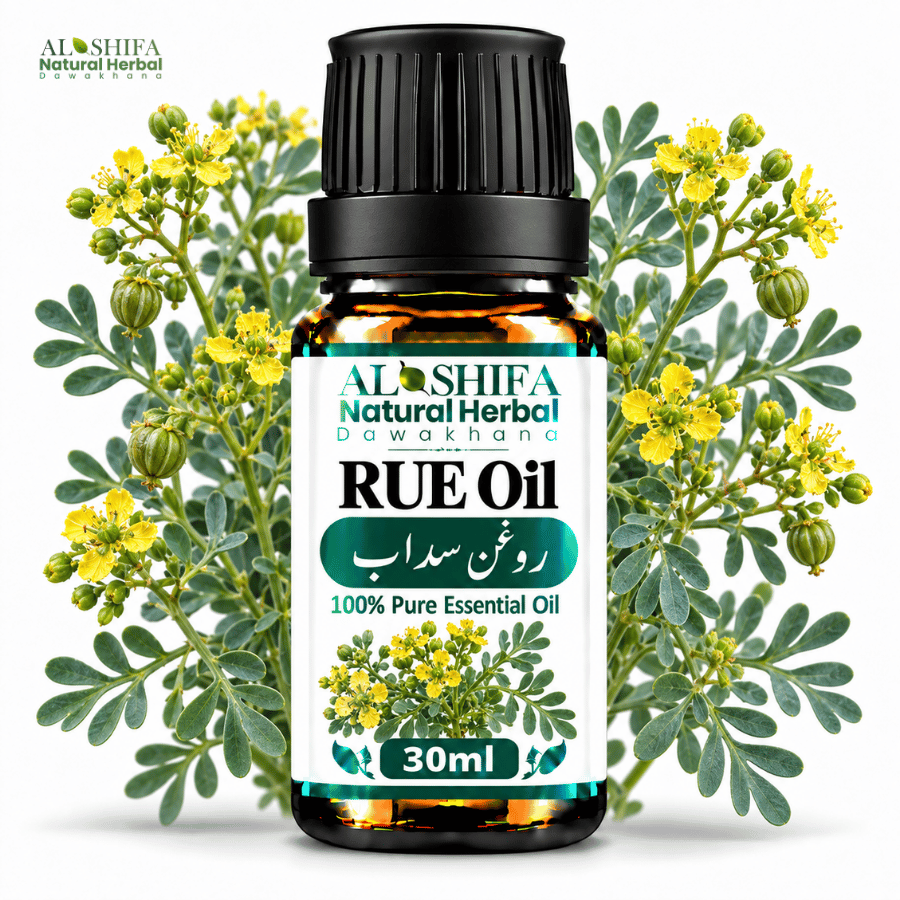
Rue Essential Oil / Roghan Sadab is a highly concentrated botanical essential oil obtained from Ruta graveolens through steam distillation or hydrodistillation. It has a strong, sharp, herbaceous, bitter-green and penetrating aroma, with naturally occurring volatile constituents such as 2-undecanone, 2-nonanone and other methyl ketones. Due to its distinctive composition and safety profile, it is best suited to specialized aromatic and professional fragrance formulations.
Al Shifa Rue Essential Oil is carefully selected for botanical identity, characteristic strong herbal aroma, freshness, quality and clean handling.
Key Features:
Usage: Use conservatively and only at an appropriate concentration in suitable formulations; avoid casual undiluted topical application.
Important Note: Rue Essential Oil requires greater safety caution than many common essential oils. Avoid use during pregnancy and casual internal use. Rue leaf and Rue seed products are not automatically identical, so the exact plant part and extraction method should be confirmed when labelling them separately.
Rue Essential Oil is a strong and highly concentrated aromatic oil associated with Ruta graveolens L., an evergreen aromatic herb belonging to the Rutaceae family. The plant is commonly known as Rue, Common Rue or Garden Rue, while Sadab / سداب is a well-known name used for the herb in South Asian and Unani herbal terminology.
Rue differs considerably from many everyday aromatherapy oils. Its volatile oil has a powerful, sharp, herbaceous, bitter-green, penetrating and distinctive aroma, and its chemical composition requires particular attention to safety. Rue Essential Oil should therefore be handled conservatively and is not suitable for casual or unrestricted home use.
Al Shifa Rue Essential Oil is selected with attention to botanical identity, characteristic aroma, freshness, quality and clean handling.
Rue Essential Oil is the concentrated volatile aromatic fraction obtained from Ruta graveolens plant material through distillation.
Common names associated with the plant include:
However, the terms Barg Sadab and Tukhm Sadab require an important distinction because they describe different plant parts.
In herbal terminology:
Sadab / سداب: Rue plant or herb
Barg Sadab / برگِ سداب: Rue leaves
Tukhm Sadab / تخم سداب: Rue seeds/fruits
Therefore, Roghan Barg Sadab and Roghan Tukhm Sadab should not automatically be treated as exact synonyms for the same essential oil.
If your supplied oil is specifically distilled from the leaves and aerial parts, the label should identify it accordingly.
If it is specifically produced from seeds/fruits, that plant part should also be stated separately.
For a commercial product labelled simply Rue Essential Oil, the supplier’s specification or certificate should be checked to confirm the exact plant part used.
Product Name: Rue Essential Oil
English Name: Rue Essential Oil / Common Rue Oil
Urdu Name: روغن سداب
Roman Name: Roghan Sadab
Scientific Name: Ruta graveolens L.
Plant Family: Rutaceae
Plant Part: Leaves / Flowering Aerial Parts; exact commercial material should be confirmed
Oil Type: Volatile Botanical Essential Oil
Extraction Method: Steam Distillation / Hydrodistillation
Common Forms/Names: Rue Oil, Common Rue Oil, Garden Rue Oil, Ruta graveolens Oil
Appearance: Pale Yellow to Yellowish; natural variation may occur
Aroma: Strong, Sharp, Herbaceous, Bitter-Green, Penetrating and Distinctive
Primary Applications: Specialized Perfumery, Botanical Fragrance Formulations and Controlled Professional Formulation
Product Type: Concentrated Botanical Essential Oil
Ruta graveolens is an aromatic perennial herb or small shrub with strongly scented foliage.
The plant belongs to the Rutaceae family, the same broad botanical family that includes citrus plants, although Rue itself has a very different appearance, aroma and chemical profile.
Its leaves have a characteristic strong scent when crushed. The plant also develops yellow flowers followed by seed-containing fruits.
Barg Sadab / برگِ سداب specifically means the leaves of the Rue plant.
The leaves and flowering aerial portions contain volatile aromatic compounds and can serve as material for essential-oil distillation.
When an oil is specifically distilled from this material, a more precise description is:
Rue Leaf Essential Oil / Roghan Barg Sadab
This is more accurate than treating every Rue-derived oil as a seed oil.
Tukhm Sadab / تخم سداب refers to the seeds of Rue.
Seeds are a distinct plant part and should not automatically be equated with leaf or aerial-part essential oil.
If a commercial product is sold specifically as Roghan Tukhm Sadab, its extraction method should be established. The name “oil” alone does not confirm whether it is a distilled volatile oil, an infused preparation or another type of botanical extract.
Rue Essential Oil can be obtained through distillation of suitable Ruta graveolens plant material.
Steam or hydrodistillation releases volatile aromatic molecules from the plant tissues. These vapours are condensed, allowing the volatile oil to separate from the aromatic water.
The finished oil is highly concentrated and should not be treated like an ordinary herbal oil or carrier oil.
Rue Essential Oil has an unusually strong botanical fragrance.
Its aroma can be described as:
Its powerful aroma means only small quantities are generally relevant in specialized aromatic formulations.
Rue Essential Oil can contain a distinctive mixture of volatile compounds, with the precise profile varying according to plant part, geographic origin, harvest and distillation.
The oil is particularly associated with aliphatic ketones, including compounds such as:
The exact chemical profile should be established through batch-specific analysis where composition is important.
2-Undecanone is one of the characteristic volatile compounds associated with Ruta graveolens oil.
It contributes significantly to Rue’s distinctive and penetrating aromatic character.
Its presence also illustrates why Rue Essential Oil should not be approached in the same way as mild everyday aromatic oils.
Rue has a powerful green and herbaceous character that can be of interest in specialized fragrance formulation.
When appropriate under professional formulation standards, its aroma can contribute to:
Because Rue is a strong oil with important safety considerations, its use in fragrance products requires careful formulation rather than casual addition.
Rue itself has a long history in different herbal traditions.
However, a critical distinction must be maintained between:
A historical use of the herb does not automatically establish the same use, concentration or safety for its essential oil.
Research involving Ruta graveolens may examine:
These materials are chemically different.
Findings involving a plant extract or isolated constituent should therefore not automatically be presented as therapeutic benefits of Rue Essential Oil.
Rue can appear commercially in several forms.
Rue Essential Oil: Concentrated volatile fraction produced by distillation.
Rue Leaf Oil: May specifically indicate volatile oil distilled from leaves/aerial material, but the supplier method should be checked.
Rue Seed Oil / Roghan Tukhm Sadab: Requires extraction-method confirmation and should not automatically be classified as the same product as leaf essential oil.
Rue Infused Oil: Produced by infusing plant material in a carrier oil.
Rue Extract: Produced using a suitable extraction medium and chemically different from essential oil.
Rue Fragrance Oil: A formulated aromatic product that may not contain naturally distilled Rue Essential Oil.
Essential oil is a highly concentrated volatile material.
It should not be used in the same quantities as fixed carrier oils such as Jojoba, Almond or Sesame Oil.
The word “Roghan” can refer broadly to oils in Urdu and herbal commerce, so the extraction method should always be considered when identifying a product.
Rue must also be distinguished from Syrian Rue.
Common Rue: Ruta graveolens — Rutaceae
Syrian Rue / Harmal: Peganum harmala — Nitrariaceae
These are completely different botanical plants.
Therefore:
Rue Essential Oil ≠ Harmal / Syrian Rue Oil
Both plants belong to the Rutaceae family, but they are entirely different botanically.
Rue: Ruta graveolens
Curry Leaf: Murraya koenigii
Their leaves, aromas and volatile oils should not be treated as interchangeable.
Rue Essential Oil requires more caution than many common essential oils.
It is not an appropriate choice for casual undiluted skin application or unrestricted household use. The oil’s composition and safety profile require careful attention to concentration, exposure and intended application.
Professional formulation guidance is preferable where Rue Essential Oil is being incorporated into a finished product.
Rue is particularly important from a skin-safety perspective.
Rue plant material contains furanocoumarin-type compounds associated with photosensitizing reactions, and Rue-derived products should therefore be handled conservatively where skin and sunlight exposure are involved.
Do not assume that ordinary dilution guidance for Lavender, Tea Tree or other common oils can automatically be applied to Rue.
Avoid casual application before exposure to strong sunlight or ultraviolet light, and follow reliable product-specific safety specifications.
Rue Essential Oil should be avoided during pregnancy.
Rue has a significant historical and toxicological safety context, making casual use during pregnancy inappropriate.
Breastfeeding use should likewise be avoided unless specifically assessed by an appropriately qualified healthcare professional familiar with the exact product.
Rue Essential Oil is not recommended for casual use with infants or young children.
Keep the concentrated oil securely stored and out of children’s reach.
Do not casually ingest Rue Essential Oil.
The fact that Rue has appeared historically in herbal practice does not make concentrated essential oil safe for self-directed internal consumption.
Aromatherapy or cosmetic-grade Rue Essential Oil should not be treated as a food oil.
Al Shifa Natural Herbal selects Rue Essential Oil with attention to:
For Perfumery: Use only at an appropriate concentration within professionally formulated fragrance products.
For Aromatic Formulations: Use conservatively and according to reliable product-specific safety guidance.
For Topical Products: Do not use casually. Any topical formulation should account for Rue’s specific skin-safety and photosensitivity considerations.
For Internal Use: Not recommended for self-directed consumption.
Rue Essential Oil refers to the concentrated volatile oil of Ruta graveolens and requires greater safety caution than many commonly used essential oils.
Barg Sadab (Rue leaves) and Tukhm Sadab (Rue seeds) are different plant parts and should not automatically be treated as identical oil products. The exact plant part and extraction method should be confirmed from the supplier before labelling an oil as Roghan Barg Sadab or Roghan Tukhm Sadab.
It must also not be confused with Syrian Rue / Harmal (Peganum harmala).
Store Rue Essential Oil in a tightly closed dark glass bottle in a cool, dry place away from direct sunlight and excessive heat.
Keep securely away from children and minimize unnecessary exposure to air and light.
Al Shifa Natural Herbal offers Rue Essential Oil / Roghan Sadab / روغن سداب for customers seeking a correctly identified Ruta graveolens botanical oil for specialized aromatic and fragrance applications.
Customers searching for Rue Essential Oil in Pakistan, Roghan Sadab, Ruta graveolens Oil, Rue Oil price in Pakistan, Roghan Sadab in Lahore or buy Rue Essential Oil online in Pakistan should pay particular attention to the product’s botanical identity, plant part and extraction method. Roghan Barg Sadab and Roghan Tukhm Sadab should only be used as exact product names when the corresponding leaf or seed material is confirmed.
Product Name: Rue Essential Oil
English Name: Rue Essential Oil / Common Rue Oil
Urdu Name: روغن سداب
Roman Name: Roghan Sadab
Scientific Name: Ruta graveolens L.
Plant Family: Rutaceae
Plant Part: Leaves / Flowering Aerial Parts; confirm exact commercial material
Extraction Method: Steam Distillation / Hydrodistillation
Oil Type: Concentrated Volatile Botanical Essential Oil
Appearance: Pale Yellow to Yellowish
Aroma: Strong, Sharp, Herbaceous, Bitter-Green and Penetrating
Primary Applications: Specialized Perfumery and Controlled Botanical Fragrance Formulation
Important Note: روغن برگِ سداب and روغن تخم سداب should not automatically be listed as synonyms for the same Rue Essential Oil. Leaves and seeds are different plant parts, and the supplier’s extraction method should be confirmed before using either name on the product label.
روغن سداب سداب نامی تیز خوشبو والی جڑی بوٹی سے حاصل ہونے والا طاقتور خوشبودار روغن ہے۔ سداب کے پتے، نرم شاخیں اور بعض صورتوں میں پھول دار بالائی حصے کشید کے لیے استعمال ہوتے ہیں۔ اس جڑی بوٹی کا سائنسی نام روٹا گریویولینس ہے اور اس کا تعلق روٹیسی خاندان سے ہے۔
سداب پاکستان اور برصغیر کی حکمت میں پرانی اور معروف جڑی بوٹی ہے۔ اس کے پتے اور بیج حکیمی ادویات میں الگ الگ طریقوں سے استعمال ہوتے ہیں۔ خالص روغن سداب جڑی بوٹی یا بیج کے مقابلے میں بہت زیادہ طاقتور ہوتا ہے، اس لیے اس کے استعمال میں خاص احتیاط ضروری ہے۔
روغن سداب کی خوشبو بہت تیز، سبز، جڑی بوٹی جیسی، تلخ، قدرے تیز مصالحہ دار اور مخصوص ہوتی ہے۔ اسے خوشبو، صابن اور محدود بیرونی آمیزوں میں بہت کم مقدار میں استعمال کیا جاتا ہے۔
اردو نام: روغن سداب، روغن برگ سداب، روغن تخم سداب
پنجابی نام: سداب دا تیل، برگ سداب دا تیل، تخم سداب دا تیل
ہندی نام: سداب تیل، ستاپ تیل
فارسی نام: روغن سداب، روغن برگ سداب
عربی نام: دھن السذاب، زیت السذاب
انگریزی نام: رو ایسینشل آئل، رو آئل، گارڈن رو آئل
سائنسی نام: روٹا گریویولینس
خاندان: روٹیسی
استعمال ہونے والا حصہ: پتے، نرم شاخیں اور پھول دار بالائی حصے
روغن حاصل کرنے کا طریقہ: بھاپ کے ذریعے کشید
سداب ایک چھوٹی، شاخ دار اور تیز خوشبو رکھنے والی جڑی بوٹی ہے۔
اس کے پتے سبز سے نیلگوں سبز، چھوٹے اور کئی حصوں میں تقسیم ہوتے ہیں۔
پودے پر چھوٹے زرد رنگ کے پھول آتے ہیں۔
اس کے پتے ہاتھ سے مسلنے پر بہت تیز اور مخصوص خوشبو دیتے ہیں۔
سداب کے پتے، بیج اور دوسرے حصے حکمت میں الگ الگ استعمال ہوتے ہیں، جبکہ اس کا کشید شدہ خالص روغن زیادہ طاقتور ہوتا ہے۔
سداب کی اہم پہچان:
ہے۔
صحیح سداب کے لیے روٹا گریویولینس کی درست پہچان اہم ہے۔
سداب کے پتوں، نرم شاخوں اور پھول دار بالائی حصوں کو جمع کیا جاتا ہے۔
انہیں صاف کرنے کے بعد بھاپ کے ذریعے کشید کیا جاتا ہے۔
بھاپ جڑی بوٹی میں موجود اڑنے والے خوشبودار اجزا کو اپنے ساتھ لے جاتی ہے۔
ٹھنڈا ہونے کے بعد روغن پانی سے الگ ہو جاتا ہے۔
حاصل ہونے والا روغن بہت تیز اور طاقتور ہوتا ہے، اس لیے اس کی مقدار ہمیشہ محدود رکھی جاتی ہے۔
برگ سداب سے مراد سداب کے پتے ہیں جبکہ تخم سداب سے مراد اس کے بیج ہیں۔
دونوں ایک ہی پودے سے حاصل ہوتے ہیں لیکن پودے کے الگ حصے ہیں۔
روغن سداب کے نام سے فروخت ہونے والا کشید شدہ خوشبودار روغن عموما پودے کے سبز بالائی حصوں، پتوں اور نرم شاخوں سے حاصل کیا جاتا ہے۔
اگر کوئی روغن خاص طور پر بیجوں سے حاصل کیا گیا ہو تو اسے روغن تخم سداب کہنا زیادہ واضح ہے۔
اس لیے روغن برگ سداب اور روغن تخم سداب کی پہچان کے لیے استعمال ہونے والا حصہ ضرور معلوم ہونا چاہیے۔
روغن سداب کی رنگت:
ہو سکتی ہے۔
رنگت جڑی بوٹی کی حالت، استعمال ہونے والے حصے، فصل اور کشید کے طریقے کے مطابق الگ رہتی ہے۔
روغن سداب کی خوشبو:
ہوتی ہے۔
اس کی تیز مہک کی وجہ سے خوشبودار آمیزوں میں اس کی بہت کم مقدار کافی ہوتی ہے۔
پاکستان اور برصغیر میں رائج حکمت کی کتب مفردات میں سداب کو گرم اور خشک مزاج کی جڑی بوٹی بیان کیا جاتا ہے۔
سداب اپنی تیز طبیعت اور طاقتور اثرات کی وجہ سے حکیمی ادویات میں کم اور مقرر مقدار میں استعمال ہوتا ہے۔
اس کے پتے اور بیج حکمت میں استعمال ہوتے ہیں، لیکن خالص کشید شدہ روغن زیادہ طاقتور ہوتا ہے اور اسے جڑی بوٹی کی عام مقدار کے برابر استعمال نہیں کیا جاتا۔
پاکستان اور برصغیر کی حکمت میں سداب کو مختلف حکیمی ادویات میں استعمال کیا جاتا ہے۔
اس کا استعمال خاص طور پر:
میں بیان کیا جاتا ہے۔
یہ فائدے سداب کی جڑی بوٹی، پتے یا بیج کے حکیمی استعمال سے وابستہ ہیں۔ خالص روغن سداب بہت طاقتور ہوتا ہے اور اسے خود سے اندرونی طور پر استعمال نہیں کرنا چاہیے۔
روغن سداب میں اہم قدرتی اجزا میں:
شامل ہوتے ہیں۔
ان اجزا کی مقدار جڑی بوٹی کی قسم، علاقے، فصل، استعمال ہونے والے حصے اور کشید کے طریقے کے مطابق الگ رہتی ہے۔
ٹو انڈیکینون روغن سداب کے نمایاں قدرتی اجزا میں شامل ہے۔
یہ روغن کی بہت تیز اور مخصوص خوشبو میں اہم حصہ رکھتا ہے۔
اسی قسم کے طاقتور اجزا کی وجہ سے روغن سداب کو بہت کم مقدار میں استعمال کیا جاتا ہے۔
روغن سداب کا استعمال محدود مقدار میں:
میں کیا جاتا ہے۔
خالص روغن سداب عام روزمرہ جلدی روغن کی طرح استعمال نہیں کرنا چاہیے۔
روغن سداب کو جسمانی مالش کے بعض روغنوں میں بہت کم مقدار میں شامل کیا جاتا ہے۔
اسے بنیادی روغن کے بغیر براہ راست جلد پر استعمال نہ کریں۔
روغن بادام، جوجوبا، تل یا کسی دوسرے بنیادی روغن میں بہت کم مقدار میں ملا کر استعمال کیا جاتا ہے۔
اس کے طاقتور اجزا کی وجہ سے بار بار یا زیادہ مقدار میں جلد پر استعمال سے بچیں۔
سداب حکمت میں جسمانی اور پٹھوں کی مالش کے لیے تیار بعض روغنوں میں استعمال ہوتا ہے۔
خالص کشید شدہ روغن سداب بہت طاقتور ہوتا ہے، اس لیے اسے بنیادی روغن میں بہت کم مقدار میں شامل کیا جاتا ہے۔
مسلسل درد یا پٹھوں کے امراض میں معالج سے پوچھ کر استعمال کریں۔
سداب کو برصغیر میں جوڑوں اور جسمانی مالش کے بعض حکیمی روغنوں میں شامل کیا جاتا ہے۔
خالص روغن سداب اور سداب سے تیار کیا گیا عام حکیمی روغن ایک چیز نہیں ہیں۔
خالص کشید شدہ روغن کو براہ راست جوڑوں پر زیادہ مقدار میں نہ لگائیں۔
روغن سداب کو صابن میں اس کی تیز اور مخصوص جڑی بوٹی جیسی خوشبو کے لیے بہت کم مقدار میں استعمال کیا جاتا ہے۔
اس کی خوشبو طاقتور ہوتی ہے، اس لیے معمولی مقدار بھی آمیزے میں نمایاں رہتی ہے۔
روغن سداب کی تیز سبز، تلخ اور جڑی بوٹی جیسی مہک اسے مخصوص خوشبو کے آمیزوں میں استعمال کے قابل بناتی ہے۔
اسے بہت کم مقدار میں دوسرے خوشبودار روغنوں کے ساتھ ملایا جاتا ہے۔
خوشبودار آمیزوں میں روغن سداب کو کم مقدار میں:
کے ساتھ ملایا جا سکتا ہے۔
سداب کی خوشبو بہت تیز ہوتی ہے، اس لیے آمیزے میں اس کی مقدار محدود رکھی جاتی ہے۔
سداب اور اسپند دو الگ جڑی بوٹیاں ہیں۔
سداب کا سائنسی نام روٹا گریویولینس ہے اور اس کا تعلق روٹیسی خاندان سے ہے۔
اسپند ایک دوسری جڑی بوٹی ہے جس کے بیج پاکستان میں حرمل کے نام سے بھی مشہور ہیں۔
ناموں کی مقامی مماثلت کی وجہ سے دونوں کو ایک دوسرے کے ساتھ نہیں ملانا چاہیے۔
روغن سداب عام خوشبودار روغنوں کے مقابلے میں زیادہ احتیاط سے استعمال کیا جاتا ہے۔
اس کے کچھ قدرتی اجزا جلد کو تیز دھوپ کے لیے زیادہ حساس بنا سکتے ہیں۔
اس لیے جلد پر لگانے کے بعد اس حصے کو تیز دھوپ اور بالائے بنفشی روشنی سے محفوظ رکھنا ضروری ہے۔
زیادہ مقدار جلد پر جلن اور سرخی پیدا کر سکتی ہے۔
روغن سداب کو خالص حالت میں براہ راست جلد پر استعمال نہ کریں۔
اسے بنیادی روغن میں بہت کم مقدار میں اچھی طرح ملا کر استعمال کریں۔
پہلی بار استعمال سے پہلے جلد کے چھوٹے حصے پر آزمائیں۔
استعمال کے بعد جلد کو تیز دھوپ سے محفوظ رکھیں۔
حساس جلد پر روغن سداب کا استعمال خاص احتیاط چاہتا ہے۔
سرخی، جلن، خارش یا سوجن ہونے پر فوراً استعمال بند کریں۔
جلد کے امراض میں طبی استعمال معالج سے پوچھ کر کریں۔
روغن سداب کے بعض قدرتی اجزا جلد پر لگنے کے بعد تیز دھوپ کے ساتھ ردعمل پیدا کر سکتے ہیں۔
جلد پر اس روغن والا آمیزہ استعمال کرنے کے بعد اس حصے کو براہ راست تیز دھوپ اور بالائے بنفشی روشنی سے محفوظ رکھیں۔
یہ احتیاط خاص طور پر خالص یا زیادہ مقدار والے آمیزوں میں ضروری ہے۔
خالص روغن سداب خود سے ہرگز نہ پئیں۔
سداب کی جڑی بوٹی یا بیج کا حکیمی استعمال اور اس کا خالص کشید شدہ روغن ایک جیسی چیزیں نہیں ہیں۔
خالص روغن کی زیادہ مقدار نقصان دہ اور زہریلی ثابت ہو سکتی ہے۔
کسی طبی مقصد کے لیے اندرونی استعمال صرف ماہر معالج کی نگرانی میں ہونا چاہیے۔
حمل کے دوران روغن سداب استعمال نہ کریں۔
سداب کی جڑی بوٹی اور اس کا خالص روغن حمل کے دوران خاص حفاظتی اہمیت رکھتے ہیں اور خود سے استعمال نہیں کیے جانے چاہئیں۔
حاملہ خواتین اسے اندرونی استعمال، جسمانی مالش یا دوسرے طبی استعمال کے لیے خود سے استعمال نہ کریں۔
دودھ پلانے کے دوران روغن سداب کا طبی استعمال معالج سے پوچھ کر کریں۔
ایسی جگہ نہ لگائیں جہاں سے روغن بچے کی جلد یا منہ تک پہنچ سکے۔
بچوں پر خالص روغن سداب استعمال نہ کریں۔
بچوں کے لیے اس کا طبی استعمال خود سے نہ کریں۔
اسے بچوں کی پہنچ سے مکمل طور پر دور رکھیں۔
روغن سداب روٹا گریویولینس کے پتوں، نرم شاخوں اور پھول دار بالائی حصوں سے حاصل ہونے والا طاقتور خوشبودار روغن ہے۔
اس میں ٹو انڈیکینون، ٹو نونینون اور دوسرے میتھائل کیٹون اجزا نمایاں ہوتے ہیں۔
اس روغن کا استعمال خوشبو، صابن اور محدود بیرونی مالش کے آمیزوں میں بہت کم مقدار میں کیا جاتا ہے۔
یہ عام نرم خوشبودار روغن نہیں ہے۔ خالص روغن جلد پر جلن پیدا کر سکتا ہے اور جلد کو تیز دھوپ کے لیے حساس بنا سکتا ہے۔
حمل کے دوران اسے استعمال نہ کریں اور خالص روغن کو خود سے اندرونی طور پر استعمال نہ کریں۔
الشفاء نیچرل ہربل دواخانہ میں روغن سداب کے لیے درج ذیل باتوں کو اہمیت دی جاتی ہے:
صحیح سداب: روٹا گریویولینس کی درست پہچان کو اہمیت دی جاتی ہے۔
اچھی جڑی بوٹی: صاف، اچھی حالت اور مخصوص قدرتی خوشبو رکھنے والے سداب کو اہمیت دی جاتی ہے۔
صحیح حصہ: پتوں، نرم شاخوں اور خوشبودار بالائی حصوں کی پہچان اہم ہے۔
قدرتی خوشبو: تیز، سبز، جڑی بوٹی جیسی اور مخصوص قدرتی مہک کو دیکھا جاتا ہے۔
صحیح کشید: بھاپ کے ذریعے حاصل ہونے والے خالص خوشبودار روغن کو اہمیت دی جاتی ہے۔
قدرتی اجزا: روغن میں پائے جانے والے قدرتی میتھائل کیٹون اجزا اس کی اہم پہچان ہیں۔
صاف روغن: پانی، گرد اور غیر ضروری ذرات سے پاک روغن کو اہمیت دی جاتی ہے۔
تازگی: باسی یا خراب بو والے روغن سے بچا جاتا ہے۔
غیر ضروری ملاوٹ سے پاک: مصنوعی خوشبو، غیر ضروری رنگ اور کم معیار کے دوسرے روغنوں کی ملاوٹ سے پاک ہونے کو اہمیت دی جاتی ہے۔
الشفاء نیچرل ہربل دواخانہ سنہ ۱۹۹۹ سے قدرتی جڑی بوٹیوں، پتوں، بیجوں اور ان سے حاصل ہونے والے روغنوں کی سپلائی کر رہا ہے۔
ہم روغن سداب میں صحیح روٹا گریویولینس، جڑی بوٹی کے درست حصے، مخصوص قدرتی خوشبو، صاف حالت، تازگی اور غیر ضروری ملاوٹ سے پاک ہونے کو اہمیت دیتے ہیں۔
اچھے روغن سداب کی پہچان صحیح پودے، درست سائنسی نام، مخصوص تیز خوشبو، صاف حالت اور درست کشید سے کی جاتی ہے۔
روغن سداب کو ٹھنڈی، خشک اور روشنی سے محفوظ جگہ پر کسی جار میں اچھی طرح پیک کر کے رکھیں۔
تیز دھوپ اور زیادہ گرمی سے دور رکھیں۔
استعمال کے بعد ڈھکن اچھی طرح بند کریں۔
پانی اور نمی سے محفوظ رکھیں۔
بچوں کی پہنچ سے مکمل طور پر دور رکھیں۔
روغن سداب طاقتور خوشبودار روغن ہے۔
اسے خالص حالت میں براہ راست جلد پر استعمال نہ کریں۔
جلد پر استعمال کے لیے بہت کم مقدار میں بنیادی روغن کے ساتھ ملائیں۔
استعمال کے بعد جلد کو تیز دھوپ سے محفوظ رکھیں۔
آنکھوں، ہونٹوں، ناک، منہ اور کھلے زخموں سے دور رکھیں۔
خالص روغن خود سے نہ پئیں۔
حمل کے دوران استعمال نہ کریں۔
بچوں پر خود سے استعمال نہ کریں۔
زیادہ مقدار میں استعمال نقصان دہ ہو سکتا ہے۔
روغن سداب روٹا گریویولینس نامی تیز خوشبو والی جڑی بوٹی سے حاصل ہونے والا طاقتور خوشبودار روغن ہے۔
اس کی خاص پہچان تیز، سبز، تلخ، جڑی بوٹی جیسی اور قدرے مصالحہ دار خوشبو ہے۔
روغن برگ سداب، روغن تخم سداب اور عام روغن سداب کے نام استعمال کرتے وقت یہ واضح ہونا چاہیے کہ روغن پودے کے کس حصے سے حاصل کیا گیا ہے۔
اس میں ٹو انڈیکینون، ٹو نونینون اور دوسرے میتھائل کیٹون اجزا پائے جاتے ہیں۔
یہ خوشبودار آمیزوں، صابن سازی اور محدود جسمانی مالش کے آمیزوں میں بہت کم مقدار میں استعمال ہوتا ہے۔
اس روغن کے ساتھ خاص احتیاط ضروری ہے کیونکہ خالص روغن جلد پر جلن پیدا کر سکتا ہے، دھوپ کے لیے جلد کی حساسیت بڑھا سکتا ہے اور زیادہ مقدار میں نقصان دہ ہو سکتا ہے۔
حمل کے دوران اس کا استعمال نہ کریں اور خالص روغن کو خود سے اندرونی طور پر استعمال نہ کریں۔