روغن امر بیل
₨ 1,000
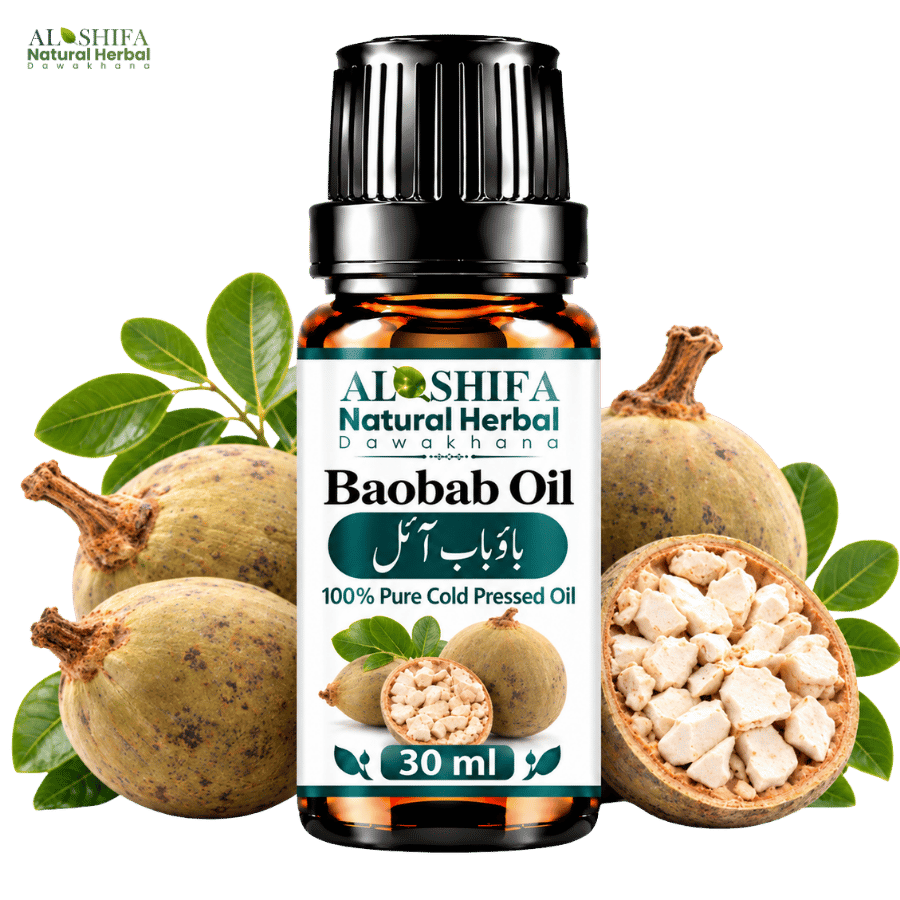
Baobab Oil / Roghan Baobab is a natural fixed vegetable oil obtained from the seeds of Adansonia digitata. Naturally containing oleic acid, linoleic acid, palmitic acid, tocopherols and phytosterols, it is valued for its rich emollient properties and use in dry skin care, hair and scalp conditioning, massage and cosmetic formulations.
Al Shifa Baobab Oil is carefully selected with attention to its correct botanical identity, quality seeds, natural fatty-acid profile, freshness, clean handling and protective packaging.
Key Features:
Usage: Apply a small amount to the skin, hair or scalp, use for massage, or blend with compatible carrier oils and cosmetic formulations.
Important Note: Baobab Oil is a fixed seed oil, not Baobab fruit pulp, concentrated extract or essential oil. Its skin and hair benefits are primarily cosmetic and conditioning in nature and should not be considered treatment for skin disease, hair loss, wrinkles or stretch marks.
Baobab Oil / Roghan Baobab – روغن باؤباب is a natural fixed vegetable oil obtained from the seeds of Adansonia digitata L., the African Baobab tree belonging to the Malvaceae family. Baobab Oil is valued for its rich emollient character, smooth texture and natural fatty-acid profile, making it particularly suitable for skin care, dry skin, hair and scalp conditioning, massage and cosmetic formulations.
The oil naturally contains a mixture of oleic acid, linoleic acid, palmitic acid and other fatty acids, along with smaller amounts of naturally occurring tocopherols and phytosterols. This composition gives Baobab Oil useful conditioning and lubricating properties for both skin and hair.
Depending on extraction and refining, Baobab Oil may range from pale yellow to golden yellow and usually has a mild, characteristic nutty or seed-like aroma. Cold-pressed oil generally retains more of its natural colour and characteristic minor constituents.
At Al Shifa Natural Herbal Dawakhana, Baobab Oil is selected with attention to its correct botanical identity, quality seeds, natural fatty-acid profile, freshness, clean handling, protective packaging and proper storage.
Baobab Oil is a natural fixed oil extracted from the seeds contained inside the fruit of the Baobab tree.
The oil is widely used as an ingredient in:
It functions primarily as an emollient and conditioning oil.
Product Name: Baobab Oil / Roghan Baobab – روغن باؤباب
English Name: Baobab Oil / Baobab Seed Oil
Urdu Name: روغن باؤباب / باؤباب کے بیج کا تیل
Roman Name: Roghan Baobab / Baobab Oil / Baobab Seed Oil
Scientific Name: Adansonia digitata L.
Plant Family: Malvaceae
Plant Part: Seeds
Oil Type: Fixed Vegetable Oil / Seed Oil / Carrier Oil
Common Forms: Cold-Pressed Baobab Oil / Mechanically Pressed Baobab Seed Oil / Refined Baobab Oil
Appearance: Pale Yellow to Golden Yellow, Depending on Processing
Aroma: Mild, Nutty to Characteristic Seed-Like Aroma
Primary Applications: Skin Care, Dry Skin Care, Hair & Scalp Care, Massage, Soap & Cosmetic Formulations
Product Type: Baobab Seed Fixed Oil
Adansonia digitata is one of the best-known Baobab species and is native to parts of Africa.
The Baobab tree is recognised by its:
The seeds contained within the fruit provide the source material for Baobab Seed Oil.
Baobab Oil is generally obtained from cleaned and dried seeds through mechanical pressing.
Common commercial forms include:
Cold-Pressed Baobab Oil – Produced with limited heat exposure and generally retains more characteristic colour, aroma and minor constituents.
Refined Baobab Oil – Further processed to produce a lighter colour and milder sensory profile.
The extraction and refining method can influence:
Baobab Oil consists mainly of triglycerides containing naturally occurring fatty acids.
It is therefore classified as a fixed vegetable oil.
It is not a conventional steam-distilled essential oil.
Therefore:
Baobab Oil ≠ Essential Oil
It can instead function as a carrier oil in suitable cosmetic and massage formulations.
Baobab Oil naturally contains several fatty acids.
Commonly reported components include:
The exact percentages vary according to seed source, growing conditions and processing.
Oleic acid is a monounsaturated fatty acid naturally present in Baobab Oil.
It contributes to:
However:
Baobab Oil ≠ Pure Oleic Acid
Linoleic acid is an essential Omega-6 fatty acid naturally present in Baobab Oil.
It contributes to the oil’s cosmetic profile and is valued in formulations designed for:
However:
Baobab Oil ≠ Pure Linoleic Acid
Baobab Oil also contains naturally occurring saturated fatty acids such as palmitic and stearic acids.
These contribute to the overall:
of the oil.
Baobab Oil can naturally contain tocopherols, compounds belonging to the Vitamin E family.
These contribute to the natural antioxidant system of the oil.
However:
Baobab Oil ≠ Vitamin E Oil
Tocopherols are only one group of minor components within the complete seed oil.
Baobab Seed Oil may also contain naturally occurring phytosterols.
These plant-derived lipid compounds contribute to the overall composition of the oil and are of interest in cosmetic formulations.
Their exact concentrations vary according to processing and seed source.
Baobab Oil is particularly valued as an emollient for skin.
It can help provide:
Its rich but spreadable texture makes it suitable for body and facial formulations.
Baobab Oil can be particularly useful in cosmetic preparations intended for dry or rough-feeling skin.
It helps form an emollient layer over the skin surface and can contribute to:
However:
Skin Conditioning ≠ Treatment for Eczema, Psoriasis or Other Skin Disease
Baobab Oil may be incorporated into facial oils and moisturising formulations.
It can be used in:
Individual skin response varies, so the finished formulation should suit the user’s skin type.
Its emollient character makes Baobab Oil suitable for body-care formulations intended for areas that commonly become dry or rough.
These can include:
The oil provides cosmetic conditioning rather than medical treatment.
Baobab Oil can be incorporated into hair-conditioning preparations.
It can contribute to:
Dry hair can become difficult to manage because of increased friction between hair fibres.
Baobab Oil can coat and lubricate the hair surface, contributing to:
Baobab Oil may be used in scalp-conditioning and massage formulations.
It provides:
However:
Scalp Conditioning ≠ Treatment for Dandruff or Scalp Disease
Baobab Oil is sometimes promoted in natural hair-care products as a hair-growth oil.
However:
Baobab Oil Should Not Be Presented as a Guaranteed Hair-Regrowth Treatment.
Its primary role is to lubricate and condition hair and scalp.
A conditioning oil can reduce friction between hair fibres.
This may help reduce:
However:
Reduced Hair Breakage ≠ Treatment for Hair Loss
Hair loss can have genetic, hormonal, nutritional and medical causes.
Baobab Oil has useful spreadability and emollient properties for massage.
It can provide:
It may be used alone when suitable or combined with other compatible carrier oils.
Because Baobab Oil is a fixed vegetable oil, it can function as a carrier for appropriately diluted essential oils.
The concentration of essential oil should be determined according to:
Baobab Oil itself should not be confused with an essential oil.
Baobab Oil can be incorporated into:
Baobab Oil may be incorporated into handcrafted and cosmetic soap formulations.
Its fatty-acid profile contributes to the characteristics of the finished soap.
The final performance depends on the complete combination of oils and formulation method.
Baobab fruit pulp and Baobab Seed Oil are completely different ingredients.
Baobab fruit pulp contains:
Baobab Seed Oil consists primarily of lipids extracted from the seeds.
Therefore:
Baobab Seed Oil ≠ Baobab Fruit Pulp
Baobab fruit pulp is well known for its Vitamin C content.
However, Vitamin C is water-soluble and should not automatically be attributed to the seed oil.
Therefore:
Baobab Seed Oil Should Not Be Marketed as a Rich Source of Vitamin C Simply Because Baobab Fruit Pulp Contains Vitamin C.
This distinction is important for accurate product information.
Baobab extracts can be prepared from:
Their composition depends on the plant part and extraction method.
Therefore:
Baobab Extract ≠ Baobab Seed Oil
Whole Baobab seeds contain:
Baobab Oil primarily represents their lipid fraction.
Therefore:
Baobab Oil ≠ Whole Baobab Seeds
Baobab Oil is a fixed vegetable seed oil.
Therefore:
Baobab Oil ≠ Essential Oil
It does not have the same concentration, volatility or application principles as conventional essential oils.
Baobab Oil and Argan Oil are both used in skin and hair care, but they come from different botanical sources.
Baobab Oil: Adansonia digitata
Argan Oil: Argania spinosa
Therefore:
Baobab Oil ≠ Argan Oil
Their fatty-acid and minor-component profiles differ.
Both are fixed carrier oils used in cosmetic formulations.
However:
Baobab Oil: Adansonia digitata
Sweet Almond Oil: Prunus dulcis
Therefore:
Baobab Oil ≠ Sweet Almond Oil
Their botanical sources and natural oil profiles are different.
Baobab Oil is rich in unsaturated fatty acids such as oleic and linoleic acids.
Coconut Oil is naturally dominated by saturated fatty acids, particularly lauric acid.
Therefore:
Baobab Oil ≠ Coconut Oil
Their textures and fatty-acid profiles are substantially different.
Baobab Oil may naturally contain tocopherols.
However:
Baobab Oil ≠ Vitamin E Oil
Naturally occurring tocopherols form only a small part of the complete seed oil.
Baobab seeds, seed oil and other parts of the plant contain natural compounds investigated for antioxidant activity.
However:
Antioxidant Activity ≠ Treatment or Prevention of Disease
Research involving extracts or isolated compounds should not automatically be applied to ordinary topical Baobab Oil.
Baobab Oil’s fatty-acid composition supports its use as a cosmetic emollient.
However, this does not establish it as a medical treatment for:
Cosmetic conditioning and medical treatment should remain clearly distinguished.
Baobab Oil is frequently marketed in anti-aging skin-care products.
Its emollient properties can make dry skin appear smoother and better conditioned.
However:
Smoother-Looking Skin ≠ Reversal of Biological Skin Aging
The oil should not be presented as permanently removing wrinkles or reversing aging.
Baobab Oil is sometimes included in body oils marketed for stretch marks.
Regular moisturising can improve skin softness and appearance.
However:
Baobab Oil Should Not Be Presented as a Guaranteed Treatment or Removal Method for Stretch Marks.
Natural seed oils can cause sensitivity in some individuals.
Before wider topical use, patch testing may be appropriate.
Discontinue use if significant:
develops.
For ordinary external cosmetic use, Baobab Oil should be used according to its intended purpose and individual tolerance.
Products containing additional essential oils or active ingredients require separate safety consideration.
Internal use should be limited to appropriately produced and labelled food-grade products.
For children, use only an appropriately formulated topical product suitable for their age.
Avoid contact with:
Keep the bottle securely out of reach of young children.
Baobab Seed Oil can be produced for cosmetic or food applications.
Therefore:
Cosmetic-Grade Baobab Oil ≠ Automatically Food-Grade Baobab Oil
Only consume oil specifically produced, labelled and supplied for food use.
Cold-pressed and refined oils can differ in:
Therefore:
Cold-Pressed Baobab Oil ≠ Refined Baobab Oil
The appropriate form depends on the intended application.
Like other natural vegetable oils containing unsaturated fatty acids, Baobab Oil can deteriorate through oxidation.
Exposure to:
can accelerate this process.
Proper storage helps preserve its characteristic quality.
At Al Shifa Natural Herbal Dawakhana, Baobab Oil is selected with attention to:
Botanical Identity – Genuine Adansonia digitata seed source.
Seed Quality – Carefully selected Baobab seeds.
Fixed-Oil Identity – Genuine vegetable seed oil rather than essential oil.
Fatty-Acid Profile – Naturally containing oleic, linoleic, palmitic and other fatty acids.
Skin-Care Applications – Suitable for emollient and conditioning formulations.
Dry-Skin Applications – Suitable for rich moisturising oil blends.
Hair-Care Applications – Suitable for hair-conditioning formulations.
Scalp-Care Applications – Suitable for scalp-conditioning preparations.
Massage Applications – Suitable for compatible massage-oil blends.
Cosmetic Applications – Suitable for creams, lotions, balms, soaps and oil-based cosmetics.
Identity Awareness – Clear distinction from Baobab fruit pulp and extracts.
Freshness Awareness – Attention to oxidation and appropriate storage.
Clean Handling – Carefully handled during packing.
Protective Packaging – Helps maintain oil quality.
Responsible Claims – No exaggerated anti-aging, hair-growth, stretch-mark or disease-treatment claims.
Al Shifa Natural Herbal Dawakhana, established in 1999, supplies natural oils, herbs and botanical materials throughout Pakistan.
Our focus for Baobab Oil includes:
For Skin Care: Apply a small amount to clean skin and massage gently until evenly distributed.
For Dry Skin: Apply to dry-feeling areas such as hands, elbows, knees, heels or other suitable areas.
For Facial Care: Use a small amount alone when suitable or incorporate into a compatible facial oil or moisturising formulation.
For Hair Care: Apply an appropriate amount to the hair before washing or use in compatible conditioning oil blends.
For Dry Hair: Apply a small amount to the lengths and ends or use as a pre-wash conditioning treatment.
For Scalp Care: Massage a suitable amount gently into the scalp.
For Massage: Use alone when suitable or blend with compatible carrier oils.
As a Carrier Oil: Use as a base for appropriately diluted essential oils according to formulation requirements.
For Soap & Cosmetics: Incorporate according to the requirements of the finished formulation.
Baobab Oil / Roghan Baobab – روغن باؤباب is a natural fixed vegetable oil obtained from the seeds of Adansonia digitata L. It should be distinguished from Baobab fruit pulp, whole seeds, concentrated extracts and conventional essential oils.
Important distinctions include:
For best quality:
Baobab Oil / Roghan Baobab – روغن باؤباب is a natural fixed vegetable oil obtained from the seeds of Adansonia digitata L. It is valued for its rich emollient character and natural fatty-acid profile containing oleic acid, linoleic acid, palmitic acid and other naturally occurring fatty acids.
Baobab Oil is particularly suitable for dry skin care, facial and body oils, hair conditioning, dry and rough hair, scalp care, massage, soaps, creams, lotions, balms and specialised cosmetic formulations.
Unlike Baobab fruit pulp, which is known for water-soluble nutritional constituents including Vitamin C, Baobab Seed Oil primarily represents the seed’s natural lipid fraction. It should therefore be identified and marketed according to its own composition.
Customers searching for Baobab Oil, Baobab Seed Oil, Roghan Baobab, Adansonia Digitata Oil, Pure Baobab Oil, Natural Baobab Oil, Cold Pressed Baobab Oil, Baobab Carrier Oil, Baobab Oil for Skin, Baobab Oil for Dry Skin, Baobab Oil for Face, Baobab Oil for Hair, Baobab Oil for Scalp, Baobab Oil for Massage, Baobab Oil Pakistan, Roghan Baobab Pakistan, Baobab Oil Lahore, Baobab Oil price in Pakistan, Roghan Baobab price, buy Baobab Oil Pakistan or Baobab Oil online Pakistan can choose Al Shifa Natural Herbal Dawakhana for carefully selected quality.
Since 1999, Al Shifa Natural Herbal Dawakhana has focused on supplying natural oils and botanical materials with attention to correct identity, quality selection, clean handling, freshness, responsible product information, protective packaging and proper storage.
Product Name: Baobab Oil / Roghan Baobab – روغن باؤباب
English Name: Baobab Oil / Baobab Seed Oil
Urdu Name: روغن باؤباب / باؤباب کے بیج کا تیل
Roman Name: Roghan Baobab / Baobab Oil / Baobab Seed Oil
Scientific Name: Adansonia digitata L.
Plant Family: Malvaceae
Plant Part: Seeds
Oil Type: Fixed Vegetable Oil / Seed Oil / Carrier Oil
Common Forms: Cold-Pressed Baobab Oil / Mechanically Pressed Baobab Seed Oil / Refined Baobab Oil
Appearance: Pale Yellow to Golden Yellow, Depending on Processing
Aroma: Mild, Nutty to Characteristic Seed-Like Aroma
Primary Applications: Skin Care, Dry Skin Care, Hair & Scalp Care, Massage, Soap & Cosmetic Formulations
Product Type: Baobab Seed Fixed Oil
Important Note: Baobab Oil is a fixed vegetable oil obtained from Adansonia digitata seeds and should not be confused with Baobab fruit pulp, concentrated Baobab extracts or essential oil. It is valued primarily for its natural fatty-acid profile and conditioning properties. Cosmetic benefits should not be interpreted as guaranteed treatment for skin disease, hair loss, wrinkles or stretch marks.
روغن باؤباب باؤباب کے پھل میں موجود صاف، خشک اور پکے ہوئے بیجوں سے حاصل ہونے والا قدرتی روغن ہے۔ باؤباب ایک بہت بڑا اور لمبی عمر والا درخت ہے جو خاص طور پر افریقہ کے گرم اور خشک علاقوں میں پایا جاتا ہے۔
اس کے بیجوں میں قدرتی چکنائی موجود ہوتی ہے جسے دبا کر روغن حاصل کیا جاتا ہے۔ روغن باؤباب اپنی نرم روغنی ساخت کی وجہ سے جلد، چہرے، بالوں، سر کی جلد، ہاتھوں، پاؤں، ناخنوں اور جسمانی مالش میں استعمال کیا جاتا ہے۔
اس میں اولیک تیزاب، لینولیک تیزاب، پالمیٹک تیزاب، سٹیئرک تیزاب، وٹامن ای اور قدرتی سٹیرولز سمیت کئی قدرتی روغنی اجزا پائے جاتے ہیں۔
اردو: باؤباب، باؤباب کا درخت، روغن باؤباب، باؤباب کے بیجوں کا تیل
پنجابی: باؤباب، باؤباب دے بیج، باؤباب دے بیجاں دا تیل
ہندی: باؤباب، باؤباب بیج، باؤباب بیج کا تیل
فارسی: بائوباب، روغن بائوباب
عربی: باوباب، تبالدی، زیت بذور الباوباب
انگریزی نام: باؤباب آئل، باؤباب سیڈ آئل، افریقن باؤباب آئل
سائنسی نام: ایڈانسونیا ڈیجیٹاٹا
خاندان: مالویسی
استعمال ہونے والا حصہ: پکے ہوئے بیج
باؤباب ایک بہت بڑا درخت ہے جس کا تنا غیر معمولی طور پر موٹا ہوتا ہے۔
اس کی موٹی شاخیں اور منفرد شکل اسے دوسرے درختوں سے آسانی سے الگ کرتی ہیں۔
باؤباب پر بڑے پھول آتے ہیں اور بعد میں سخت بیرونی چھلکے والا پھل بنتا ہے۔
پھل کے اندر خشک گودا اور سخت بیج موجود ہوتے ہیں۔
انہی بیجوں میں قدرتی چکنائی پائی جاتی ہے جس سے روغن باؤباب حاصل کیا جاتا ہے۔
اچھے باؤباب کے بیجوں میں یہ خصوصیات دیکھی جاتی ہیں:
باؤباب کے پھل سے بیج الگ کیے جاتے ہیں۔
صاف اور خشک بیجوں کو دبا کر ان میں موجود قدرتی چکنائی حاصل کی جاتی ہے۔
ٹھنڈے دباؤ سے حاصل روغن میں بیجوں کے قدرتی روغنی اجزا اچھی طرح موجود رہتے ہیں۔
روغن حاصل کرنے کے بعد بیجوں کے غیر ضروری ذرات الگ کیے جاتے ہیں۔
خالص روغن باؤباب عموما سنہری زرد سے ہلکی بھوری رنگت رکھتا ہے۔
باؤباب افریقہ کا درخت ہے اور پاکستان و برصغیر کی معروف حکیمی کتب مفردات میں روغن باؤباب کا الگ اور واضح مزاج مستند طور پر مقرر نہیں ہے۔
اس لیے روغن باؤباب کو اپنی طرف سے گرم، سرد، تر یا خشک مزاج دینا درست نہیں۔
اس کی پہچان بیجوں سے حاصل ہونے والے قدرتی روغن کے طور پر رکھی جاتی ہے۔
باؤباب افریقہ کے مشہور درختوں میں شامل ہے۔
اس کا پھل، بیج، پتے اور دوسرے حصے وہاں مختلف غذائی استعمال رکھتے ہیں۔
باؤباب کے بیجوں سے حاصل روغن اپنی قدرتی چکنائی کی وجہ سے جلد اور بالوں کی دیکھ بھال میں خاص اہمیت رکھتا ہے۔
اس کی نرم روغنی ساخت اسے چہرے، جسم، بالوں اور جسمانی مالش میں استعمال ہونے والے بنیادی روغنوں میں شامل کرتی ہے۔
روغن باؤباب کے اہم بیرونی استعمال یہ ہیں:
روغن باؤباب خشک اور کھردری جلد کی روغنی دیکھ بھال میں استعمال کیا جاتا ہے۔
اس میں موجود اولیک اور لینولیک تیزاب جلد کو نرم اور ملائم رکھنے کے لیے فائدہ مند ہیں۔
نہانے کے بعد صاف جلد پر اس کی تھوڑی مقدار لگا کر ہلکی مالش کی جاتی ہے۔
روغن باؤباب چہرے کی خشک جلد کی روغنی دیکھ بھال میں استعمال کیا جاتا ہے۔
اس کے چند قطرے صاف جلد پر لگا کر ہلکے ہاتھ سے پھیلائے جاتے ہیں۔
اسے رات کے وقت چہرے کی جلد پر کم مقدار میں استعمال کیا جاتا ہے۔
جلدی امراض میں طبی استعمال معالج سے پوچھ کر کریں۔
بہت خشک ہاتھوں، پاؤں، کہنیوں اور گھٹنوں پر روغن باؤباب استعمال کیا جاتا ہے۔
اس کی قدرتی چکنائی خشک حصوں کو نرم رکھنے کے لیے فائدہ مند ہے۔
اسے روغن بادام، روغن جوجوبا یا روغن ناریل کے ساتھ ملا کر بھی استعمال کیا جاتا ہے۔
روغن باؤباب خشک ہاتھوں اور پاؤں کی روزمرہ دیکھ بھال کے لیے استعمال کیا جاتا ہے۔
رات کے وقت تھوڑی مقدار لگا کر ہلکی مالش کی جاتی ہے۔
یہ انگلیوں، ناخنوں کے اردگرد اور خشک پاؤں کی جلد کے لیے بھی فائدہ مند ہے۔
خشک اور کھردری ایڑیوں پر روغن باؤباب کی تھوڑی مقدار لگائی جاتی ہے۔
اسے رات کے وقت لگا کر ہلکی مالش کی جاتی ہے۔
اسے روغن ناریل یا روغن بادام کے ساتھ ملا کر بھی استعمال کیا جاتا ہے۔
روغن باؤباب جسمانی مالش کے لیے اچھا بنیادی روغن ہے۔
اسے بازوؤں، ٹانگوں، کندھوں، کمر اور جسم کی خشک جلد پر لگایا جاتا ہے۔
اس کی نرم روغنی ساخت جسمانی جلد کی مالش کے لیے فائدہ مند ہے۔
جسمانی محنت یا ورزش کے بعد روغن باؤباب کو بازوؤں، کندھوں، کمر اور ٹانگوں کی مالش میں استعمال کیا جاتا ہے۔
اسے دوسرے مالش والے روغنوں کے ساتھ ملا کر بھی استعمال کیا جاتا ہے۔
روغن باؤباب کو دوسرے بنیادی روغنوں کے ساتھ ملا کر پٹھوں کے کھنچاؤ کے دوران بیرونی مالش میں استعمال کیا جاتا ہے۔
پٹھوں کے امراض یا چوٹ میں طبی استعمال معالج سے پوچھ کر کریں۔
روغن باؤباب بالوں کی روغنی دیکھ بھال میں استعمال کیا جاتا ہے۔
اسے بالوں کی لمبائی، خشک سروں اور سر کی جلد پر کم مقدار میں لگایا جاتا ہے۔
اس کی قدرتی چکنائی خشک، کھردرے اور بے رونق بالوں کو نرم اور ہموار رکھنے کے لیے فائدہ مند ہے۔
روغن باؤباب سر کی خشک جلد کی روغنی دیکھ بھال میں استعمال کیا جاتا ہے۔
اسے انگلیوں کے پوروں سے ہلکے ہاتھ سے سر کی جلد پر لگایا جاتا ہے۔
اسے روغن ناریل، روغن بادام یا روغن جوجوبا کے ساتھ ملا کر بھی استعمال کیا جاتا ہے۔
سر کی جلد کے امراض میں طبی استعمال معالج سے پوچھ کر کریں۔
خشک اور کھردرے بالوں پر روغن باؤباب کے چند قطرے لگائے جاتے ہیں۔
اسے بال دھونے سے پہلے بالوں کی لمبائی پر بھی استعمال کیا جاتا ہے۔
اس کی روغنی ساخت بالوں کو نرم، ہموار اور چمک دار دکھانے کے لیے فائدہ مند ہے۔
بالوں کے خشک سروں پر روغن باؤباب کی بہت کم مقدار لگائی جاتی ہے۔
یہ بالوں کے خشک اور کھردرے حصوں کو روغنی نرمی دینے کے لیے فائدہ مند ہے۔
بالوں کا بہت زیادہ گرنا، مسلسل پتلا ہونا یا سر پر خالی جگہیں بننا بالوں کے امراض سے جڑا مسئلہ ہے۔
ایسی صورت میں معالج سے چیک کروائیں۔
روغن باؤباب کو بالوں اور سر کی جلد کی روزمرہ روغنی دیکھ بھال کے لیے استعمال کیا جاتا ہے۔
روغن باؤباب داڑھی کی روغنی دیکھ بھال میں استعمال کیا جاتا ہے۔
اس کے چند قطرے داڑھی اور اس کے نیچے کی خشک جلد پر لگائے جاتے ہیں۔
اسے روغن جوجوبا اور روغن بادام کے ساتھ ملا کر بھی استعمال کیا جاتا ہے۔
روغن باؤباب ناخنوں اور ان کے اردگرد خشک جلد کی دیکھ بھال کے لیے استعمال کیا جاتا ہے۔
چند قطرے لگا کر ہلکی مالش کی جاتی ہے۔
اس کی قدرتی چکنائی ناخنوں کے اردگرد خشک اور کھردری جلد کو نرم رکھنے کے لیے فائدہ مند ہے۔
روغن باؤباب میں اہم قدرتی روغنی اجزا یہ ہیں:
اولیک تیزاب روغن باؤباب کے نمایاں روغنی اجزا میں شامل ہے۔
یہ اومیگا نو خاندان کی قدرتی چکنائی ہے۔
یہ جلد اور بالوں کو روغنی نرمی دینے والے کئی قدرتی روغنوں میں پایا جاتا ہے۔
لینولیک تیزاب اومیگا چھ خاندان کی قدرتی چکنائی ہے۔
یہ روغن باؤباب کی اہم قدرتی چکنائیوں میں شامل ہے۔
یہ جلد اور بالوں کی روغنی دیکھ بھال کے لیے فائدہ مند ہے۔
پالمیٹک تیزاب باؤباب کے بیجوں کی قدرتی چکنائی کا حصہ ہے۔
یہ کئی دوسرے بیجوں سے حاصل ہونے والے روغنوں میں بھی پایا جاتا ہے۔
سٹیئرک تیزاب بھی روغن باؤباب میں پایا جاتا ہے۔
یہ بیجوں کی قدرتی چکنائی کا حصہ ہے۔
روغن باؤباب میں قدرتی وٹامن ای پایا جاتا ہے۔
یہ باؤباب کے بیجوں کی قدرتی روغنی ساخت میں شامل ہے۔
باؤباب کے بیجوں کے روغن میں قدرتی سٹیرولز بھی پائے جاتے ہیں۔
یہ روغن کے قدرتی اجزا میں شامل ہیں۔
باؤباب کا پھل اور اس کے بیجوں سے حاصل روغن ایک چیز نہیں ہیں۔
پھل کے اندر خشک گودا پایا جاتا ہے جبکہ بیجوں میں قدرتی چکنائی موجود ہوتی ہے۔
روغن باؤباب بیجوں کی چکنائی سے حاصل کیا جاتا ہے۔
اسی لیے پھل کے غذائی اجزا اور بیجوں کے روغن کے اجزا کو ایک جیسا نہیں سمجھنا چاہیے۔
روغن باؤباب بیجوں کو دبا کر حاصل ہونے والی قدرتی چکنائی ہے۔
باؤباب کا جوہر پھل یا دوسرے حصوں سے تیار کیا جاتا ہے۔
دونوں کی ساخت اور استعمال الگ ہیں۔
جلد اور بالوں کے لیے استعمال ہونے والے روغن کی پہچان باؤباب کے بیجوں سے حاصل روغن کے طور پر ہونی چاہیے۔
اچھے روغن باؤباب کی رنگت عموما سنہری زرد سے ہلکی بھوری ہوتی ہے۔
ٹھنڈے دباؤ سے حاصل روغن میں بیجوں کی قدرتی رنگت زیادہ نمایاں رہتی ہے۔
بہت شوخ مصنوعی رنگ اچھے روغن کی پہچان نہیں ہے۔
خالص روغن باؤباب میں ہلکی بیجوں یا گری جیسی قدرتی خوشبو پائی جاتی ہے۔
اس کی خوشبو بہت تیز نہیں ہونی چاہیے۔
باسی، سڑی ہوئی یا خراب بو روغن کے خراب ہونے کی پہچان ہے۔
روغن باؤباب کے چند قطرے صاف جلد پر لگائیں۔
ہلکے ہاتھ سے مالش کریں۔
بہت خشک حصوں پر ضرورت کے مطابق تھوڑی زیادہ مقدار لگائیں۔
پہلی بار استعمال سے پہلے جلد کے چھوٹے حصے پر تھوڑی مقدار آزمائیں۔
روغن باؤباب کی تھوڑی مقدار سر کی جلد اور بالوں پر لگائیں۔
انگلیوں کے پوروں سے ہلکی مالش کریں۔
بالوں کی لمبائی اور خشک سروں پر چند قطرے لگائیں۔
بعد میں بال اپنے معمول کے مطابق دھو لیں۔
روغن باؤباب کو درج ذیل روغنوں کے ساتھ ملا کر استعمال کیا جاتا ہے:
ان روغنوں کے ساتھ اسے جلد، بالوں، داڑھی اور جسمانی مالش میں استعمال کیا جاتا ہے۔
حساس جلد پر پہلی بار روغن باؤباب کی تھوڑی مقدار آزمائیں۔
خارش، سرخی یا جلن پیدا ہو تو استعمال بند کریں۔
جلدی امراض میں طبی استعمال معالج سے پوچھ کر کریں۔
روغن باؤباب کے نام سے فروخت ہونے والے ہر تیل کو خوراک میں استعمال نہ کریں۔
خوراک کے لیے صرف وہ روغن استعمال کریں جس پر کھانے کے قابل ہونے کی واضح ہدایت موجود ہو۔
جلد، بالوں اور جسمانی مالش کے لیے تیار روغن کو نہ پئیں۔
کسی بیماری کے لیے روغن باؤباب کا اندرونی طبی استعمال اپنی طرف سے نہ کریں۔
اندرونی طبی استعمال معالج سے پوچھ کر کریں۔
خوراک کے لیے صرف کھانے کے درجے کا روغن استعمال کریں۔
حمل کے دوران کسی بیماری کے لیے روغن باؤباب کا اندرونی طبی استعمال اپنی طرف سے نہ کریں۔
اندرونی طبی استعمال معالج سے پوچھ کر کریں۔
بیرونی استعمال سے پہلے جلد کے چھوٹے حصے پر تھوڑی مقدار آزمائیں۔
دودھ پلانے کے دوران کسی بیماری کے لیے روغن باؤباب کا اندرونی طبی استعمال معالج سے پوچھ کر کریں۔
بیرونی روغن کو چھاتی اور بچے کے منہ سے لگنے والی جگہ پر نہ لگائیں۔
بچوں میں کسی بیماری کے لیے روغن باؤباب کا طبی استعمال اپنی طرف سے نہ کریں۔
طبی استعمال معالج سے پوچھ کر کریں۔
روغن کو بچوں کی پہنچ سے دور رکھیں۔
اچھے بیج: صاف، خشک، پکے اور اچھی حالت والے باؤباب کے بیج استعمال کیے گئے ہوں۔
قدرتی رنگت: سنہری زرد سے ہلکی بھوری قدرتی رنگت ہو۔
قدرتی خوشبو: بیجوں یا گری جیسی ہلکی اور صاف خوشبو ہو۔
صاف روغن: پانی، گرد اور غیر ضروری ذرات سے پاک ہو۔
تازگی: باسی، سڑی ہوئی یا خراب بو نہ ہو۔
اصل واضح ہو: روغن واضح طور پر باؤباب کے بیجوں سے حاصل کیا گیا ہو۔
غیر ضروری ملاوٹ سے پاک: مصنوعی رنگ، غیر ضروری مصنوعی خوشبو اور کم معیار کے دوسرے روغن کی ملاوٹ سے پاک ہو۔
روغن باؤباب باؤباب کے صاف، خشک اور پکے ہوئے بیجوں سے حاصل ہونے والا قدرتی روغن ہے۔
اس میں اولیک تیزاب، لینولیک تیزاب، پالمیٹک تیزاب، سٹیئرک تیزاب، وٹامن ای اور قدرتی سٹیرولز پائے جاتے ہیں۔
اس کا بیرونی استعمال چہرے، خشک جسمانی جلد، بالوں، سر کی جلد، ہاتھوں، پاؤں، داڑھی، ناخنوں اور جسمانی مالش میں کیا جاتا ہے۔
پاکستانی اور برصغیر کی معروف حکیمی کتب مفردات میں روغن باؤباب کا الگ مستند مزاج واضح طور پر مقرر نہیں، اس لیے اسے اپنی طرف سے گرم، سرد، تر یا خشک مزاج نہیں دیا جاتا۔
خوراک کے لیے صرف وہ روغن استعمال کریں جو واضح طور پر کھانے کے قابل ہو۔
الشفاء نیچرل ہربل دواخانہ میں روغن باؤباب کے لیے درج ذیل باتوں کو اہمیت دی جاتی ہے:
اچھے باؤباب کے بیج: صاف، خشک، پکے اور اچھی حالت والے بیجوں کو اہمیت دی جاتی ہے۔
قدرتی خوشبو: بیجوں کی اپنی ہلکی اور صاف خوشبو کو اہمیت دی جاتی ہے۔
قدرتی رنگت: سنہری زرد سے ہلکی بھوری قدرتی رنگت کو دیکھا جاتا ہے۔
صاف روغن: پانی، گرد اور غیر ضروری ذرات سے پاک روغن کو اہمیت دی جاتی ہے۔
تازگی: باسی یا خراب بو والے روغن سے بچا جاتا ہے۔
اصل کی پہچان: باؤباب کے بیجوں سے حاصل ہونے والے اصل روغن کی پہچان کو اہمیت دی جاتی ہے۔
غیر ضروری ملاوٹ سے پاک: مصنوعی رنگ، غیر ضروری مصنوعی خوشبو اور کم معیار کے دوسرے روغن کی ملاوٹ سے پاک ہونے کو اہمیت دی جاتی ہے۔
الشفاء نیچرل ہربل دواخانہ سنہ ۱۹۹۹ سے قدرتی جڑی بوٹیوں، بیجوں اور ان سے حاصل ہونے والے روغنوں کی سپلائی کر رہا ہے۔
ہم روغن باؤباب میں اچھے بیج، صاف حالت، قدرتی رنگت، قدرتی خوشبو، تازگی اور غیر ضروری ملاوٹ سے پاک ہونے کو اہمیت دیتے ہیں۔
اچھے روغن باؤباب کی پہچان صاف اور پکے بیجوں، قدرتی سنہری رنگت، ہلکی خوشبو، صاف حالت، تازگی اور اچھی پیکنگ سے کی جاتی ہے۔
روغن باؤباب کو ٹھنڈی، خشک اور روشنی سے محفوظ جگہ پر کسی جار میں اچھی طرح پیک کر کے رکھیں۔
اسے تیز دھوپ، پانی اور زیادہ گرمی سے بچائیں۔
استعمال کے بعد ڈھکن اچھی طرح بند کریں۔
اگر روغن میں باسی یا خراب بو پیدا ہو جائے تو استعمال نہ کریں۔
اسے بچوں کی پہنچ سے دور رکھیں۔
روغن باؤباب خریدتے وقت دیکھیں کہ وہ واضح طور پر باؤباب کے بیجوں سے حاصل کیا گیا ہو۔
پہلی بار جلد کے چھوٹے حصے پر تھوڑی مقدار آزمائیں۔
آنکھوں اور کھلے زخموں پر نہ لگائیں۔
خارش، سرخی یا جلن پیدا ہو تو استعمال بند کریں۔
بالوں اور جلد کے لیے تیار روغن کو نہ پئیں۔
خوراک کے لیے صرف کھانے کے درجے کا روغن استعمال کریں۔
کسی بیماری میں طبی استعمال معالج سے پوچھ کر کریں۔
روغن باؤباب باؤباب کے پکے ہوئے بیجوں کی قدرتی چکنائی سے حاصل کیا جانے والا روغن ہے۔
باؤباب افریقہ کا معروف درخت ہے اور پاکستانی و برصغیر کی معروف حکیمی کتب مفردات میں اس کے بیجوں کے روغن کا الگ مستند مزاج واضح طور پر مقرر نہیں ہے۔
اس میں اولیک تیزاب، لینولیک تیزاب، پالمیٹک تیزاب، سٹیئرک تیزاب، وٹامن ای اور قدرتی سٹیرولز پائے جاتے ہیں۔
اسے چہرے، خشک جسمانی جلد، ہاتھوں، پاؤں، بالوں، سر کی جلد، داڑھی، ناخنوں اور جسمانی مالش کے لیے استعمال کیا جاتا ہے۔
باؤباب کے پھل، اس کے جوہر اور بیجوں سے حاصل روغن کی پہچان الگ رکھنا ضروری ہے۔
اچھے روغن باؤباب کی پہچان صاف اور پکے بیجوں، قدرتی سنہری رنگت، ہلکی قدرتی خوشبو، صاف حالت، تازگی اور غیر ضروری ملاوٹ سے پاک ہونے سے کی جاتی ہے۔