روغن گندم
Original price was: ₨ 1,000.₨ 845Current price is: ₨ 845.
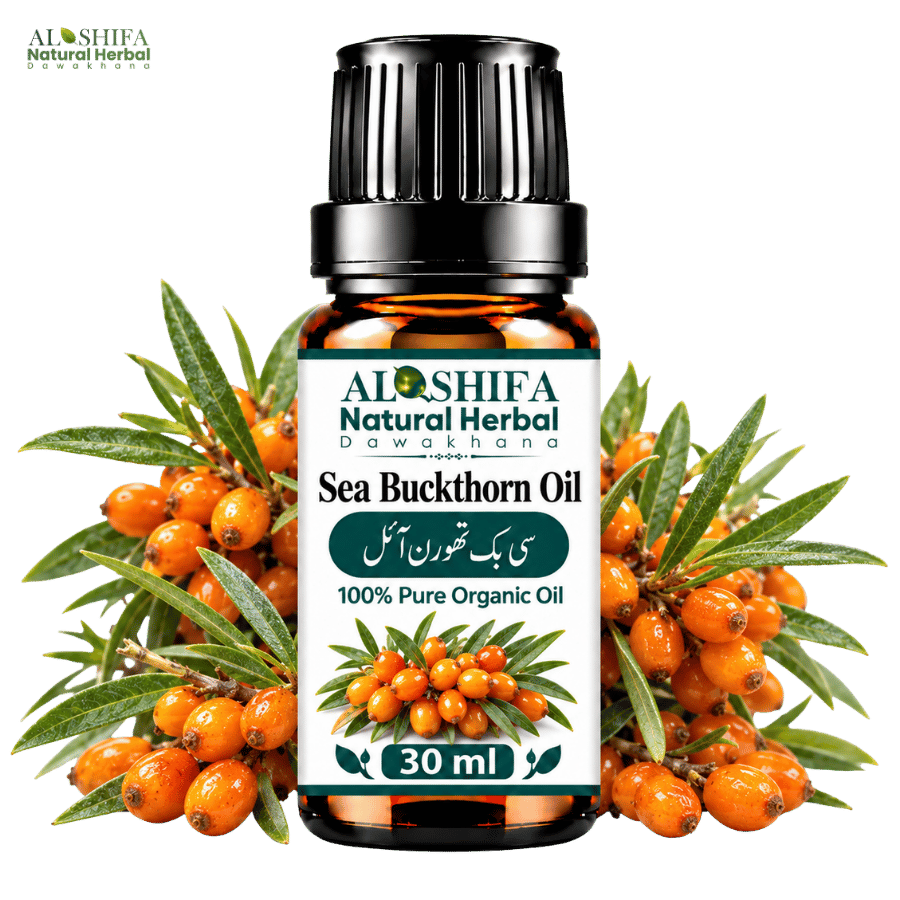
Sea Buckthorn Oil is a nutrient-rich botanical fixed oil obtained from the fruits or seeds of Hippophae rhamnoides. Naturally containing fatty acids, carotenoids, tocopherols and phytosterols, it is widely used in face care, skin care, hair and scalp care, body oils, massage blends, lip care and premium cosmetic formulations.
Al Shifa Sea Buckthorn Oil is carefully selected with attention to its correct botanical identity, plant-part source, characteristic quality, clean handling, protective packaging and suitability for cosmetic and personal-care formulations.
Key Features:
Usage: Use in facial oils, skin-care products, hair and scalp blends, massage oils, lip-care products or cosmetic formulations. Deeply coloured pulp oil may be blended with lighter carrier oils to reduce temporary staining.
Important Note: Sea Buckthorn Seed Oil and Sea Buckthorn Pulp Oil are different. Pulp oil is particularly associated with Palmitoleic Acid / Omega-7 and a deeper orange colour, while seed oil is generally richer in Linoleic and Alpha-Linolenic Acids. Confirm the plant part when the exact oil composition is important.
Sea Buckthorn Oil – سی بک تھورن آئل is a nutrient-rich botanical oil obtained from the fruits or seeds of Hippophae rhamnoides L., a hardy shrub known for its bright orange berries. Sea Buckthorn has a long history of use in food, traditional botanical preparations and modern skin and hair-care formulations.
The oil is particularly valued in cosmetics because of its naturally occurring fatty acids, carotenoids, tocopherols, phytosterols and other lipid-soluble plant compounds. Depending on whether the oil comes from the fruit pulp or seeds, its colour, texture and fatty-acid composition can differ considerably.
Sea Buckthorn Pulp Oil is usually deeper orange to reddish-orange and is particularly notable for its palmitoleic acid and carotenoid content, while Sea Buckthorn Seed Oil is generally lighter and typically contains greater proportions of linoleic and alpha-linolenic acids.
At Al Shifa Natural Herbal Dawakhana, Sea Buckthorn Oil is selected with attention to its botanical identity, plant-part source, characteristic colour and aroma, clean handling, protective packaging and suitability for cosmetic and personal-care formulations.
Sea Buckthorn Oil is a natural fixed botanical oil derived from the fruit or seeds of the Sea Buckthorn plant.
Its botanical name is:
Hippophae rhamnoides L.
It belongs to the Elaeagnaceae family.
Sea Buckthorn produces clusters of small yellow-orange to deep orange berries. Oils obtained from these fruits are widely used in premium skin-care, body-care, hair-care and cosmetic formulations.
Unlike conventional essential oils, Sea Buckthorn Oil is primarily a fixed botanical oil.
Product Name: Sea Buckthorn Oil – سی بک تھورن کا آئل
English Name: Sea Buckthorn Oil
Urdu Name: سی بک تھورن کا آئل / سی بک تھورن کا تیل
Roman Name: Sea Buckthorn Oil
Scientific Name: Hippophae rhamnoides L.
Plant Family: Elaeagnaceae
Plant Part: Fruit Pulp and/or Seeds, Depending on Product Type
Oil Type: Fixed Botanical Oil / Carrier Oil
Common Forms: Sea Buckthorn Pulp Oil / Sea Buckthorn Seed Oil
Production Method: Mechanical Pressing or Other Suitable Extraction Method, Depending on Product Grade
Appearance: Yellow-Orange to Deep Orange or Reddish-Orange, Depending on Plant Part and Processing
Aroma: Characteristic, Fruity, Herbal & Slightly Earthy
Texture: Rich, Smooth & Emollient
Primary Applications: Face Care, Skin Care, Body Care, Hair & Scalp Care, Massage Blends, Lip Care, Premium Cosmetic Formulations & Personal-Care Products
Product Type: Natural Plant-Derived Fixed / Carrier Oil
Sea Buckthorn is a thorny shrub adapted to demanding environmental conditions.
The plant produces small berries with a characteristic bright orange colour.
Its fruits contain:
Different parts of the fruit can produce oils with noticeably different compositions.
Sea Buckthorn Pulp Oil is obtained primarily from the fleshy part of the berry.
It is often recognised by its:
One particularly notable fatty acid associated with Sea Buckthorn Pulp Oil is:
Palmitoleic Acid – Omega-7
This characteristic has contributed significantly to the popularity of Sea Buckthorn Pulp Oil in premium cosmetic formulations.
Sea Buckthorn Seed Oil is obtained from the seeds inside the berries.
Compared with pulp oil, it is generally:
Its fatty-acid profile commonly includes meaningful proportions of:
Therefore:
Sea Buckthorn Seed Oil ≠ Sea Buckthorn Pulp Oil
Both come from the same plant but are not chemically identical oils.
Sea Buckthorn is frequently marketed as a natural source of Omega-7.
This statement requires an important clarification.
Sea Buckthorn pulp oil is particularly associated with palmitoleic acid, commonly referred to as an Omega-7 fatty acid.
Sea Buckthorn seed oil has a different fatty-acid profile.
Therefore:
Not Every Sea Buckthorn Oil Contains the Same Amount of Omega-7
The plant part matters.
Depending on the plant part and processing method, Sea Buckthorn Oil can contain fatty acids including:
The relative proportions can vary considerably between seed and pulp oils.
The rich orange colour of many Sea Buckthorn oils is associated with naturally occurring carotenoid pigments.
These compounds contribute to the characteristic appearance of the oil.
However:
Deep Orange Colour ≠ Automatic Proof of Purity
Colour can vary according to:
Sea Buckthorn Oil can naturally contain tocopherol-related compounds associated with Vitamin E activity.
However:
Sea Buckthorn Oil ≠ Vitamin E Oil
Naturally occurring tocopherols in a botanical oil should not be confused with concentrated Vitamin E ingredients.
Sea Buckthorn Oil can also contain naturally occurring plant sterols, commonly known as phytosterols.
These lipid-soluble plant compounds contribute to the broader composition of the oil and are of interest in cosmetic formulation.
Sea Buckthorn Oil is widely incorporated into premium skin-care formulations.
Its rich lipid composition makes it suitable for products intended to support:
It is commonly included in:
Sea Buckthorn Oil can be particularly useful as an emollient ingredient in formulations intended for dry or rough-feeling skin.
The oil helps form a lipid-rich layer on the skin surface and can contribute to a softer, smoother feel.
However:
Moisturising & Conditioning ≠ Treatment for Skin Disease
Dryness caused by an underlying skin disorder may require appropriate treatment.
Sea Buckthorn Oil is used in facial-care formulations because of its distinctive lipid and pigment profile.
It may be incorporated into:
Deeply coloured pulp oil is often used at controlled concentrations because its natural orange pigments can temporarily colour the skin or stain light-coloured materials.
The fatty acids present in Sea Buckthorn Oil make it useful in formulations designed to support normal skin-barrier conditioning.
However:
Cosmetic Barrier Support ≠ Treatment for Eczema, Psoriasis or Dermatitis
These are medical skin conditions and should not be reduced to ordinary cosmetic dryness.
Sea Buckthorn Oil may be incorporated into products designed for gentle skin conditioning, but individual tolerance varies.
A patch test is advisable before broader use, particularly for people with sensitive or reactive skin.
Sea Buckthorn Oil can be incorporated into hair-care formulations including:
Its fixed-oil composition can contribute to:
Sea Buckthorn Oil may also be included in scalp-care formulations.
Its role is primarily cosmetic and conditioning.
It can be blended with compatible carrier oils to produce specialised scalp oils.
Sea Buckthorn Oil is sometimes promoted online for hair growth.
However:
Sea Buckthorn Oil ≠ Proven Hair-Regrowth Treatment
Hair conditioning and scalp moisturising should not be confused with clinically demonstrated regrowth.
Persistent or unexplained hair loss requires appropriate evaluation.
Sea Buckthorn Oil can be incorporated into:
Its emollient character makes it suitable for formulations intended to reduce the feeling of dry, rough lips.
Deeply coloured oil should be used thoughtfully because its pigments can influence the finished product colour.
Sea Buckthorn Oil can be included in:
Its rich colour and lipid profile make it particularly suitable for premium botanical formulations.
Sea Buckthorn Oil may be blended with other carrier oils for massage applications.
Because pure pulp oil can be strongly coloured and relatively rich, formulators often combine it with lighter carrier oils.
Potential blending oils include:
Sea Buckthorn Oil can be incorporated into specialised:
The amount used depends on the formulation and whether the product contains seed oil, pulp oil or a blend.
Sea Buckthorn Oil is primarily a fixed botanical oil.
Therefore:
Sea Buckthorn Oil ≠ Conventional Essential Oil
It should not automatically be handled or classified in the same way as highly concentrated volatile essential oils.
This distinction deserves particular attention.
Sea Buckthorn Seed Oil:
Sea Buckthorn Pulp Oil:
Therefore:
Seed Oil and Pulp Oil Should Not Be Treated as Chemically Identical
An extract may be prepared using different solvents and can concentrate different plant compounds.
Therefore:
Sea Buckthorn Extract ≠ Sea Buckthorn Fixed Oil
The two should not be used interchangeably in technical product descriptions.
Sea Buckthorn berries can also be processed into juice.
Juice is primarily a water-based food product.
Oil is a lipid-rich fraction.
Therefore:
Sea Buckthorn Juice ≠ Sea Buckthorn Oil
Research involving the juice should not automatically be transferred to topical oil.
Sea Buckthorn berry powder consists of dried fruit material.
It contains a broader mixture of fruit constituents.
Therefore:
Sea Buckthorn Berry Powder ≠ Sea Buckthorn Oil
Sea Buckthorn and Rosehip are different botanical materials.
Rosehip Oil commonly comes from species of Rosa, while Sea Buckthorn Oil comes from Hippophae rhamnoides.
Therefore:
Sea Buckthorn Oil ≠ Rosehip Oil
Although both are popular in facial and premium skin-care formulations, their botanical identity and natural composition differ.
Sea Buckthorn Oil may naturally contain tocopherols.
However:
Sea Buckthorn Oil ≠ Vitamin E Oil
Vitamin E Oil is a concentrated Vitamin E ingredient or oil-based Vitamin E formulation.
Sea Buckthorn is a complete botanical oil with its own fatty-acid and plant-compound profile.
Both products can have orange colouring associated with carotenoid compounds.
However:
Sea Buckthorn Oil ≠ Carrot Oil
Similar colour does not establish botanical similarity.
Jojoba Oil is technically a liquid wax obtained from Simmondsia chinensis seeds.
Sea Buckthorn Oil is a fixed botanical oil derived from Sea Buckthorn fruits or seeds.
Therefore:
Sea Buckthorn Oil ≠ Jojoba Oil
White Mineral Oil is a highly refined mineral-derived hydrocarbon oil.
Sea Buckthorn Oil is plant-derived.
Therefore:
Sea Buckthorn Oil ≠ Mineral Oil
Their origin and chemical composition are fundamentally different.
Cold pressing is used for selected Sea Buckthorn oil products.
It can help retain characteristic pigments and naturally occurring oil-soluble constituents.
However:
Cold-Pressed ≠ Automatic Proof of Purity or Superior Quality
Quality also depends on:
Refining can modify:
Refined oil is not automatically poor quality.
Its suitability depends on the intended application and required specification.
Sea Buckthorn Pulp Oil can have a very strong orange or reddish-orange colour.
This can temporarily colour:
This is particularly relevant when using concentrated pulp oil.
Sea Buckthorn fruits, seeds and oils contain compounds investigated for antioxidant activity.
However, studies may involve:
These are not interchangeable research materials.
Therefore:
Experimental Antioxidant Activity ≠ Treatment or Prevention of Disease
Sea Buckthorn-derived materials have been studied experimentally in relation to inflammatory pathways.
However:
Experimental Anti-Inflammatory Findings ≠ Medical Treatment by Cosmetic Sea Buckthorn Oil
Research results should be interpreted according to the exact material and study design.
Sea Buckthorn has attracted scientific interest involving skin and tissue-repair processes.
However:
Cosmetic Sea Buckthorn Oil Should Not Be Presented as a Treatment for Wounds, Burns or Serious Skin Injuries
Damaged skin requires appropriate care according to the severity and cause of the injury.
Sea Buckthorn Oil is widely used in products marketed for mature-looking skin.
Its emollient and conditioning properties can improve the appearance and feel of dry skin.
However:
Skin Conditioning ≠ Reversal of Skin Ageing
Claims involving permanent wrinkle removal or reversal of ageing should be avoided.
The natural carotenoid content of Sea Buckthorn Oil does not mean it is a treatment for pigmentation disorders.
Therefore:
Sea Buckthorn Oil ≠ Treatment for Melasma or Hyperpigmentation
Sea Buckthorn Oil may be incorporated into cosmetic facial products, but:
Sea Buckthorn Oil ≠ Acne Treatment
People with acne-prone skin should assess individual tolerance and the complete formulation.
Sea Buckthorn contains carotenoids and other compounds of cosmetic interest.
However:
Sea Buckthorn Oil ≠ Sunscreen
It should not replace a properly formulated and tested sunscreen.
A strongly coloured botanical oil does not automatically provide reliable ultraviolet protection.
SPF claims require appropriate testing of the finished sunscreen product.
Sea Buckthorn Oil contains unsaturated fatty acids that can be affected by oxidation.
Exposure to:
can gradually reduce oil quality.
Proper packaging and storage are therefore important.
Before wider topical application, test a small amount on a limited area of skin.
Observe for:
Discontinue use if a significant reaction develops.
Routine cosmetic use of an appropriately produced topical Sea Buckthorn Oil is different from taking concentrated Sea Buckthorn preparations internally.
During pregnancy and breastfeeding, use products according to their intended cosmetic purpose and seek professional guidance before medicinal or concentrated internal use.
For children, use only an appropriately formulated product intended for their age group.
Avoid unnecessary use of concentrated botanical products on very young or sensitive skin.
Keep the oil securely out of reach of children.
Although Sea Buckthorn Oil is generally used as a cosmetic botanical ingredient, individual sensitivity is possible.
Discontinue use if significant irritation or an allergic-type reaction occurs.
Some Sea Buckthorn oils are manufactured as food or dietary products.
Others are supplied specifically for cosmetic use.
Therefore:
Cosmetic-Grade Sea Buckthorn Oil ≠ Automatically Food-Grade Sea Buckthorn Oil
Do not ingest a product unless its grade and intended use specifically support consumption.
At Al Shifa Natural Herbal Dawakhana, Sea Buckthorn Oil is selected with attention to:
Botanical Identity – Genuine Hippophae rhamnoides source.
Plant-Part Identity – Recognition of seed oil and fruit-pulp oil differences.
Characteristic Appearance – Natural yellow-orange to deep orange colour according to oil type.
Fatty-Acid Profile Awareness – Recognition of the different lipid characteristics of seed and pulp oils.
Natural Carotenoid Profile – Particularly relevant to deeply coloured pulp oil.
Skin-Care Applications – Suitable for premium facial, body and moisturising formulations.
Hair & Scalp Applications – Suitable for specialised conditioning blends.
Cosmetic Applications – Useful in oils, creams, lotions, balms and lip-care products.
Clean Handling – Carefully handled during packing.
Protective Packaging – Helps protect the oil from unnecessary light, air and contamination.
Responsible Information – No exaggerated disease-treatment, hair-growth or anti-ageing claims.
Proper Storage – Helps preserve freshness and product quality.
Al Shifa Natural Herbal Dawakhana, established in 1999, supplies natural oils, herbs and specialised botanical materials throughout Pakistan.
Our focus for Sea Buckthorn Oil includes:
For Face Care: Add an appropriate amount to facial oils, serums, creams or balms. Deeply coloured pulp oil may be blended with lighter carrier oils to reduce staining.
For Skin Care: Apply according to the finished cosmetic formulation or blend with compatible carrier oils.
For Hair & Scalp Care: Incorporate into hair oils, masks, conditioners or scalp-care formulations.
For Massage: Blend with compatible carrier oils according to the desired texture and colour.
For Lip Care: Incorporate at an appropriate level into lip oils, balms or conditioning formulations.
For Cosmetic Formulation: Confirm whether the material is seed oil, pulp oil or a blend before determining its formulation role.
Sea Buckthorn Oil – سی بک تھورن کا آئل is a natural fixed botanical oil obtained from the fruits or seeds of Hippophae rhamnoides. Sea Buckthorn Seed Oil and Sea Buckthorn Pulp Oil have different colour, fatty-acid and minor-component profiles and should not automatically be treated as identical materials.
Important distinctions include:
Store Sea Buckthorn Oil in a cool, clean and dry place.
For best quality:
Sea Buckthorn Oil – سی بک تھورن کا آئل is a premium botanical fixed oil derived from the fruits or seeds of Hippophae rhamnoides L.
It is valued in modern cosmetic formulations for its naturally occurring fatty acids, carotenoids, tocopherols and phytosterols and is widely incorporated into face oils, skin-care products, body oils, hair and scalp preparations, massage blends, lip-care products, creams, lotions and premium cosmetic formulations.
An important quality consideration is whether the product is Sea Buckthorn Seed Oil or Sea Buckthorn Pulp Oil, as these materials differ significantly in colour and fatty-acid composition.
Customers searching for Sea Buckthorn Oil, Hippophae Rhamnoides Oil, Sea Buckthorn Berry Oil, Sea Buckthorn Seed Oil, Sea Buckthorn Pulp Oil, Omega 7 Sea Buckthorn Oil, Sea Buckthorn Oil for Face, Sea Buckthorn Oil for Skin, Sea Buckthorn Oil for Hair, Sea Buckthorn Oil for Scalp, Sea Buckthorn Carrier Oil, Sea Buckthorn Oil Pakistan, Sea Buckthorn Oil Lahore, Sea Buckthorn Oil price in Pakistan, buy Sea Buckthorn Oil Pakistan or Sea Buckthorn Oil online Pakistan can choose Al Shifa Natural Herbal Dawakhana for carefully selected botanical quality.
Since 1999, Al Shifa Natural Herbal Dawakhana has focused on supplying natural oils and botanical materials with attention to correct identity, quality selection, clean handling, responsible product information, protective packaging and proper storage.
Product Name: Sea Buckthorn Oil – سی بک تھورن کا آئل
English Name: Sea Buckthorn Oil
Urdu Name: سی بک تھورن کا آئل / سی بک تھورن کا تیل
Roman Name: Sea Buckthorn Oil
Scientific Name: Hippophae rhamnoides L.
Plant Family: Elaeagnaceae
Plant Part: Fruit Pulp and/or Seeds, Depending on Product Type
Oil Type: Fixed Botanical Oil / Carrier Oil
Common Forms: Sea Buckthorn Pulp Oil / Sea Buckthorn Seed Oil
Production Method: Mechanical Pressing or Other Suitable Extraction Method, Depending on Product Grade
Appearance: Yellow-Orange to Deep Orange or Reddish-Orange, Depending on Plant Part and Processing
Aroma: Characteristic, Fruity, Herbal & Slightly Earthy
Texture: Rich, Smooth & Emollient
Primary Applications: Face Care, Skin Care, Body Care, Hair & Scalp Care, Massage Blends, Lip Care, Premium Cosmetic Formulations & Personal-Care Products
Product Type: Natural Plant-Derived Fixed / Carrier Oil
Important Note: Sea Buckthorn Seed Oil and Sea Buckthorn Pulp Oil are obtained from different parts of the same plant and have different natural compositions. Pulp oil is particularly associated with Palmitoleic Acid / Omega-7 and deeper carotenoid-rich colour, while seed oil generally contains greater proportions of Linoleic and Alpha-Linolenic Acids. Confirm the plant part and product grade when exact composition or intended use is important.
سی بک تھورن کا آئل سی بک تھورن نامی جھاڑی کے نارنجی رنگ کے پھل یا اس کے بیجوں سے حاصل ہونے والا قدرتی روغن ہے۔ یہ پودا سرد علاقوں میں اگتا ہے اور اپنے شوخ نارنجی پھلوں کی وجہ سے آسانی سے پہچانا جاتا ہے۔
سی بک تھورن کے پھل اور بیج دونوں سے روغن حاصل کیا جاتا ہے، لیکن دونوں روغنوں کی قدرتی ساخت ایک جیسی نہیں ہوتی۔ پھل کے گودے سے حاصل روغن میں پالمیٹولیک تیزاب خاص اہمیت رکھتا ہے، جبکہ بیجوں کے روغن میں لینولیک تیزاب اور الفا لینولینک تیزاب زیادہ نمایاں ہوتے ہیں۔
اس میں قدرتی روغنی تیزاب، وٹامن ای، کیروٹینائڈز اور پودے کے دوسرے مفید اجزا پائے جاتے ہیں۔ اس کی گہری زرد، نارنجی یا سرخی مائل رنگت بھی انہی قدرتی رنگ دار اجزا کی وجہ سے ہوتی ہے۔
سی بک تھورن کا آئل خاص طور پر خشک جلد، چہرے کی دیکھ بھال، ہونٹوں، ہاتھوں، ایڑیوں، بالوں، سر کی جلد اور مختلف جلدی روغنوں میں استعمال کیا جاتا ہے۔
اردو: سی بک تھورن، سی بک تھورن کا آئل، سی بک تھورن بیری آئل
پنجابی: سی بک تھورن، سی بک تھورن دا تیل
ہندی: سی بک تھورن، سی بک تھورن تیل
فارسی: سنجد تلخ، سی بک تھورن
عربی: نبق البحر، سی بک تھورن
انگریزی نام: سی بک تھورن آئل، سی بک تھورن بیری آئل، سی بک تھورن سیڈ آئل
سائنسی نام: ہپو فائی ریم نائیڈز
خاندان: ایلیگنیسی
استعمال ہونے والا حصہ: پھل کا گودا اور بیج
سی بک تھورن ایک کانٹے دار جھاڑی ہے جو سرد اور پہاڑی علاقوں میں اچھی طرح اگتی ہے۔
اس کی شاخوں پر چھوٹے نارنجی سے سرخی مائل پھل بڑی تعداد میں لگتے ہیں۔
یہ پھل رس دار ہوتے ہیں اور ان کے اندر چھوٹے بیج موجود ہوتے ہیں۔
پھل کے گودے اور بیج دونوں سے الگ الگ روغن حاصل کیا جاتا ہے۔
سی بک تھورن کے پھل اپنی گہری نارنجی رنگت اور قدرتی روغنی اجزا کی وجہ سے خاص پہچان رکھتے ہیں۔
اچھے سی بک تھورن پھل:
اچھے روغن کے لیے پکے ہوئے صاف پھل اور اچھی حالت والے بیج اہم ہیں۔
سی بک تھورن کے پھل کے گودے اور بیجوں سے روغن حاصل کیا جاتا ہے۔
پھل کے گودے سے حاصل روغن کو سی بک تھورن بیری آئل کہا جاتا ہے۔
بیجوں سے حاصل روغن کو سی بک تھورن سیڈ آئل کہا جاتا ہے۔
دونوں سی بک تھورن سے حاصل ہوتے ہیں، لیکن ان میں پائے جانے والے روغنی تیزابوں کی مقدار الگ ہوتی ہے۔
اسی لیے بوتل پر یہ واضح ہونا ضروری ہے کہ روغن پھل کے گودے سے حاصل ہوا ہے یا بیجوں سے۔
سی بک تھورن پاکستان اور برصغیر کی معروف قدیم حکیمی مفردات میں عام مقامی دوا کے طور پر مشہور نہیں ہے۔
اسی وجہ سے اس کے روغن کا گرم، سرد، خشک یا تر مزاج پاکستانی کتب مفردات کے حوالے سے واضح اور یکساں طور پر مقرر نہیں ہے۔
اس لیے سی بک تھورن کے روغن کے لیے اپنی طرف سے کوئی مزاج مقرر کرنا درست نہیں۔
اس روغن کی پہچان اس کے اصل پودے، پھل یا بیج، قدرتی روغنی اجزا اور بیرونی استعمال کی بنیاد پر کی جاتی ہے۔
سی بک تھورن کے آئل کے اہم استعمال یہ ہیں:
سی بک تھورن کا آئل خشک اور کھردری جلد کی دیکھ بھال میں خاص اہمیت رکھتا ہے۔
اس میں موجود قدرتی روغنی تیزاب جلد کو نرم اور ملائم رکھنے کے لیے فائدہ مند ہیں۔
اسے اکیلا بہت کم مقدار میں یا بادام، جوجوبا اور دوسرے بنیادی روغنوں کے ساتھ ملا کر استعمال کیا جاتا ہے۔
سی بک تھورن کا آئل چہرے کے روغنی آمیزوں میں کم مقدار میں شامل کیا جاتا ہے۔
اس کی قدرتی نارنجی رنگت کافی گہری ہوتی ہے، اس لیے چہرے پر چند قطرے دوسرے بنیادی روغن کے ساتھ ملا کر لگائے جاتے ہیں۔
یہ خشک اور بے رونق نظر آنے والی جلد کی روزمرہ دیکھ بھال کے لیے استعمال کیا جاتا ہے۔
سی بک تھورن میں اولیک، لینولیک، پالمیٹک اور پالمیٹولیک تیزاب جیسے قدرتی روغنی اجزا پائے جاتے ہیں۔
یہ اجزا جلد کی روغنی دیکھ بھال میں فائدہ مند ہیں۔
اس کا باقاعدہ بیرونی استعمال خشک اور کھردری جلد کو نرم محسوس کراتا ہے۔
سی بک تھورن کا صاف بیرونی درجے کا روغن ہونٹوں کے بام میں کم مقدار میں شامل کیا جاتا ہے۔
اس کی گہری قدرتی رنگت کی وجہ سے مقدار بہت کم رکھی جاتی ہے۔
ہونٹوں کے لیے صرف ایسا روغن استعمال کریں جس پر جلد اور ہونٹوں کے استعمال کی واضح ہدایت موجود ہو۔
خشک ہاتھوں کی دیکھ بھال کے لیے سی بک تھورن کا آئل دوسرے نرم روغنوں کے ساتھ ملا کر استعمال کیا جاتا ہے۔
خاص طور پر انگلیوں اور ہاتھوں کی کھردری جلد پر تھوڑی مقدار لگائی جاتی ہے۔
خشک اور کھردری ایڑیوں کی دیکھ بھال میں سی بک تھورن کا آئل فائدہ مند روغنی آمیزوں میں شامل کیا جاتا ہے۔
اسے بادام، ناریل یا دوسرے بنیادی روغن کے ساتھ ملا کر پاؤں اور ایڑیوں پر لگایا جاتا ہے۔
کہنیوں اور گھٹنوں کی خشک اور سخت جلد پر سی بک تھورن والا روغن استعمال کیا جاتا ہے۔
اس کے قدرتی روغنی اجزا خشک جلد کو نرم رکھنے کے لیے فائدہ مند ہیں۔
سی بک تھورن کا آئل جسمانی روغن میں بھی شامل کیا جاتا ہے۔
اسے بادام، جوجوبا، ناریل یا دوسرے بنیادی روغن کے ساتھ ملا کر جلد پر لگایا جاتا ہے۔
اس کی گہری رنگت کی وجہ سے جسمانی روغن میں بھی مقدار کم رکھی جاتی ہے۔
سی بک تھورن کا آئل خشک اور بے رونق بالوں کی دیکھ بھال والے روغنوں میں استعمال کیا جاتا ہے۔
اسے ناریل، بادام، جوجوبا یا دوسرے بالوں کے روغن کے ساتھ ملا کر استعمال کیا جاتا ہے۔
بالوں کے خشک سروں پر بہت تھوڑی مقدار لگائی جاتی ہے۔
سی بک تھورن کا آئل سر کی خشک جلد کی روغنی دیکھ بھال میں استعمال کیا جاتا ہے۔
اسے دوسرے بالوں کے روغن کے ساتھ ملا کر سر کی جلد پر ہلکی مالش کی جاتی ہے۔
سر کی جلد کے امراض میں طبی استعمال معالج سے پوچھ کر کریں۔
سی بک تھورن کا آئل داڑھی کے روغن میں کم مقدار میں شامل کیا جاتا ہے۔
اسے جوجوبا یا بادام کے روغن کے ساتھ ملا کر داڑھی اور اس کے نیچے کی جلد پر لگایا جاتا ہے۔
اس کی گہری نارنجی رنگت کی وجہ سے چند قطرے کافی رہتے ہیں۔
سی بک تھورن کے پھل اور بیجوں کے روغن میں اہم اجزا یہ ہیں:
ان اجزا کی مقدار پھل کے گودے اور بیج کے روغن میں الگ ہوتی ہے۔
پالمیٹولیک تیزاب سی بک تھورن کے پھل کے گودے سے حاصل روغن کی اہم پہچان ہے۔
یہ قدرتی روغنی تیزاب جلد کی روغنی دیکھ بھال میں خاص اہمیت رکھتا ہے۔
اسی وجہ سے پھل کے گودے کا روغن خشک اور کھردری جلد کے لیے بنائے جانے والے روغنوں میں استعمال کیا جاتا ہے۔
لینولیک تیزاب سی بک تھورن کے بیجوں کے روغن میں اہم مقدار میں پایا جاتا ہے۔
یہ جلد اور بالوں کی روغنی دیکھ بھال کے لیے فائدہ مند قدرتی چکنائی ہے۔
الفا لینولینک تیزاب خاص طور پر سی بک تھورن کے بیجوں کے روغن میں پایا جاتا ہے۔
یہ بیجوں کے روغن کی قدرتی چکنائی کا اہم حصہ ہے۔
اولیک تیزاب سی بک تھورن کے روغن میں پایا جانے والا قدرتی روغنی جز ہے۔
یہ جلد اور بالوں کے لیے استعمال ہونے والے بہت سے قدرتی روغنوں میں بھی پایا جاتا ہے۔
سی بک تھورن کے روغن میں قدرتی وٹامن ای پایا جاتا ہے۔
وٹامن ای جلد اور بالوں کی دیکھ بھال والے روغنوں میں اہم غذائی جز سمجھا جاتا ہے۔
یہ روغن کی قدرتی خوبیوں میں بھی اہم حصہ رکھتا ہے۔
کیروٹینائڈز سی بک تھورن کے پھل کے روغن کی نارنجی اور سرخی مائل رنگت کے اہم قدرتی اجزا ہیں۔
پھل کے گودے سے حاصل روغن میں ان کی مقدار زیادہ نمایاں ہوتی ہے۔
اسی وجہ سے یہ روغن جلد اور کپڑوں پر ہلکا نارنجی رنگ چھوڑ سکتا ہے۔
سی بک تھورن کے پھل کے گودے سے حاصل روغن عموما گہری نارنجی سے سرخی مائل رنگت رکھتا ہے۔
اس میں پالمیٹولیک تیزاب اور کیروٹینائڈز نمایاں ہوتے ہیں۔
یہ جلد کی روغنی دیکھ بھال کے لیے خاص طور پر استعمال کیا جاتا ہے۔
سی بک تھورن کے بیجوں سے حاصل روغن پھل کے گودے والے روغن سے نسبتاً ہلکی رنگت رکھتا ہے۔
اس میں لینولیک اور الفا لینولینک تیزاب نمایاں ہوتے ہیں۔
یہ جلد، بالوں اور مختلف بنیادی روغنی آمیزوں میں استعمال کیا جاتا ہے۔
سی بک تھورن کے پھل کے گودے اور بیج سے حاصل روغن ایک جیسے نہیں ہیں۔
پھل کے گودے کا روغن زیادہ نارنجی یا سرخی مائل ہوتا ہے اور اس میں پالمیٹولیک تیزاب اور کیروٹینائڈز نمایاں ہوتے ہیں۔
بیجوں کا روغن نسبتاً ہلکی رنگت رکھتا ہے اور اس میں لینولیک اور الفا لینولینک تیزاب نمایاں ہوتے ہیں۔
اس لیے خریدتے وقت بوتل پر استعمال ہونے والا حصہ ضرور دیکھیں۔
سی بک تھورن کا آئل عام خوشبودار روغن نہیں ہے۔
یہ پھل کے گودے یا بیج سے حاصل ہونے والا چکنائی والا روغن ہے۔
اسے لیونڈر، پودینہ یا یوکلپٹس جیسے تیز خوشبودار روغنوں کی قسم میں شامل نہیں کیا جاتا۔
پھل کے گودے سے حاصل سی بک تھورن کا آئل گہری زرد، نارنجی یا سرخی مائل رنگت رکھتا ہے۔
بیجوں سے حاصل روغن نسبتاً ہلکا زرد یا نارنجی نظر آتا ہے۔
اس کی قدرتی رنگت اس کے اہم شناختی نشانات میں شامل ہے۔
گہری نارنجی رنگت والا سی بک تھورن کا آئل کپڑوں اور ہلکے رنگ کے کپڑے پر نشان چھوڑ سکتا ہے۔
اس لیے استعمال کے فوراً بعد سفید یا ہلکے رنگ کے کپڑے پہننے سے احتیاط کریں۔
سی بک تھورن کا آئل جلد پر کم مقدار میں استعمال کریں۔
گہری رنگت والے پھل کے روغن کو جوجوبا، بادام، ناریل یا دوسرے بنیادی روغن کے ساتھ ملا کر استعمال کیا جاتا ہے۔
پہلی بار جلد کے چھوٹے حصے پر تھوڑی مقدار آزمائیں۔
حساس جلد پر پہلی بار بہت کم مقدار آزمائیں۔
جلد پر خارش، جلن یا سرخی پیدا ہو تو استعمال بند کریں۔
جلدی امراض میں طبی استعمال معالج سے پوچھ کر کریں۔
سی بک تھورن کے ہر روغن کو خوراک کے لیے استعمال نہیں کیا جاتا۔
صرف وہ روغن خوراک میں استعمال کریں جس پر کھانے کے قابل ہونے کی واضح ہدایت موجود ہو۔
جلد، بالوں یا بیرونی استعمال کے لیے تیار روغن کو نہ پئیں۔
کسی بیماری کے لیے اندرونی طبی استعمال معالج سے پوچھ کر کریں۔
حمل کے دوران سی بک تھورن کے روغن کا اندرونی طبی استعمال اپنی طرف سے نہ کریں۔
اندرونی طبی استعمال معالج سے پوچھ کر کریں۔
بیرونی استعمال سے پہلے بھی جلد کے چھوٹے حصے پر تھوڑی مقدار آزمائیں۔
دودھ پلانے کے دوران اندرونی طبی استعمال معالج سے پوچھ کر کریں۔
بیرونی استعمال میں اسے چھاتی اور بچے کے منہ سے لگنے والی جگہ پر نہ لگائیں۔
بچوں کے لیے سی بک تھورن کے روغن کا طبی استعمال معالج سے پوچھ کر کریں۔
بچوں کی جلد پر استعمال سے پہلے بہت تھوڑی مقدار آزمائیں۔
روغن کو بچوں کی پہنچ سے دور رکھیں۔
درست شناخت: اصل سی بک تھورن سے حاصل روغن ہونا چاہیے۔
استعمال ہونے والا حصہ: یہ واضح ہونا چاہیے کہ روغن پھل کے گودے سے حاصل ہوا ہے یا بیج سے۔
قدرتی رنگت: پھل کے روغن میں گہری نارنجی سے سرخی مائل اور بیج کے روغن میں نسبتاً ہلکی رنگت دیکھی جاتی ہے۔
صاف روغن: پانی، گرد اور غیر ضروری ذرات سے پاک ہونا چاہیے۔
قدرتی بو: روغن میں اپنی ہلکی خاص بو ہونی چاہیے۔
تازگی: باسی اور خراب بو والا روغن استعمال نہ کریں۔
غیر ضروری ملاوٹ سے پاک: مصنوعی رنگ، مصنوعی خوشبو اور کم معیار کے دوسرے روغن کی ملاوٹ سے پاک ہونا چاہیے۔
سی بک تھورن کا آئل سی بک تھورن کے نارنجی پھل کے گودے یا اس کے بیجوں سے حاصل کیا جاتا ہے۔
پھل کے گودے اور بیج سے حاصل روغن کی قدرتی ساخت الگ ہوتی ہے۔
پھل کے روغن میں پالمیٹولیک تیزاب اور کیروٹینائڈز نمایاں ہوتے ہیں، جبکہ بیجوں کے روغن میں لینولیک اور الفا لینولینک تیزاب نمایاں ہوتے ہیں۔
اس کا بیرونی استعمال خشک جلد، چہرے، ہاتھوں، ایڑیوں، بالوں، سر کی جلد اور جسمانی جلد کی دیکھ بھال میں کیا جاتا ہے۔
اس کی گہری نارنجی رنگت جلد اور کپڑوں پر ہلکا رنگ چھوڑ سکتی ہے۔
خوراک کے لیے صرف وہ روغن استعمال کریں جس پر کھانے کے قابل ہونے کی واضح ہدایت موجود ہو۔
کسی بیماری کے لیے اندرونی طبی استعمال معالج سے پوچھ کر کریں۔
الشفاء نیچرل ہربل دواخانہ میں سی بک تھورن کے آئل کے لیے درج ذیل باتوں کو اہمیت دی جاتی ہے:
اصل سی بک تھورن: درست شناخت والے سی بک تھورن کے پھل اور بیج کو اہمیت دی جاتی ہے۔
اچھے پھل: صاف، پکے ہوئے اور اچھی حالت والے پھلوں کو اہمیت دی جاتی ہے۔
اچھے بیج: صاف اور اچھی حالت والے بیجوں کو اہمیت دی جاتی ہے۔
استعمال ہونے والا حصہ: پھل کے گودے اور بیج کے روغن کی الگ شناخت کو اہمیت دی جاتی ہے۔
قدرتی رنگت: روغن کی اپنی زرد، نارنجی یا سرخی مائل رنگت کو دیکھا جاتا ہے۔
صاف روغن: پانی، گرد اور غیر ضروری ذرات سے پاک روغن کو اہمیت دی جاتی ہے۔
تازگی: باسی یا خراب بو والے روغن سے بچا جاتا ہے۔
غیر ضروری ملاوٹ سے پاک: مصنوعی رنگ، مصنوعی خوشبو اور کم معیار کے دوسرے روغن کی ملاوٹ سے پاک ہونے کو اہمیت دی جاتی ہے۔
الشفاء نیچرل ہربل دواخانہ سنہ ۱۹۹۹ سے قدرتی جڑی بوٹیوں، پھلوں، بیجوں اور ان سے حاصل ہونے والے روغنوں کی سپلائی کر رہا ہے۔
ہم سی بک تھورن کے آئل میں اصل پودے کی درست شناخت، استعمال ہونے والے حصے، صاف حالت، قدرتی رنگت، تازگی اور غیر ضروری ملاوٹ سے پاک ہونے کو اہمیت دیتے ہیں۔
اچھے سی بک تھورن آئل کی پہچان اصل سی بک تھورن، واضح پھل یا بیج کی شناخت، قدرتی رنگت، صاف حالت، تازگی اور اچھی پیکنگ سے کی جاتی ہے۔
سی بک تھورن کے آئل کو ٹھنڈی، خشک اور روشنی سے محفوظ جگہ پر کسی جار میں اچھی طرح پیک کر کے رکھیں۔
اسے تیز دھوپ، پانی اور زیادہ گرمی سے بچائیں۔
استعمال کے بعد ڈھکن اچھی طرح بند کریں۔
اسے بچوں کی پہنچ سے دور رکھیں۔
سی بک تھورن کے پھل اور بیج کے روغن کی پہچان الگ رکھیں۔
گہری نارنجی رنگت والا روغن کپڑوں پر نشان چھوڑ سکتا ہے۔
پہلی بار جلد کے چھوٹے حصے پر تھوڑی مقدار آزمائیں۔
آنکھوں اور کھلے زخموں پر نہ لگائیں۔
جلن، خارش یا سرخی پیدا ہو تو استعمال بند کریں۔
جلدی امراض میں طبی استعمال معالج سے پوچھ کر کریں۔
حمل، دودھ پلانے، بچوں اور اندرونی طبی استعمال کے لیے معالج سے پوچھ کر کریں۔
سی بک تھورن کا آئل اس پودے کے نارنجی پھل کے گودے یا بیجوں سے حاصل ہونے والا قدرتی روغن ہے۔
اس کے لیے پاکستانی حکیمی کتب مفردات میں کوئی واضح اور یکساں مزاج مقرر نہیں، اس لیے اسے اپنی طرف سے گرم، سرد، خشک یا تر کہنا درست نہیں۔
پھل کے گودے کے روغن میں پالمیٹولیک تیزاب اور کیروٹینائڈز نمایاں ہوتے ہیں، جبکہ بیجوں کے روغن میں لینولیک اور الفا لینولینک تیزاب زیادہ نمایاں ہوتے ہیں۔
اس کا استعمال خشک جلد، چہرے کی جلد، ہاتھوں، ایڑیوں، جسمانی جلد، بالوں، سر کی جلد اور مختلف روغنی آمیزوں میں کیا جاتا ہے۔
پھل کے گودے اور بیج سے حاصل روغن الگ شناخت رکھتے ہیں، اس لیے خریدتے وقت استعمال ہونے والا حصہ دیکھنا ضروری ہے۔
اچھے سی بک تھورن آئل کی پہچان اصل سی بک تھورن، واضح پھل یا بیج کی شناخت، قدرتی رنگت، صاف حالت، تازگی اور غیر ضروری ملاوٹ سے پاک ہونے سے کی جاتی ہے۔