
Tukhme Khatmi, Althaea officinalis Linn
Contact for Price
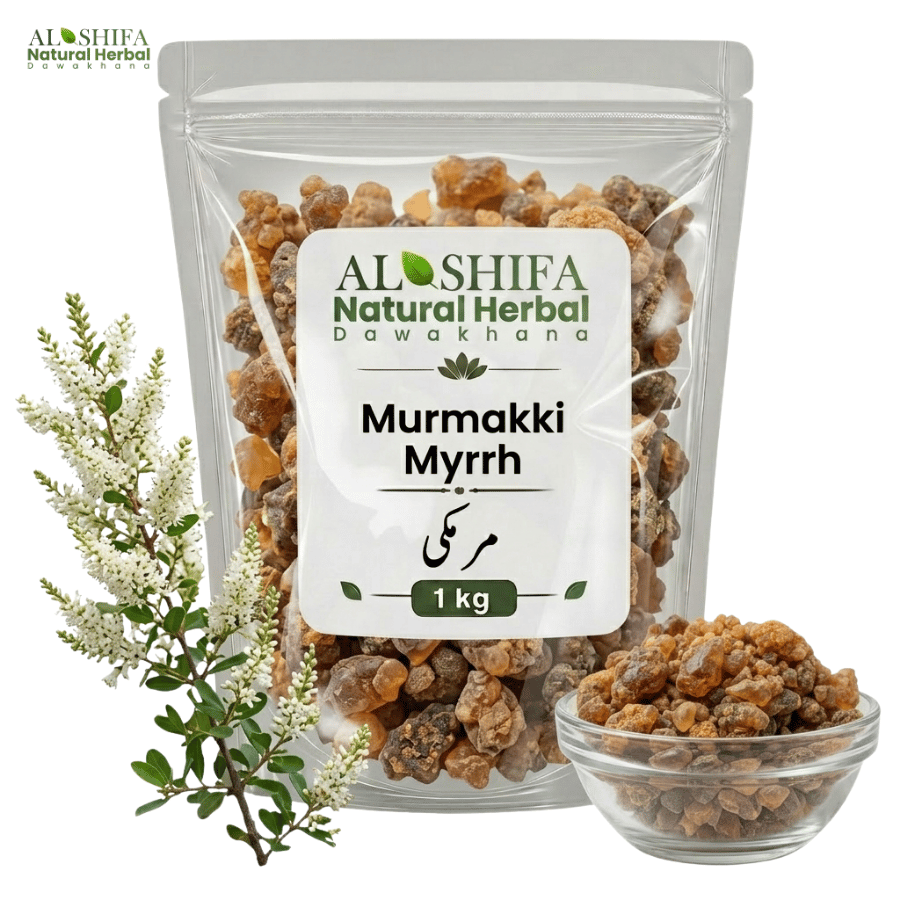
Murmakki, commonly known as Myrrh, is a traditional aromatic gum-resin obtained mainly from Commiphora myrrha. It has traditionally been used in oral and gum-care, skin-care, wound-care, digestive, aromatic and selected Unani preparations.
Al Shifa Murmakki is carefully selected with attention to its traditional resin identity, characteristic aroma, natural appearance, cleanliness, proper dryness and responsible storage.
Key Features:
Important Note: Murmakki is Myrrh resin and should not be confused with Frankincense. Whole resin, extracts and essential oil are different preparations. Internal medicinal use requires caution, particularly during pregnancy, and traditional use should not replace appropriate dental or medical treatment.
Murmakki, commonly known as Myrrh, is a traditional aromatic natural resin obtained from trees of the Commiphora genus, especially Commiphora myrrha. It belongs to the Burseraceae family and is known in Urdu herbal and Unani practice as مر مکی.
Myrrh has a long history of use in Unani, Middle Eastern and other traditional systems. It has traditionally been included in oral and gum-care preparations, skin and wound-care formulations, digestive preparations, aromatic applications and selected Unani compound medicines.
Murmakki is naturally aromatic, resinous and distinctly bitter. It contains a complex mixture of resin compounds, gum components and volatile aromatic constituents. Scientific studies have investigated Myrrh and its constituents for several biological properties, but findings from laboratory studies, isolated compounds, extracts or essential oils should not automatically be applied to ordinary raw resin.
An important identification point is that Myrrh is not Frankincense. Myrrh is mainly obtained from Commiphora species, while Frankincense is obtained from Boswellia species. Both are aromatic tree resins from the Burseraceae family, but they are botanically and chemically different materials.
At Al Shifa Natural Herbal Dawakhana, Murmakki is carefully selected with attention to its traditional resin identity, characteristic aroma, natural appearance, cleanliness, proper dryness and responsible storage.
Murmakki is an aromatic gum-resin produced by certain Commiphora trees.
When the bark is naturally damaged or deliberately tapped, a sticky exudate comes out. This material gradually dries and hardens into irregular resin pieces commonly sold as Myrrh.
The principal botanical source commonly associated with medicinal Myrrh is:
Commiphora myrrha
Other related Commiphora species may also appear in regional or commercial Myrrh supplies.
For this reason, botanical source and trade identity should be considered carefully when precise identification is required.
Product Name: Murmakki
English Name: Myrrh / Myrrh Gum Resin
Urdu Name: مر مکی
Roman Name: Murmakki / Mur Makki / Murr Makki
Scientific Name: Commiphora myrrha (Nees) Engl.
Plant Family: Burseraceae
Plant Part: Natural Gum-Resin / Bark Exudate
Common Form: Whole Resin Pieces / Broken Resin / Powder
Product Type: Traditional Aromatic Medicinal Gum-Resin
Natural Myrrh usually occurs as irregular dried resin pieces.
Depending on source, age and storage, the pieces may appear:
Freshly broken pieces may show a different internal appearance from the outer surface.
Myrrh also has a characteristic strong aromatic smell and distinctly bitter taste.
Natural variation between pieces and batches is expected.
Good-quality Murmakki should generally have:
Because natural resins are collected from trees and may contain small amounts of bark or plant matter, careful cleaning and sorting are important.
Myrrh is often casually called a gum, but it is more accurately described as a gum-resin or oleo-gum-resin.
This means it naturally contains a mixture of different plant-derived components rather than behaving like a simple edible gum.
Therefore:
Myrrh Gum-Resin ≠ Ordinary Edible Gum
It should not automatically be used in the same way as Gum Arabic or food gums.
Myrrh and Frankincense are two famous aromatic resins, but they come from different plants.
Myrrh:
Mainly associated with Commiphora species.
Frankincense:
Obtained from Boswellia species.
Therefore:
Myrrh ≠ Frankincense
and
Commiphora ≠ Boswellia
Their aroma, chemical composition, traditional uses and resin characteristics differ.
The genus Commiphora contains many species.
Commercial materials sold under names such as Myrrh may vary according to:
Therefore:
Commiphora myrrha ≠ Every Commiphora Species
Information from one botanical species should not automatically be applied to every resin sold under a similar traditional name.
Murmakki has a long history in traditional medicine and aromatic use.
It has traditionally been included in preparations associated with:
Its strong aroma, bitterness and resinous character contributed to its historical importance.
One of the best-known traditional uses of Myrrh is in oral-care preparations.
It has historically appeared in:
However:
Traditional Oral Use ≠ Treatment for Dental Disease
Tooth decay, gum disease, persistent bleeding, swelling, pus, severe pain or loose teeth require professional dental assessment.
Traditional Myrrh preparations may sometimes be used in diluted oral-care formulations.
Raw resin pieces or concentrated preparations should not automatically be applied directly to sensitive mouth tissues.
Excessive concentration may cause irritation.
Any preparation intended for the mouth should be appropriately formulated and should not be swallowed unless specifically intended and considered suitable for internal use.
Murmakki has traditionally been included in external preparations associated with:
This historical use does not mean raw Myrrh resin should be placed directly into deep, infected or serious wounds.
Serious wounds require appropriate medical care.
Seek professional assessment for:
Traditional use should not delay appropriate wound cleaning, vaccination assessment or medical treatment.
Murmakki has historically appeared in selected digestive formulations.
Its bitter and aromatic character contributed to its traditional inclusion in preparations associated with:
Traditional digestive use does not establish treatment for ulcers, infection, inflammatory bowel disease or other diagnosed digestive disorders.
Myrrh has been valued for centuries for its distinctive aroma.
It has been used in:
Burning resin produces smoke and volatile compounds.
Smoke exposure can irritate the respiratory system, particularly in sensitive individuals.
Good ventilation is important when aromatic resins are burned.
Myrrh contains a complex mixture of naturally occurring compounds.
Reported constituent groups include:
The exact composition varies according to:
A characteristic smell can help evaluate a resin, but aroma alone does not prove botanical species.
Related aromatic resins can sometimes have overlapping sensory characteristics.
Therefore:
Characteristic Aroma ≠ Botanical Authentication
Reliable sourcing remains important.
Murmakki can occur in several forms.
Whole Resin:
Natural dried gum-resin pieces.
Powder:
Finely ground resin material.
Extract:
A processed preparation concentrating selected constituents.
Essential Oil:
A concentrated volatile aromatic fraction obtained through specialized processing.
These are not interchangeable.
Therefore:
Whole Myrrh Resin ≠ Powder ≠ Extract ≠ Myrrh Essential Oil
Their concentration, composition and safety considerations can differ significantly.
Myrrh essential oil contains concentrated volatile aromatic compounds.
The safety considerations for an essential oil are different from those of whole resin.
Essential oil should not automatically be swallowed or applied undiluted simply because Myrrh has a history of traditional herbal use.
Research involving essential oil should also not automatically be applied to ordinary dried resin.
Whole Murmakki pieces allow better examination of:
Once finely powdered, many visible identification features are lost.
Reliable sourcing becomes more important when purchasing powdered Myrrh.
Myrrh and its constituents have been investigated in laboratory and experimental research.
Research may examine areas involving:
However:
Laboratory Activity ≠ Proven Human Treatment
and
Extract or Essential-Oil Research ≠ Guaranteed Effect of Raw Myrrh Resin
Clinical usefulness depends on preparation, concentration, route of use, condition being treated and quality of evidence.
Myrrh is sometimes described as having antimicrobial properties.
Laboratory findings involving microorganisms do not mean raw Murmakki can safely treat infections in humans.
Therefore:
Laboratory Antimicrobial Activity ≠ Proven Treatment for Infection
Serious bacterial, fungal or other infections require appropriate diagnosis and treatment.
Murmakki is a biologically active aromatic resin and should not be treated as an ordinary food ingredient.
Large, frequent or concentrated internal amounts should not be used without appropriate guidance.
Potential concerns can depend on:
Traditional medicinal use does not mean unlimited use is safe.
Myrrh has a history of traditional medicinal use that raises particular concern during pregnancy, including traditional associations with uterine and menstrual activity.
For this reason, medicinal internal use during pregnancy should be avoided unless specifically advised by an appropriately qualified healthcare professional.
Concentrated extracts and essential oils require additional caution.
Reliable safety information for medicinal amounts of Myrrh during breastfeeding is limited.
Breastfeeding women should seek appropriate professional guidance before regular internal use or use of concentrated preparations.
Medicinal use in children should be professionally guided.
Whole resin pieces may also present a choking risk.
Concentrated extracts and essential oils should not be assumed suitable for children simply because they originate from a natural resin.
Some research has investigated Myrrh in relation to metabolic and blood-glucose effects.
This does not establish raw Myrrh as a treatment for diabetes.
People using medicines that affect blood sugar should use medicinal Myrrh cautiously and seek appropriate guidance.
Prescribed diabetes treatment should not be replaced with Myrrh.
Because herbal resins can contain biologically active constituents and Myrrh may interact with physiological processes, people taking anticoagulant or antiplatelet medicines should seek professional guidance before significant medicinal internal use.
People preparing for surgery should also disclose herbal and resin products they use to their healthcare team.
People with chronic medical conditions or those taking regular medicines should seek appropriate guidance before frequent medicinal use of Murmakki.
This is especially important for people with:
Natural origin does not guarantee absence of interactions.
Individual sensitivity to Myrrh can occur.
Topical or oral preparations may cause irritation in some individuals.
Discontinue use if significant:
develop.
Serious allergic reactions require prompt medical attention.
At Al Shifa Natural Herbal Dawakhana, Murmakki is selected with attention to:
Traditional Resin Identity – Material consistent with traditional Myrrh.
Natural Resin Appearance – Characteristic irregular dried gum-resin pieces.
Characteristic Aroma – Naturally aromatic Myrrh-like resin character.
Proper Dryness – Maintained in a suitably dry condition.
Cleanliness – Selected to minimize dust, soil and unnecessary foreign matter.
Material Condition – Checked for excessive moisture, mould and deterioration.
Responsible Handling – Carefully sorted and packed.
Responsible Storage – Protected from moisture, excessive heat and unsuitable storage conditions.
Al Shifa Natural Herbal Dawakhana, established in 1999, supplies traditional herbs, natural resins and herbal raw materials throughout Pakistan.
Our focus for Murmakki includes:
Murmakki has traditionally been included in:
The appropriate preparation and amount depend on the intended use and product form.
Whole resin, powder, extract and essential oil differ significantly.
For medicinal internal use, follow a recognized traditional formulation or guidance from an appropriately qualified practitioner.
Avoid unsupervised concentrated internal use.
Murmakki is Myrrh, an aromatic gum-resin obtained mainly from Commiphora species, particularly Commiphora myrrha.
Important distinctions include:
Store Murmakki in a cool, dry and clean place in a tightly closed container.
For responsible storage:
Do not use resin showing visible mould, excessive moisture, unusual deterioration or an unpleasant rotten or musty smell.
Murmakki, commonly known as Myrrh or Myrrh Gum Resin, is a traditional aromatic gum-resin obtained mainly from Commiphora myrrha, known in Urdu as مر مکی.
It has traditionally been used in oral and gum-care, skin-care, wound-care, digestive, aromatic and selected Unani preparations.
Customers searching for Murmakki, Mur Makki, Murr Makki, Myrrh, Myrrh Gum, Myrrh Resin, Myrrh Gum Resin, Commiphora Myrrha, Commiphora Myrrha Resin, Dried Myrrh, Whole Myrrh Resin, Pure Murmakki, Original Murmakki, Natural Murmakki, Pure Myrrh, Original Myrrh, Natural Myrrh Resin, Murmakki benefits, Murmakki uses, Myrrh benefits, Myrrh uses, Commiphora Myrrha benefits, Myrrh for gums, Myrrh for oral care, Myrrh traditional skin use, Murmakki traditional uses, Murmakki Unani, Myrrh Unani, Murmakki Pakistan, Myrrh Pakistan, Commiphora Myrrha Pakistan, Pure Murmakki Pakistan, Original Murmakki Pakistan, Murmakki Lahore, Myrrh Lahore, Murmakki price in Pakistan, Myrrh price in Pakistan, Commiphora Myrrha price in Pakistan, buy Murmakki Pakistan, buy Myrrh Pakistan, Murmakki online Pakistan or Myrrh online Pakistan can choose Al Shifa Natural Herbal Dawakhana for carefully selected traditional natural resin.
Since 1999, Al Shifa Natural Herbal Dawakhana has focused on supplying herbs, natural gums, resins and traditional raw materials with attention to identity, cleanliness, proper drying, careful handling, responsible storage and clear product information.
Product Name: Murmakki
English Name: Myrrh / Myrrh Gum Resin
Urdu Name: مر مکی
Roman Name: Murmakki / Mur Makki / Murr Makki
Scientific Name: Commiphora myrrha (Nees) Engl.
Plant Family: Burseraceae
Plant Part: Natural Gum-Resin / Bark Exudate
Product Type: Traditional Aromatic Medicinal Gum-Resin
Traditional Use: Oral and gum-care, skin-care, wound-care, digestive, aromatic and selected Unani preparations
Important Note: Murmakki is Myrrh resin mainly associated with Commiphora myrrha and should not be confused with Frankincense. Whole resin, extracts and essential oil differ considerably in concentration and use. Internal medicinal use requires caution, particularly during pregnancy.
مر مکی ایک خوشبودار قدرتی نباتاتی گوند نما رال ہے جو ایک مخصوص کانٹے دار درخت کے تنے اور شاخوں سے نکلنے والی رطوبت کے خشک ہونے سے حاصل ہوتی ہے۔ خشک ہونے کے بعد یہ زردی مائل بھورے، سرخی مائل بھورے یا گہرے بھورے بے قاعدہ ٹکڑوں کی شکل اختیار کر لیتی ہے۔
طبِ یونانی اور دیسی طبی ادویات میں مر مکی کو خاص طور پر منہ کے امراض، مسوڑھوں کے امراض، منہ کے چھالوں کی بیماری، گلے کے امراض، جلد کے امراض، زخموں، معدے کے امراض اور خواتین کے امراض کے لیے بنائی جانے والی حکیمی ادویات میں شامل کیا جاتا ہے۔
مر مکی اپنی مخصوص خوشبو، کڑوے ذائقے اور رال دار ساخت کی وجہ سے آسانی سے پہچانی جا سکتی ہے۔ اس کا بیرونی استعمال بھی کیا جاتا ہے جبکہ اندرونی طبی استعمال میں مقدار اور جسمانی حالت کا خاص خیال رکھنا ضروری ہے۔
الشفاء نیچرل ہربل دواخانہ میں مر مکی منتخب کرتے وقت اس کی درست نباتاتی شناخت، قدرتی رال دار ساخت، مخصوص خوشبو، قدرتی رنگت، صفائی اور مناسب خشک حالت کو اہمیت دی جاتی ہے۔
مر مکی ایک قدرتی رال ہے جو مر کے درخت کے تنے یا شاخوں سے خارج ہونے والی رطوبت کے خشک ہونے سے بنتی ہے۔
تازہ رطوبت نرم اور چپچپی ہوتی ہے۔ ہوا کے سامنے آنے کے بعد یہ آہستہ آہستہ سخت ہو کر بے قاعدہ ڈلیوں یا ٹکڑوں کی شکل اختیار کر لیتی ہے۔
خشک مر مکی کی عام پہچان یہ ہے:
نام: مر مکی
معروف نام: مر، مر مکی
نباتاتی نام: کمیفورا مائرا
خاندان: برسیریسی خاندان
استعمال ہونے والا حصہ: تنے اور شاخوں سے حاصل ہونے والی خشک رال
قسم: خوشبودار نباتاتی رال اور مفرد دوا
عام شکل: بے قاعدہ خشک رال دار ٹکڑے
عام رنگت: زردی مائل بھوری سے سرخی مائل گہری بھوری
ذائقہ: کڑوا اور قدرے تیز
بو: مخصوص خوشبودار رال جیسی
مر مکی ایک کانٹے دار جھاڑی یا چھوٹے درخت سے حاصل کی جاتی ہے۔
درخت کے تنے اور شاخوں سے نکلنے والی قدرتی رطوبت ہوا کے سامنے آ کر خشک ہوتی ہے اور آہستہ آہستہ سخت رال میں تبدیل ہو جاتی ہے۔
خشک ہونے کے بعد اسے جمع کر کے صاف کیا جاتا ہے تاکہ مٹی، چھال اور غیر ضروری ذرات الگ کیے جا سکیں۔
پاکستان میں رائج حکیمی اور مفردات کی کتابوں میں مر مکی کا مزاج گرم و خشک درجہ دوم بیان کیا جاتا ہے۔
طبِ یونانی میں اسے خاص طور پر منہ کے امراض، مسوڑھوں کے امراض، گلے کے امراض، زخموں، جلد کے امراض اور خواتین کے امراض کے لیے بنائی جانے والی حکیمی ادویات میں شامل کیا جاتا ہے۔
گرم اور خشک مزاج کی وجہ سے اس کی بڑی طبی مقدار خود سے استعمال نہیں کرنی چاہیے۔
اچھا مر مکی پہچاننے کے لیے درج ذیل باتیں دیکھی جاتی ہیں:
طبِ یونانی میں مر مکی کے اہم استعمال یہ ہیں:
منہ کے لیے استعمال: منہ کے امراض، منہ کے چھالوں کی بیماری اور مسوڑھوں کے امراض کے لیے بنائی جانے والی حکیمی ادویات میں شامل کیا جاتا ہے۔
گلے کے لیے استعمال: گلے کے امراض کے لیے بنائی جانے والی غرارے اور حکیمی ادویات میں شامل کیا جاتا ہے۔
جلد کے لیے استعمال: جلد کے امراض اور زخموں کے بیرونی استعمال والی حکیمی ادویات میں شامل کیا جاتا ہے۔
معدے کے لیے استعمال: معدے کے امراض اور ہاضمے کے لیے بنائی جانے والی مرکب حکیمی ادویات میں شامل کیا جاتا ہے۔
خواتین کے لیے استعمال: خواتین کے امراض کے لیے بنائی جانے والی حکیمی ادویات میں بھی اس کا ذکر ملتا ہے، لیکن اندرونی استعمال میں خاص احتیاط ضروری ہے۔
مر مکی کا معروف استعمال منہ کے امراض کے لیے ہے۔
اسے منہ کی صفائی کے لیے بنائے جانے والے سفوف، غرارے اور کلی کی حکیمی ادویات میں شامل کیا جاتا ہے۔
اگر منہ کے امراض مسلسل موجود ہوں، منہ میں غیر معمولی زخم بنے رہیں یا نگلنے میں مشکل ہو تو معالج سے چیک کروائیں۔
مر مکی کو منہ کے چھالوں کی بیماری کے لیے بنائی جانے والی حکیمی ادویات میں شامل کیا جاتا ہے۔
اگر منہ کے چھالوں کی بیماری دو ہفتے سے زیادہ برقرار رہے، بار بار واپس آئے یا کھانے پینے میں بہت زیادہ تکلیف پیدا کرے تو معالج سے چیک کروائیں۔
مر مکی کو مسوڑھوں کے امراض کے لیے بنائے جانے والے حکیمی منجن اور کلی کی ادویات میں شامل کیا جاتا ہے۔
اسے خاص طور پر مسوڑھوں کی سوجن، کمزوری اور خون آنے کی شکایت کے لیے بنائے جانے والے مرکبات میں شامل کیا جا سکتا ہے۔
اگر مسوڑھوں سے مسلسل خون آئے، پیپ نکلے یا دانت ہلنے لگیں تو معالج سے چیک کروائیں۔
مر مکی کو مسوڑھوں سے خون آنے کی بیماری کے لیے بنائے جانے والے منجن اور کلی کے مرکبات میں شامل کیا جا سکتا ہے۔
بار بار خون آنے کی صورت میں صرف منجن پر انحصار کرنے کے بجائے دانتوں اور مسوڑھوں کی حالت معالج سے چیک کروائیں۔
مر مکی کو دانتوں کے امراض کے لیے بنائے جانے والے حکیمی منجن میں شامل کیا جاتا ہے۔
دانت میں مسلسل درد، سوجن یا پیپ موجود ہو تو معالج سے چیک کروائیں۔
مر مکی کو گلے کے امراض کے لیے بنائی جانے والی کلی اور غرارے کی حکیمی ادویات میں شامل کیا جا سکتا ہے۔
اگر گلے کے امراض کے ساتھ نگلنے میں شدید مشکل، تیز بخار یا گردن میں نمایاں سوجن ہو تو معالج سے چیک کروائیں۔
مر مکی کو گلے کی خراش کی بیماری کے لیے بنائے جانے والے حکیمی غراروں میں شامل کیا جا سکتا ہے۔
اگر گلے کی خراش کی بیماری مسلسل رہے یا آواز کئی ہفتوں تک خراب رہے تو معالج سے چیک کروائیں۔
مر مکی کو جلد کے امراض کے لیے بنائی جانے والی بیرونی حکیمی ادویات میں شامل کیا جاتا ہے۔
اس کی رال کو مختلف مرہم اور جلد پر لگائی جانے والی ادویات میں استعمال کیا جا سکتا ہے۔
حساس جلد پر استعمال سے پہلے تھوڑی مقدار لگا کر برداشت دیکھنا بہتر ہے۔
مر مکی کو زخموں کے لیے بنائی جانے والی بیرونی حکیمی ادویات میں شامل کیا جاتا ہے۔
گہرے، بڑے، آلودہ، بہت زیادہ خون والے یا پیپ والے زخم پر خود سے مر مکی نہ لگائیں۔
ایسے زخم کی صورت میں معالج سے چیک کروائیں۔
مر مکی کے بیرونی مرکبات کو جلد کی سوزش کی بیماری میں استعمال کرتے وقت احتیاط ضروری ہے کیونکہ حساس افراد میں یہ جلن بھی پیدا کر سکتی ہے۔
اگر لگانے کے بعد شدید جلن، سرخی، خارش یا سوجن بڑھے تو استعمال بند کریں۔
مر مکی کو معدے کے امراض کے لیے بنائی جانے والی مرکب حکیمی ادویات میں شامل کیا جاتا ہے۔
اس کا اندرونی استعمال بیرونی استعمال کی نسبت زیادہ احتیاط چاہتا ہے۔
اگر معدے کے امراض کے ساتھ شدید درد، بار بار قے یا خون کی علامات موجود ہوں تو معالج سے چیک کروائیں۔
مر مکی کو بدہضمی کی بیماری کے لیے بنائی جانے والی حکیمی ادویات میں دوسرے مناسب مفردات کے ساتھ شامل کیا جا سکتا ہے۔
اگر بدہضمی کی بیماری مسلسل رہے یا وزن کم ہو رہا ہو تو معالج سے چیک کروائیں۔
مر مکی کو پیٹ میں گیس کی بیماری اور ہاضمے کے لیے بنائے جانے والے مرکب حکیمی نسخوں میں شامل کیا جا سکتا ہے۔
اگر پیٹ میں گیس کے ساتھ شدید درد یا مسلسل قبض کی بیماری موجود ہو تو معالج سے چیک کروائیں۔
طبِ یونانی میں مر مکی کو خواتین کے امراض کے لیے بنائی جانے والی حکیمی ادویات میں بھی شامل کیا جاتا ہے۔
اس کا اندرونی استعمال خاص احتیاط چاہتا ہے، خاص طور پر ماہواری، حمل یا رحم کی بیماریوں میں۔
خواتین بڑی طبی مقدار خود سے استعمال نہ کریں۔
مر مکی کو ماہواری کے امراض کے لیے بنائی جانے والی حکیمی ادویات میں شامل کیا جا سکتا ہے۔
اگر ماہواری کے امراض میں بہت زیادہ خون آئے، شدید درد ہو یا ماہواری طویل عرصے تک بند رہے تو معالج سے چیک کروائیں۔
مر مکی میں کئی قدرتی نباتاتی اجزاء پائے جاتے ہیں، جن میں شامل ہیں:
مر مکی کی مخصوص خوشبو اور رال دار ساخت میں اس کے قدرتی روغنی اور رال دار اجزاء اہم کردار ادا کرتے ہیں۔
مر مکی کا بڑا حصہ قدرتی رال اور گوند نما اجزاء پر مشتمل ہوتا ہے۔
یہی رال اس کی سخت، بے قاعدہ اور قدرے چپچپی ساخت کی وجہ بنتی ہے۔
گرم کرنے پر اس کی خوشبو زیادہ نمایاں ہو سکتی ہے۔
مر مکی میں قدرتی خوشبودار روغنی اجزاء پائے جاتے ہیں جو اس کی مخصوص مہک میں اہم کردار ادا کرتے ہیں۔
خشک مر مکی اور اس سے حاصل کیے گئے گاڑھے روغنی عرق کو ایک جیسا استعمال نہیں کرنا چاہیے۔
گاڑھے روغنی عرق کا اندرونی استعمال زیادہ احتیاط چاہتا ہے۔
مکمل مر مکی:
مکمل رال دار ٹکڑوں میں قدرتی رنگت، ساخت، خوشبو، صفائی اور ملاوٹ دیکھنا نسبتاً آسان ہوتا ہے۔
مر مکی کا سفوف:
پسی ہوئی مر مکی حکیمی ادویات میں شامل کرنا آسان ہوتی ہے، لیکن سفوف کی حالت میں اصل رال کی شناخت دیکھنا مشکل ہو جاتی ہے۔
ضرورت کے مطابق صاف مر مکی کو تازہ باریک کرنا بہتر ہے۔
مر مکی اور لوبان دو الگ نباتاتی رالیں ہیں۔
مر مکی کمیفورا نسل کے درخت سے حاصل ہوتی ہے اور اس کا ذائقہ نمایاں طور پر کڑوا ہوتا ہے۔
لوبان ایک الگ درخت کی خوشبودار رال ہے۔
دونوں کی نباتاتی شناخت، خوشبو، ذائقہ اور حکیمی استعمال ایک جیسے نہیں ہیں۔
مر مکی کو عام نباتاتی گوند کے برابر نہیں سمجھنا چاہیے۔
مر مکی میں رال اور خوشبودار روغنی اجزاء نمایاں ہوتے ہیں جبکہ عام نباتاتی گوند کی ساخت اور استعمال مختلف ہو سکتے ہیں۔
اسی لیے مر مکی کو صرف ظاہری شکل دیکھ کر کسی عام گوند سے تبدیل نہ کریں۔
مر مکی کو منہ اور مسوڑھوں کے لیے بنائی جانے والی کلی کے مرکبات میں شامل کیا جا سکتا ہے۔
بہت گاڑھا محلول منہ کی حساس جھلی میں جلن پیدا کر سکتا ہے۔
کلی کے لیے استعمال ہونے والا محلول نگلنے سے گریز کریں۔
مر مکی کو جلد اور منہ کے لیے بنائی جانے والی بیرونی حکیمی ادویات میں استعمال کیا جاتا ہے۔
حساس جلد یا حساس منہ میں زیادہ گاڑھی مقدار جلن پیدا کر سکتی ہے۔
اگر استعمال کے بعد شدید جلن یا سوجن ہو تو استعمال بند کریں۔
حاملہ خواتین مر مکی کا اندرونی طبی استعمال خود سے نہ کریں۔
مر مکی کے رحم پر اثرات کے حوالے سے احتیاط ضروری سمجھی جاتی ہے، اس لیے حمل کے دوران اس کی بڑی طبی مقدار سے گریز کریں۔
اگر حمل کے دوران کسی بیماری کے لیے حکیمی دوا استعمال کرنی ہو تو معالج سے مناسب دوا معلوم کریں۔
دودھ پلانے والی خواتین مر مکی کی بڑی طبی مقدار خود سے استعمال نہ کریں۔
اس دوران اندرونی استعمال کی مناسب مقدار معالج سے معلوم کریں۔
بچوں کو مر مکی کی اندرونی طبی مقدار خود سے نہ دیں۔
منہ یا گلے کے استعمال میں بھی ایسا محلول نہ دیں جسے بچہ آسانی سے نگل سکتا ہو۔
اگر بچے میں منہ کے امراض، گلے کے امراض یا معدے کے امراض موجود ہوں تو معالج سے چیک کروائیں۔
بزرگ افراد میں مر مکی کی اندرونی طبی مقدار جسمانی حالت کے مطابق ہونی چاہیے۔
اگر دل کے امراض، جگر کی بیماری، گردوں کی بیماری یا ذیابیطس کی بیماری موجود ہو تو بڑی طبی مقدار خود سے استعمال نہ کریں۔
ذیابیطس کی بیماری والے افراد مر مکی کی بڑی اندرونی طبی مقدار خود سے استعمال نہ کریں۔
اگر ذیابیطس کی بیماری کی مستقل ادویات استعمال ہو رہی ہوں تو مر مکی کے باقاعدہ اندرونی استعمال سے پہلے معالج کو بتائیں۔
دل کے امراض والے افراد مر مکی کی بڑی اندرونی طبی مقدار خود سے استعمال نہ کریں۔
دل کی مستقل ادویات خود سے بند یا تبدیل نہ کریں۔
جگر کی بیماری والے افراد مر مکی کی بڑی اندرونی طبی مقدار یا گاڑھا روغنی عرق خود سے استعمال نہ کریں۔
اگر جگر کی بیماری کی مستقل ادویات استعمال ہو رہی ہوں تو معالج سے مناسب مقدار معلوم کریں۔
گردوں کی بیماری والے افراد مر مکی کی بڑی اندرونی طبی مقدار خود سے استعمال نہ کریں۔
اگر گردوں کی بیماری کی مستقل ادویات استعمال ہو رہی ہوں تو معالج سے چیک کروائیں۔
اگر دل کے امراض، خون جمنے کے امراض یا فالج کی بیماری کی وجہ سے خون پتلا کرنے والی ادویات استعمال ہو رہی ہوں تو مر مکی کی بڑی اندرونی طبی مقدار خود سے شروع نہ کریں۔
غیر معمولی خون آنے کی صورت میں معالج سے چیک کروائیں۔
اگر کوئی شخص ذیابیطس کی بیماری، دل کے امراض، جگر کی بیماری، گردوں کی بیماری یا خون جمنے کے امراض کی مستقل ادویات استعمال کر رہا ہو تو مر مکی کی بڑی اندرونی طبی مقدار خود سے شروع نہ کرے۔
مستقل ادویات خود سے بند یا تبدیل نہ کریں۔
مر مکی یا اس کے خوشبودار رال دار اجزاء سے حساس افراد میں جسمانی ردعمل پیدا ہو سکتا ہے۔
اگر استعمال کے بعد:
پیدا ہو تو استعمال بند کریں اور معالج سے چیک کروائیں۔
مر مکی کی بہت زیادہ اندرونی مقدار خود سے استعمال نہ کریں۔
زیادہ استعمال سے:
پیدا ہو سکتی ہے۔
اگر علامات شدید یا مسلسل ہوں تو معالج سے چیک کروائیں۔
مر مکی کے مصلح اور بدل کا انتخاب بیماری، جسمانی حالت اور حکیمی نسخے کے مطابق کیا جاتا ہے۔
ہر خوشبودار رال یا نباتاتی گوند مر مکی کا مکمل بدل نہیں ہوتا۔
مناسب مصلح اور بدل مستند حکیم سے معلوم کریں۔
مر مکی کو حکیمی ادویات میں:
استعمال کیا جاتا ہے۔
مقدار عمر، جسمانی حالت، بیماری اور استعمال کی شکل کے مطابق مقرر کی جاتی ہے۔
مر مکی کی خشک رال، سفوف اور گاڑھے روغنی عرق کی مقدار ایک جیسی نہیں ہوتی۔
حاملہ خواتین، دودھ پلانے والی خواتین، بچوں اور دل، جگر، گردوں یا ذیابیطس کی بیماری والے افراد اندرونی طبی مقدار خود سے مقرر نہ کریں۔
مر مکی ایک خوشبودار نباتاتی رال ہے جسے طبِ یونانی میں خاص طور پر منہ کے امراض، مسوڑھوں کے امراض، منہ کے چھالوں کی بیماری، گلے کے امراض، جلد کے امراض، زخموں، معدے کے امراض اور خواتین کے امراض کے لیے بنائی جانے والی حکیمی ادویات میں شامل کیا جاتا ہے۔
حاملہ خواتین مر مکی کا اندرونی طبی استعمال خود سے نہ کریں۔ گہرے یا پیپ والے زخم، مسلسل منہ کے چھالے، شدید مسوڑھوں سے خون یا نگلنے میں واضح دشواری کی صورت میں معالج سے چیک کروائیں۔
الشفاء نیچرل ہربل دواخانہ میں مر مکی منتخب کرتے وقت درج ذیل باتوں کا خیال رکھا جاتا ہے:
درست نباتاتی شناخت: اصل مر مکی کی رال کی شناخت کو خاص اہمیت دی جاتی ہے۔
قدرتی رنگت: زردی مائل سے سرخی مائل بھوری قدرتی رنگت دیکھی جاتی ہے۔
اصل رال دار ساخت: بے قاعدہ سخت ٹکڑوں کی قدرتی ساخت کو اہمیت دی جاتی ہے۔
مخصوص خوشبو: مر مکی کی قدرتی رال جیسی خوشبو کو شناخت میں اہم سمجھا جاتا ہے۔
قدرتی کڑوا ذائقہ: اصل مر مکی کا مخصوص کڑوا ذائقہ شناخت کی اہم علامت ہے۔
مناسب خشک حالت: رال میں غیر ضروری نمی نہیں ہونی چاہیے۔
صاف ستھری حالت: مٹی، ریت، چھال اور غیر ضروری ذرات کم سے کم ہونے چاہئیں۔
غیر ضروری ملاوٹ سے پاک: عام گوند یا مشابہ رال کی ملاوٹ سے پاک مال منتخب کرنے کو اہمیت دی جاتی ہے۔
الشفاء نیچرل ہربل دواخانہ سنہ ۱۹۹۹ سے قدرتی جڑی بوٹیوں، نباتاتی رال اور حکیمی مفردات کی سپلائی کر رہا ہے۔
ہم مر مکی کی درست نباتاتی شناخت، قدرتی رنگت، مخصوص خوشبو، رال دار ساخت، صفائی اور مناسب خشک حالت کو اہمیت دیتے ہیں۔
قدرتی رال میں اصل نباتاتی ماخذ، خوشبو، ساخت اور صفائی معیار کی اہم نشانیاں ہیں۔
مر مکی کو ٹھنڈی، خشک اور صاف جگہ پر کسی جار میں اچھی طرح پیک کر کے رکھیں۔
اگر مر مکی میں پھپھوندی، غیر ضروری نمی یا خراب بو پیدا ہو جائے تو اسے استعمال نہ کریں۔
مر مکی پاکستان میں منہ، مسوڑھوں، جلد اور حکیمی مرکبات میں استعمال ہونے والی معروف قدرتی نباتاتی رال ہے۔ اسے خاص طور پر منہ کے امراض، مسوڑھوں کے امراض، منہ کے چھالوں کی بیماری، گلے کے امراض، جلد کے امراض اور معدے کے امراض کے لیے بنائی جانے والی حکیمی ادویات میں شامل کیا جاتا ہے۔
اگر آپ مر مکی، مر، خالص مر مکی، اصل مر مکی، مر مکی کے فوائد، مر مکی کے استعمال، مر مکی پاکستان، مر مکی لاہور، مر مکی کی قیمت، مر مکی آن لائن یا مر مکی خریدیں تلاش کر رہے ہیں تو الشفاء نیچرل ہربل دواخانہ درست نباتاتی شناخت، قدرتی رنگت، مخصوص خوشبو، رال دار ساخت اور صفائی کو اہمیت دیتا ہے۔
نام: مر مکی
معروف نام: مر، مر مکی
نباتاتی نام: کمیفورا مائرا
خاندان: برسیریسی خاندان
استعمال ہونے والا حصہ: تنے اور شاخوں سے حاصل ہونے والی خشک رال
قسم: خوشبودار نباتاتی رال اور مفرد دوا
مزاج: گرم و خشک درجہ دوم
عام شکل: بے قاعدہ خشک رال دار ٹکڑے
عام رنگت: زردی مائل بھوری سے سرخی مائل گہری بھوری
ذائقہ: کڑوا اور قدرے تیز
بو: مخصوص خوشبودار رال جیسی
اہم قدرتی اجزاء: قدرتی رال دار اجزاء، گوند والے اجزاء، خوشبودار روغنی اجزاء، فورانوسیسکوئی ٹرپین قسم کے اجزاء، کومفورک تیزابی اجزاء، فینول والے نباتاتی اجزاء اور ٹرپین قسم کے نباتاتی اجزاء۔
اہم حکیمی استعمال: منہ کے امراض، مسوڑھوں کے امراض، منہ کے چھالوں کی بیماری، گلے کے امراض، جلد کے امراض، زخموں اور معدے کے امراض کے لیے بنائی جانے والی حکیمی ادویات میں شامل کیا جاتا ہے۔
اہم احتیاط: حاملہ خواتین مر مکی کا اندرونی طبی استعمال خود سے نہ کریں۔ بچوں، دودھ پلانے والی خواتین اور دل، جگر، گردوں یا ذیابیطس کی بیماری والے افراد اندرونی طبی مقدار مستند معالج سے معلوم کریں۔