
Badi Elaichi, Black Cardamom
Contact for Price
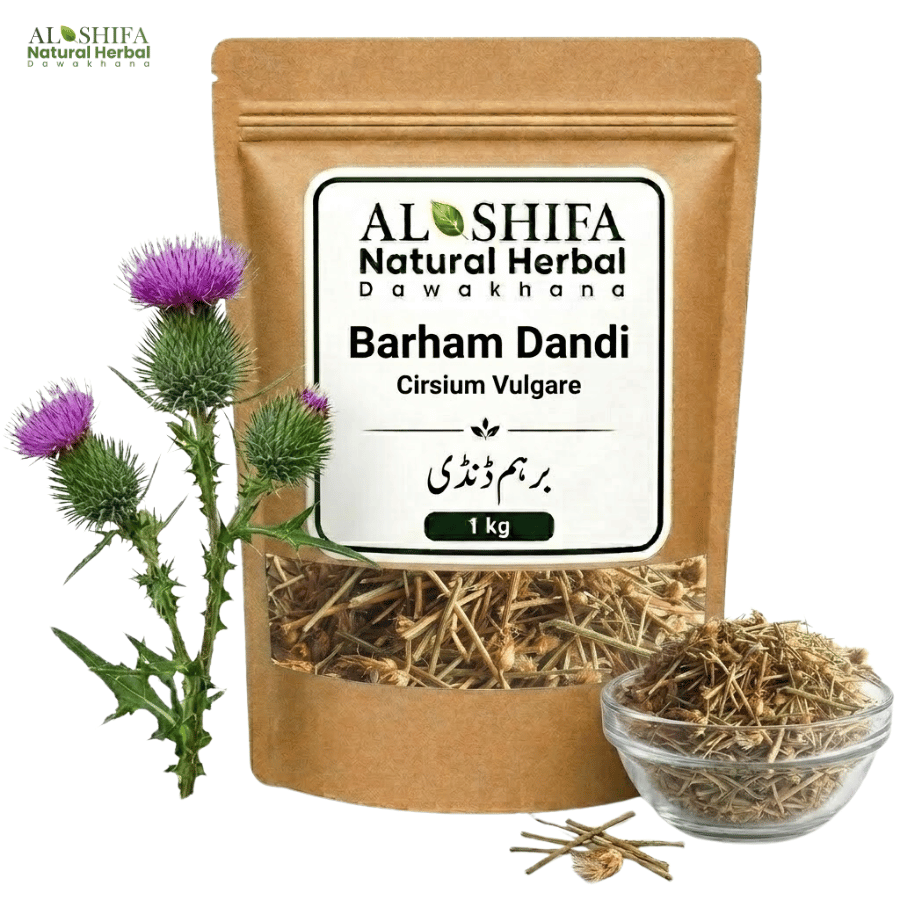
Barham Dandi, commonly known as Bull Thistle or Spear Thistle, is a traditional herbal material obtained from Cirsium vulgare (Savi) Ten. It has traditionally been used in general wellness, digestive, urinary, restorative and selected herbal preparations.
Al Shifa Barham Dandi is carefully selected with attention to its botanical identity, characteristic thistle appearance, cleanliness, proper dryness and responsible storage.
Key Features:
Important Note: Barham Dandi (Cirsium vulgare) is different from Milk Thistle, Blessed Thistle and other thistle species. Its traditional uses do not establish treatment of specific medical conditions, and the naturally spiny dried material should be handled carefully.
Barham Dandi, known in Urdu as برہم ڈنڈی, is a traditional herbal material associated with Cirsium vulgare (Savi) Ten., commonly known as Bull Thistle or Spear Thistle. It belongs to the Asteraceae family and is recognized by its spiny leaves, upright stems and purple flower heads.
Bull Thistle grows naturally in many temperate regions and is known for its tough, prickly appearance. Different parts of thistle plants have been used as food or in herbal practices in different cultures. In traditional herbal use, Barham Dandi has been associated with general wellness, digestive support, urinary wellness, restorative preparations and selected external applications.
It is important to identify the plant correctly because the common name thistle is used for many different plants. Bull Thistle should not automatically be confused with Milk Thistle, Blessed Thistle or other Cirsium species.
At Al Shifa Natural Herbal Dawakhana, Barham Dandi is selected with attention to its traditional identity, recognizable plant characteristics, cleanliness, proper dryness and responsible storage.
Barham Dandi is a spiny herb associated with the botanical species:
Cirsium vulgare (Savi) Ten.
The plant generally develops an upright flowering stem and may grow considerably taller when mature.
Its recognizable features include:
Because the plant is naturally prickly, dried material should be handled carefully.
Product Name: Barham Dandi
English Name: Bull Thistle / Spear Thistle
Urdu Name: برہم ڈنڈی
Roman Name: Barham Dandi / Brahm Dandi / Brahmdandi
Scientific Name: Cirsium vulgare (Savi) Ten.
Plant Family: Asteraceae
Plant Part: Traditionally Used Aerial Parts / Whole Herb
Common Form: Whole Dried Herb / Cut Herb / Powder
Product Type: Traditional Herbal Raw Material
Cirsium vulgare is commonly called Bull Thistle because of its large, strong and sharply spiny appearance.
It is also known as Spear Thistle, referring to its pointed and prickly leaves.
The plant naturally develops protective spines, so its rough appearance should not automatically be considered a sign of poor-quality material.
Dried Barham Dandi may contain a mixture of:
Its colour may range from:
Purple flower colour may become duller after drying.
Good-quality dried Barham Dandi should generally have:
Whole or coarsely cut material retains more visible identification features than finely powdered material.
This is an important botanical distinction.
Bull Thistle:
Cirsium vulgare
Milk Thistle:
Silybum marianum
Both belong to the Asteraceae family, but they are different plants.
Milk Thistle is especially known for its seeds and silymarin-related compounds.
Bull Thistle should not automatically be described as a source of standardized silymarin or given all the same uses associated with Milk Thistle.
Therefore:
Bull Thistle ≠ Milk Thistle
Blessed Thistle is another traditional herb with a similar common name.
It is commonly identified as:
Cnicus benedictus
This is different from:
Cirsium vulgare – Bull Thistle
Information about Blessed Thistle should therefore not automatically be applied to Barham Dandi.
The genus Cirsium contains many thistle species.
They may share:
However, they are not automatically interchangeable.
Research conducted on one Cirsium species cannot automatically be treated as evidence for Cirsium vulgare.
Correct botanical identity remains important.
Barham Dandi has been associated with selected traditional herbal practices.
Traditional applications may include preparations connected with:
These uses represent traditional herbal practice and should not be interpreted as proof that Barham Dandi treats specific diseases.
Barham Dandi has been included in selected herbal traditions associated with digestive wellness.
Such preparations may traditionally be used for general digestive support and appetite-related wellness.
However, persistent digestive problems can have many causes.
Medical assessment is appropriate for symptoms such as:
Barham Dandi should not replace diagnosis or treatment of digestive diseases.
Selected traditional uses of Barham Dandi have also been associated with urinary wellness.
This does not establish that Bull Thistle treats urinary tract infection, kidney stones or other urinary diseases.
Burning urination, blood in urine, fever, severe back or abdominal pain, difficulty passing urine or persistent urinary symptoms require appropriate medical assessment.
Barham Dandi may appear in selected traditional preparations associated with general strength and restorative wellness.
Traditional restorative use may relate to:
Persistent or unexplained weakness can result from nutritional deficiency, anaemia, thyroid disorders, diabetes, infection or other medical conditions and should be appropriately investigated.
Thistle materials have also appeared in selected external herbal practices.
However, Bull Thistle naturally contains sharp spines.
Unprocessed plant material should therefore not be rubbed directly onto sensitive, irritated or damaged skin.
Any external preparation should be suitable for the intended purpose and free from sharp plant fragments.
Cirsium species contain a variety of naturally occurring plant compounds.
Research on Bull Thistle and related Cirsium plants has identified or investigated compounds including:
The exact chemical composition can vary according to:
The presence of a natural compound does not by itself establish a medical benefit.
Cirsium plants have attracted research interest because some of their natural compounds show antioxidant activity in laboratory testing.
“Antioxidant” describes the ability of certain substances to interact with oxidation-related chemical processes.
It should not be interpreted as proof that Barham Dandi prevents or cures cancer, heart disease or another medical condition.
Traditional use provides historical information about how a plant has been used.
Modern scientific evidence asks different questions, including:
For this reason, laboratory findings involving a Cirsium extract should not automatically be converted into treatment claims for ordinary dried Barham Dandi.
Barham Dandi may be available in different forms.
Whole Dried Herb:
Retains recognizable stems, leaves and other plant characteristics.
Cut Herb:
Smaller pieces prepared for selected traditional formulations.
Powder:
Finely ground plant material with fewer visible identification features.
Extract:
A processed preparation that may concentrate selected soluble compounds.
These forms should not automatically be considered equivalent.
Whole or coarsely cut material allows examination of:
Once finely powdered, botanical identification by appearance becomes considerably more difficult.
Reliable sourcing is therefore particularly important when purchasing powdered material.
Bull Thistle naturally develops sharp spines.
Dried material may therefore contain pointed plant fragments capable of causing minor mechanical injury.
When handling whole Barham Dandi:
This physical caution is separate from the plant’s chemical safety.
Barham Dandi belongs to the Asteraceae family.
This family includes many plants such as:
People with known sensitivity to plants in this family should use additional caution.
Allergic reactions are not guaranteed, but botanical family sensitivity is an important consideration.
Traditional use does not mean that unlimited quantities of Barham Dandi are appropriate.
Regular medicinal use should consider:
Appropriate professional guidance is recommended for medicinal use.
Reliable modern safety information for medicinal quantities of Cirsium vulgare during pregnancy and breastfeeding is limited.
Pregnant or breastfeeding women should avoid self-directed medicinal use of concentrated or unfamiliar preparations.
Food history or traditional use should not automatically be interpreted as proof of safety during pregnancy.
Barham Dandi should not automatically be given to children as a strengthening, digestive or urinary remedy without appropriate professional guidance.
The sharp spines of whole dried material also make careful storage particularly important around children.
People with chronic medical conditions or those taking regular medicines should seek appropriate guidance before using Barham Dandi regularly for medicinal purposes.
This is especially important when it is part of a multi-herb preparation, because the safety and interaction profile depends on all ingredients in the formulation.
At Al Shifa Natural Herbal Dawakhana, Barham Dandi is selected with attention to:
Traditional Identity – Material consistent with recognized Cirsium vulgare characteristics.
Natural Appearance – Attention to characteristic thistle structure, leaves and stems.
Proper Dryness – Carefully dried to support responsible storage.
Cleanliness – Selected to minimize soil, dust and unnecessary foreign material.
Material Condition – Checked for excessive moisture, mould, insects and deterioration.
Whole Herb Quality – Whole or coarsely cut material retains more visible identification characteristics.
Careful Handling – Appropriate handling due to the naturally spiny structure of the plant.
Al Shifa Natural Herbal Dawakhana, established in 1999, supplies traditional herbs and natural raw materials throughout Pakistan.
Our focus for Barham Dandi includes:
Barham Dandi has traditionally been included in general wellness, digestive, urinary, restorative and selected compound herbal preparations.
Depending on the intended formulation, dried material may be:
The appropriate preparation depends on the intended use and individual circumstances.
Because different thistle species are not automatically interchangeable, correct botanical identification is important before medicinal use.
Barham Dandi is associated with Cirsium vulgare (Savi) Ten., commonly known as Bull Thistle or Spear Thistle.
Important distinctions include:
Store Barham Dandi in a cool, dry and clean place in a tightly closed container.
For responsible storage:
Do not use material showing visible mould, excessive moisture, significant insect infestation, severe deterioration or an unpleasant stale smell.
Barham Dandi, known in Urdu as برہم ڈنڈی, is a traditional herbal material associated with Cirsium vulgare (Savi) Ten., commonly known as Bull Thistle or Spear Thistle.
It has historically been included in general wellness, digestive, urinary, restorative and selected traditional herbal preparations. Correct botanical identity is important because Bull Thistle is different from Milk Thistle, Blessed Thistle and other plants commonly described as thistles.
Customers searching for Barham Dandi, Brahm Dandi, Brahmdandi, Bull Thistle, Spear Thistle, Cirsium Vulgare, Cirsium Vulgare Herb, dried Barham Dandi, whole Barham Dandi, pure Barham Dandi, original Barham Dandi, natural Barham Dandi, Barham Dandi benefits, Barham Dandi uses, Bull Thistle benefits, Bull Thistle uses, Cirsium Vulgare benefits, Cirsium Vulgare uses, Barham Dandi traditional uses, Barham Dandi digestive wellness, Barham Dandi urinary wellness, Barham Dandi Unani, Barham Dandi Pakistan, Bull Thistle Pakistan, Cirsium Vulgare Pakistan, pure Barham Dandi Pakistan, original Barham Dandi Pakistan, Barham Dandi Lahore, Barham Dandi price in Pakistan, Bull Thistle price in Pakistan, Cirsium Vulgare price in Pakistan, buy Barham Dandi Pakistan, Barham Dandi online Pakistan or buy Bull Thistle Pakistan can choose Al Shifa Natural Herbal Dawakhana for carefully selected traditional herbal material.
Since 1999, Al Shifa Natural Herbal Dawakhana has focused on supplying traditional herbs and natural raw materials with attention to identity, cleanliness, proper drying, careful handling, responsible storage and clear product information.
Product Name: Barham Dandi
English Name: Bull Thistle / Spear Thistle
Urdu Name: برہم ڈنڈی
Roman Name: Barham Dandi / Brahm Dandi / Brahmdandi
Scientific Name: Cirsium vulgare (Savi) Ten.
Plant Family: Asteraceae
Plant Part: Traditionally Used Aerial Parts / Whole Herb
Common Form: Whole Dried Herb / Cut Herb / Powder
Product Type: Traditional Herbal Raw Material
Traditional Use: General wellness, digestive wellness, urinary wellness, restorative support and selected traditional herbal preparations
Important Note: Bull Thistle is different from Milk Thistle and Blessed Thistle. Cirsium vulgare should not automatically be treated as equivalent to other thistle species, and traditional uses do not establish treatment of specific medical conditions.
برہم ڈنڈی ایک کانٹے دار نباتاتی بوٹی ہے جو کھلی زمین، کھیتوں کے کناروں، چراگاہوں اور غیر آباد جگہوں پر پیدا ہو سکتی ہے۔ اس کے پتے کانٹے دار ہوتے ہیں اور پودے پر گلابی سے جامنی رنگ کے پھول آتے ہیں۔ حکیمی اور دیسی طبی ادویات میں اس کے پودے کے مختلف حصے استعمال کیے جاتے ہیں۔
برہم ڈنڈی کو حکیمی استعمال میں خاص طور پر ہاضمے کے امراض، جگر کے امراض، پیشاب کے امراض، جسمانی سوجن کی بیماری، جلد کے امراض اور جسمانی کمزوری کے لیے استعمال ہونے والی ادویات میں شامل کیا جاتا ہے۔
یہ ایک کانٹے دار پودا ہے، اس لیے اسے جمع کرتے وقت ہاتھوں کو کانٹوں سے بچانا ضروری ہے۔ درست نباتاتی شناخت بھی اہم ہے کیونکہ کانٹے دار پھولوں والی کئی جنگلی بوٹیاں ظاہری طور پر ایک جیسی دکھائی دے سکتی ہیں۔
الشفاء نیچرل ہربل دواخانہ میں برہم ڈنڈی منتخب کرتے وقت اس کی درست نباتاتی شناخت، قدرتی رنگت، اصل پودے کی ساخت، صفائی اور مناسب خشک حالت کو اہمیت دی جاتی ہے۔
برہم ڈنڈی ایک کانٹے دار پودا ہے۔ اس کا تنا سیدھا اور مضبوط ہو سکتا ہے جبکہ پتے کناروں سے گہرے کٹے ہوئے اور کانٹے دار ہوتے ہیں۔
پودے پر گول کانٹے دار پھول بنتے ہیں جن میں گلابی یا جامنی رنگ کے باریک پھول دکھائی دیتے ہیں۔
خشک برہم ڈنڈی کی عام پہچان یہ ہے:
نام: برہم ڈنڈی
معروف نام: برہم ڈنڈی، کانٹے دار برہم ڈنڈی
نباتاتی نام: سرسیئم ولگیر
خاندان: ایسٹریسی خاندان
استعمال ہونے والا حصہ: پتے، تنا، جڑ اور پودے کے منتخب خشک حصے
قسم: نباتاتی مفرد دوا
عام شکل: کانٹے دار خشک بوٹی
عام رنگت: سبزی مائل بھوری سے بھوری
ذائقہ: قدرے کڑوا
بو: ہلکی نباتاتی
برہم ڈنڈی کی درست شناخت بہت اہم ہے۔
اس کی نمایاں نشانیاں یہ ہیں:
صرف کانٹے دیکھ کر کسی جنگلی بوٹی کو برہم ڈنڈی سمجھ کر استعمال نہ کریں۔
پاکستان میں رائج حکیمی استعمال میں برہم ڈنڈی کو گرم و خشک مزاج والی نباتاتی مفرد دوا بیان کیا جاتا ہے۔
اسے ہاضمے، جگر، پیشاب اور جسمانی سوجن کے لیے استعمال ہونے والی حکیمی ادویات میں شامل کیا جاتا ہے۔
مقدار کا انتخاب مریض کی عمر، جسمانی حالت اور بیماری کے مطابق کیا جاتا ہے۔
اچھا برہم ڈنڈی پہچاننے کے لیے درج ذیل باتیں دیکھیں:
خشک بوٹی میں پودے کی اصل ساخت نظر آنا درست شناخت میں مدد دیتا ہے۔
حکیمی استعمال میں برہم ڈنڈی کو درج ذیل مقاصد کے لیے ادویات میں شامل کیا جاتا ہے:
ہاضم: ہاضمے کے امراض کے لیے استعمال ہونے والی حکیمی ادویات میں شامل کیا جاتا ہے۔
جگر کے لیے استعمال: جگر کے امراض کے حکیمی نسخوں میں شامل کیا جاتا ہے۔
مدرِ بول: پیشاب کے امراض اور جسم سے زیادہ پانی کے اخراج کے لیے بنائی جانے والی حکیمی ادویات میں شامل کیا جاتا ہے۔
جسمانی سوجن کے لیے استعمال: جسمانی سوجن کی بیماری کے حکیمی نسخوں میں شامل کیا جاتا ہے۔
جلد کے لیے استعمال: جلد کے امراض کے لیے بنائی جانے والی حکیمی ادویات میں شامل کیا جاتا ہے۔
برہم ڈنڈی کو ہاضمے کے امراض کے لیے استعمال ہونے والی حکیمی ادویات میں شامل کیا جاتا ہے۔
اس کا کڑوا ذائقہ ہاضمے کے لیے استعمال ہونے والی نباتاتی ادویات میں اس کی اہمیت کی ایک وجہ ہے۔
اگر ہاضمے کے امراض کے ساتھ شدید پیٹ درد، مسلسل قے، پاخانے میں خون یا تیزی سے وزن کم ہو رہا ہو تو معالج سے چیک کروائیں۔
برہم ڈنڈی کو بدہضمی کی بیماری کے لیے استعمال ہونے والے حکیمی نسخوں میں شامل کیا جاتا ہے۔
اگر کھانے کے بعد مسلسل بھاری پن، متلی، پیٹ میں درد یا بہت زیادہ اپھارا رہتا ہو تو معالج سے چیک کروائیں۔
کڑوی نباتاتی ادویات کو ہاضمے اور بھوک کے لیے حکیمی نسخوں میں استعمال کیا جاتا ہے۔
برہم ڈنڈی کو بھی بھوک کی کمی کی بیماری کے لیے استعمال ہونے والی حکیمی ادویات میں شامل کیا جا سکتا ہے۔
اگر بھوک کی کمی کی بیماری کے ساتھ وزن مسلسل کم ہو رہا ہو تو معالج سے چیک کروائیں۔
برہم ڈنڈی کا ذکر جگر کے امراض کے لیے استعمال ہونے والی حکیمی ادویات میں ملتا ہے۔
جگر کے امراض میں خود سے مسلسل جڑی بوٹیاں استعمال کرنا مناسب نہیں۔
اگر آنکھوں یا جلد میں پیلاہٹ، پیشاب بہت گہرا، پیٹ میں سوجن یا دائیں طرف اوپری پیٹ میں مسلسل درد ہو تو معالج سے چیک کروائیں۔
برہم ڈنڈی کو یرقان کی بیماری کے لیے استعمال ہونے والے حکیمی نسخوں میں شامل کیا جاتا ہے۔
یرقان کی بیماری میں جلد یا آنکھوں کا پیلا ہونا جگر، پتہ یا خون کے مسائل کی علامت ہو سکتا ہے۔
یرقان کی بیماری ظاہر ہونے پر معالج سے چیک کروائیں۔
برہم ڈنڈی کو پیشاب کے امراض کے لیے استعمال ہونے والی حکیمی ادویات میں شامل کیا جاتا ہے۔
حکیمی استعمال میں اسے پیشاب کے اخراج کو بڑھانے والے نباتاتی اجزاء کے ساتھ شامل کیا جا سکتا ہے۔
اگر پیشاب میں خون، شدید جلن، بخار یا کمر کے پہلو میں شدید درد ہو تو معالج سے چیک کروائیں۔
برہم ڈنڈی کا ذکر پیشاب کی جلن کی بیماری کے حکیمی نسخوں میں بھی ملتا ہے۔
پیشاب کی جلن کی بیماری میں پانی کی کمی، پیشاب کی نالی کا انفیکشن یا پتھری جیسے مسائل دیکھے جا سکتے ہیں۔
اگر جلن مسلسل موجود ہو تو معالج سے چیک کروائیں۔
برہم ڈنڈی کو جسمانی سوجن کی بیماری کے لیے استعمال ہونے والی حکیمی ادویات میں شامل کیا جاتا ہے۔
جسم میں پانی جمع ہونے سے پاؤں، ٹخنوں، ہاتھوں یا چہرے پر سوجن ہو سکتی ہے۔
اگر جسمانی سوجن کی بیماری اچانک پیدا ہو، سانس پھولے یا پیشاب کم ہو جائے تو معالج سے چیک کروائیں۔
پیشاب بڑھانے والی نباتاتی ادویات گردوں پر اثر ڈال سکتی ہیں۔
گردوں کے امراض والے افراد برہم ڈنڈی کی بڑی طبی مقدار خود سے استعمال نہ کریں۔
اگر گردوں کی بیماری میں پیشاب کم ہو یا جسم میں سوجن ہو تو معالج سے چیک کروائیں۔
برہم ڈنڈی کو جلد کے امراض کے لیے استعمال ہونے والی حکیمی ادویات میں شامل کیا جاتا ہے۔
اگر جلد پر شدید خارش، پیپ، زخم، سوجن یا تیزی سے پھیلتی ہوئی سرخی ہو تو معالج سے چیک کروائیں۔
نامعلوم جنگلی پودے کا رس براہِ راست جلد پر نہ لگائیں۔
برہم ڈنڈی کو جسمانی طاقت کے لیے استعمال ہونے والے حکیمی نسخوں میں بھی شامل کیا جا سکتا ہے۔
اگر جسمانی کمزوری مسلسل موجود ہو، وزن تیزی سے کم ہو یا روزمرہ کام کرنا مشکل ہو تو معالج سے چیک کروائیں۔
برہم ڈنڈی کے پودے میں کئی قدرتی نباتاتی اجزاء پائے جا سکتے ہیں، جن میں شامل ہیں:
پودے کے پتے، جڑ، تنا اور پھول میں ان اجزاء کی مقدار ایک جیسی نہیں ہوتی۔
برہم ڈنڈی میں فلیوونائڈز اور فینول والے نباتاتی اجزاء پائے جاتے ہیں۔
یہ نباتاتی اجزاء پودے کو اس کی قدرتی خصوصیات فراہم کرتے ہیں۔
ان اجزاء کی مقدار پودے کی عمر، زمین، موسم اور خشک کرنے کے طریقے سے متاثر ہو سکتی ہے۔
برہم ڈنڈی کے مختلف حصوں کا استعمال ایک جیسا نہیں ہوتا۔
پتے: خشک کر کے حکیمی نسخوں میں شامل کیے جا سکتے ہیں۔
جڑ: مخصوص حکیمی استعمال میں شامل کی جا سکتی ہے۔
تنا: مکمل خشک بوٹی کے ساتھ موجود ہو سکتا ہے۔
پھول: پودے کی شناخت میں اہم کردار ادا کرتے ہیں۔
استعمال کے مقصد کے مطابق درست حصہ منتخب کرنا ضروری ہے۔
مکمل خشک برہم ڈنڈی:
مکمل خشک بوٹی میں پتے، تنا، کانٹے اور پھول کی ساخت دیکھنا آسان ہوتا ہے۔
برہم ڈنڈی کا سفوف:
پیسنے کے بعد حکیمی ادویات میں شامل کرنا آسان ہوتا ہے، لیکن اصل نباتاتی شناخت مشکل ہو جاتی ہے۔
درست شناخت والی مکمل خشک بوٹی لے کر ضرورت کے مطابق تازہ پیسنا بہتر ہے۔
برہم ڈنڈی جیسی شکل رکھنے والے کئی کانٹے دار پودے کھیتوں اور جنگلی علاقوں میں پیدا ہوتے ہیں۔
درست شناخت کے لیے:
صرف ظاہری مشابہت کی بنیاد پر جنگلی پودا استعمال نہ کریں۔
اگر قبض کی بیماری موجود ہو تو برہم ڈنڈی کی طبی مقدار خود سے استعمال نہ کریں۔
اگر کئی دن تک پاخانہ نہ آئے، پیٹ میں شدید درد ہو یا پیٹ بہت زیادہ پھول جائے تو معالج سے چیک کروائیں۔
معدے اور آنتوں کے امراض والے افراد برہم ڈنڈی کی بڑی مقدار خود سے استعمال نہ کریں۔
اگر استعمال کے بعد:
پیدا ہو تو استعمال روک دیں اور معالج سے چیک کروائیں۔
خواتین برہم ڈنڈی کی بڑی طبی مقدار خود سے استعمال نہ کریں۔
اگر ماہواری کے امراض، پیشاب کے امراض یا جسمانی سوجن کی بیماری موجود ہو تو معالج سے چیک کروائیں۔
حاملہ خواتین برہم ڈنڈی کی طبی مقدار خود سے استعمال نہ کریں۔
حمل میں پیشاب بڑھانے والی یا تیز اثر رکھنے والی نباتاتی ادویات استعمال کرنے سے پہلے مستند معالج سے رہنمائی حاصل کریں۔
دودھ پلانے والی خواتین برہم ڈنڈی کی طبی مقدار خود سے استعمال نہ کریں۔
اگر کسی بیماری کے لیے استعمال کی ضرورت ہو تو مستند معالج سے مقدار اور طریقۂ استعمال معلوم کریں۔
بچوں کو برہم ڈنڈی کی طبی مقدار خود سے نہ دیں۔
اگر بچے میں ہاضمے کے امراض، پیشاب کے امراض یا جگر کے امراض مسلسل موجود ہوں تو معالج سے چیک کروائیں۔
پیشاب کے اخراج پر اثر ڈالنے والی نباتاتی ادویات جسم میں پانی اور نمکیات کے توازن پر اثر ڈال سکتی ہیں۔
بلڈ پریشر کی بیماری والے افراد برہم ڈنڈی کی بڑی طبی مقدار خود سے شروع نہ کریں۔
بلڈ پریشر کی مقررہ ادویات خود سے بند یا کم نہ کریں۔
ذیابیطس کی بیماری والے افراد برہم ڈنڈی کی طبی مقدار خود سے استعمال نہ کریں۔
اگر ذیابیطس کی بیماری کی ادویات استعمال ہو رہی ہوں تو مستند معالج کو ان کے بارے میں بتائیں۔
جگر کی بیماری والے افراد برہم ڈنڈی کی بڑی طبی مقدار خود سے استعمال نہ کریں۔
یرقان کی بیماری، جگر میں سوجن یا جگر کی بیماری کی ادویات استعمال کرنے کی صورت میں معالج سے چیک کروائیں۔
گردوں کی بیماری والے افراد برہم ڈنڈی کی طبی مقدار خود سے استعمال نہ کریں۔
خاص طور پر پیشاب کم ہونے، جسم میں سوجن یا گردوں کی کمزوری کی صورت میں معالج سے چیک کروائیں۔
اگر کوئی شخص بلڈ پریشر کی بیماری، ذیابیطس کی بیماری، جگر کی بیماری، گردوں کی بیماری یا دل کے امراض کی مستقل ادویات استعمال کر رہا ہو تو برہم ڈنڈی کی طبی مقدار خود سے شروع نہ کرے۔
اپنی مستقل ادویات کے بارے میں مستند معالج کو بتائیں۔
برہم ڈنڈی ایسٹریسی خاندان کا پودا ہے۔ اس خاندان کے پودوں سے حساس افراد میں جلدی یا جسمانی حساسیت پیدا ہو سکتی ہے۔
اگر استعمال کے بعد:
پیدا ہو تو استعمال بند کریں اور معالج سے چیک کروائیں۔
برہم ڈنڈی کے پتے اور پھول کے گرد سخت کانٹے ہو سکتے ہیں۔
تازہ پودا جمع کرتے وقت موٹے دستانے پہننا بہتر ہے۔
کانٹا جلد میں گہرا داخل ہو جائے، زخم سرخ ہو، پیپ بنے یا سوجن بڑھتی جائے تو معالج سے چیک کروائیں۔
برہم ڈنڈی کی بڑی طبی مقدار خود سے استعمال نہ کریں۔
زیادہ مقدار سے:
پیدا ہو سکتے ہیں۔
اگر علامات شدید ہوں یا مسلسل موجود رہیں تو معالج سے چیک کروائیں۔
برہم ڈنڈی کے مصلح اور بدل کا انتخاب بیماری، جسمانی حالت اور استعمال کے مقصد کے مطابق کیا جاتا ہے۔
ہاضمے، جگر یا پیشاب کے لیے استعمال ہونے والی ہر نباتاتی مفرد دوا برہم ڈنڈی کا مکمل بدل نہیں ہوتی۔
مناسب مصلح اور بدل مستند حکیم سے معلوم کریں۔
برہم ڈنڈی کی طبی مقدار عمر، جسمانی حالت، استعمال ہونے والے پودے کے حصے اور بیماری کے مطابق مقرر کی جاتی ہے۔
حکیمی ادویات میں اسے:
شامل کیا جاتا ہے۔
خاص طور پر جگر کے امراض، گردوں کے امراض، پیشاب کے امراض، بلڈ پریشر کی بیماری اور جسمانی سوجن کی بیماری میں مقدار خود سے مقرر نہ کریں۔
برہم ڈنڈی ایک کانٹے دار نباتاتی مفرد دوا ہے۔ اس کی درست نباتاتی شناخت بہت اہم ہے کیونکہ کانٹے دار جنگلی پودوں میں ظاہری مشابہت پائی جا سکتی ہے۔
اگر جگر کے امراض، پیشاب کے امراض، گردوں کے امراض، جسمانی سوجن کی بیماری، ہاضمے کے امراض یا جلد کے امراض مسلسل موجود ہوں تو معالج سے چیک کروائیں۔
نامعلوم جنگلی پودا صرف شکل دیکھ کر طبی استعمال میں نہ لائیں۔
الشفاء نیچرل ہربل دواخانہ میں برہم ڈنڈی منتخب کرتے وقت درج ذیل باتوں کا خیال رکھا جاتا ہے:
درست نباتاتی شناخت: اصل پودے کی پہچان کو خاص اہمیت دی جاتی ہے۔
قدرتی رنگت: خشک بوٹی کی قدرتی سبزی مائل بھوری رنگت دیکھی جاتی ہے۔
اصل ساخت: پتوں، تنے، کانٹوں اور پھول کے حصوں کی ساخت کو دیکھا جاتا ہے۔
مناسب خشک حالت: بوٹی میں غیر ضروری نمی نہیں ہونی چاہیے۔
صاف ستھری حالت: مٹی، گرد اور غیر ضروری چیزوں سے پاک حالت کو اہمیت دی جاتی ہے۔
پھپھوندی اور کیڑوں سے حفاظت: خراب، پھپھوندی والی یا کیڑے لگی بوٹی استعمال کے لیے مناسب نہیں سمجھی جاتی۔
الشفاء نیچرل ہربل دواخانہ سنہ ۱۹۹۹ سے قدرتی جڑی بوٹیوں اور حکیمی مفردات کی سپلائی کر رہا ہے۔
ہم برہم ڈنڈی کی درست نباتاتی شناخت، قدرتی رنگت، اصل پودے کی ساخت، صفائی اور مناسب خشک حالت کو اہمیت دیتے ہیں۔
برہم ڈنڈی جیسی جنگلی اور کانٹے دار بوٹی خریدتے وقت درست شناخت خاص طور پر اہم ہے، کیونکہ پسی ہوئی شکل میں اصل پودے کی پہچان مشکل ہو جاتی ہے۔
برہم ڈنڈی کو ٹھنڈی، خشک اور صاف جگہ پر اچھی طرح بند جار یا پیکٹ میں رکھیں۔
پسی ہوئی برہم ڈنڈی مکمل خشک بوٹی کے مقابلے میں جلد نمی پکڑ سکتی ہے، اس لیے ضرورت کے مطابق تازہ پیسنا بہتر ہے۔
اگر بوٹی میں پھپھوندی، کیڑے، غیر ضروری نمی یا خراب بو پیدا ہو جائے تو اسے استعمال نہ کریں۔
برہم ڈنڈی حکیمی استعمال میں آنے والی کانٹے دار نباتاتی مفرد دوا ہے۔ اسے ہاضمے کے امراض، جگر کے امراض، پیشاب کے امراض، جسمانی سوجن کی بیماری اور جلد کے امراض کے لیے استعمال ہونے والی حکیمی ادویات میں شامل کیا جاتا ہے۔
اگر آپ برہم ڈنڈی، خالص برہم ڈنڈی، اصل برہم ڈنڈی، برہم ڈنڈی کے فوائد، برہم ڈنڈی کے استعمال، برہم ڈنڈی پاکستان، برہم ڈنڈی لاہور، برہم ڈنڈی کی قیمت، برہم ڈنڈی آن لائن یا برہم ڈنڈی خریدیں تلاش کر رہے ہیں تو الشفاء نیچرل ہربل دواخانہ درست نباتاتی شناخت، صفائی اور مناسب خشک حالت کو اہمیت دیتا ہے۔
نام: برہم ڈنڈی
معروف نام: برہم ڈنڈی، کانٹے دار برہم ڈنڈی
نباتاتی نام: سرسیئم ولگیر
خاندان: ایسٹریسی خاندان
استعمال ہونے والا حصہ: پتے، تنا، جڑ اور منتخب خشک حصے
قسم: نباتاتی مفرد دوا
مزاج: گرم و خشک
عام شکل: کانٹے دار خشک بوٹی
عام رنگت: سبزی مائل بھوری سے بھوری
ذائقہ: قدرے کڑوا
بو: ہلکی نباتاتی
اہم قدرتی اجزاء: فلیوونائڈز، فینول والے نباتاتی اجزاء، ٹینن، نباتاتی ریشہ، قدرتی روغنی اجزاء اور معدنی اجزاء۔
اہم حکیمی استعمال: ہاضمے کے امراض، جگر کے امراض، پیشاب کے امراض، جسمانی سوجن کی بیماری اور جلد کے امراض کے لیے استعمال ہونے والی حکیمی ادویات میں شامل کیا جاتا ہے۔
اہم احتیاط: حاملہ خواتین، دودھ پلانے والی خواتین، بچے اور جگر، گردوں، بلڈ پریشر یا ذیابیطس کی بیماری والے افراد طبی مقدار خود سے مقرر نہ کریں۔ جنگلی پودے کی درست نباتاتی شناخت کے بغیر اسے استعمال نہ کریں۔