
Aloe vera Var, kawar Gandal
Contact for Price
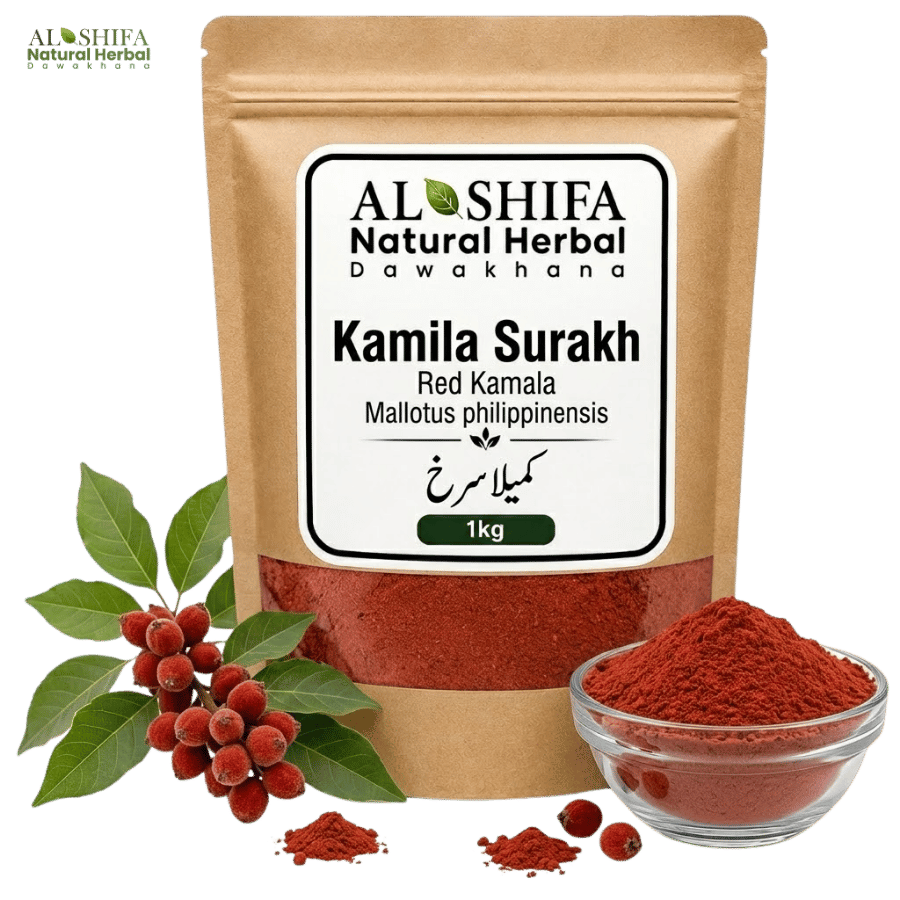
Kamila Surakh, commonly known as Red Kamala or Kamala Powder, is a traditional natural red botanical material obtained from the glandular surface of mature fruits of Mallotus philippinensis. It has traditionally been used in selected Unani and Ayurvedic formulations, external herbal preparations and natural colouring or dyeing applications.
Al Shifa Kamila Surakh is carefully selected with attention to its characteristic natural red colour, cleanliness, proper dryness and responsible storage.
Key Features:
Important Note: Kamila Surakh is traditionally the glandular powder collected from the fruit surface and is not simply ground whole fruit. Historical anti-parasitic use does not establish it as a treatment for intestinal parasites. Internal medicinal use should follow appropriate professional guidance.
Kamila Surakh, commonly known as Red Kamala or Kamala Powder, is a traditional natural red to reddish-brown powder obtained from the surface of the mature fruits of Mallotus philippinensis. In Urdu and traditional herbal trade, it is known as Red Kamala and has historically been used in selected Unani and Ayurvedic preparations, traditional external applications and natural colouring or dyeing practices.
Unlike ordinary herbal powders prepared by grinding leaves, roots or seeds, traditional Red Kamala consists mainly of the fine glandular material collected from the outer surface of the fruit capsules. This distinction is important when identifying genuine Kamala.
Historically, Kamala has appeared in traditional preparations associated with intestinal and digestive applications, particularly old anti-parasitic practices. It has also been valued externally and commercially as a natural colouring material.
However, traditional internal use of Kamala requires caution. It should not be treated as an ordinary food powder or used casually for suspected intestinal worms or digestive disease.
At Al Shifa Natural Herbal Dawakhana, Kamila Surakh is selected with attention to its characteristic natural colour, recognizable appearance, cleanliness, proper dryness and responsible storage.
Kamila Surakh is the fine coloured glandular material associated with the outer surface of mature fruits of the Kamala tree, Mallotus philippinensis.
The plant produces fruit capsules covered with a characteristic reddish powdery coating.
Traditionally, this material is collected and separated to produce Kamala powder.
It may appear as:
Natural colour may vary according to source, fruit maturity, collection, processing and storage.
Product Name: Kamila Surakh
English Name: Red Kamala / Kamala Powder
Urdu Name: کمیلا سرخ
Roman Name: Kamila Surakh / Kamila Surkh / Kamala Surkh
Scientific Name: Mallotus philippinensis (Lam.) Müll.Arg.
Plant Family: Euphorbiaceae
Plant Part: Glandular Powder from Fruit Surface
Common Form: Fine Red / Reddish-Brown Powder
Product Type: Traditional Botanical Raw Material / Natural Colouring Material
Mallotus philippinensis is a small to medium-sized tree found in parts of South and Southeast Asia.
Its fruits are particularly distinctive because their outer surface develops a layer of fine reddish glandular material.
This coloured surface material is the traditional source of Red Kamala.
The tree itself has different parts, including:
These parts should not automatically be treated as interchangeable with Kamala powder.
The characteristic colour of Kamala comes from naturally occurring compounds concentrated in the glandular material covering the fruit.
The powder may range from:
Natural variation is expected.
The colour may be affected by:
An extremely bright or unnaturally uniform colour should not automatically be interpreted as better quality.
Good-quality Kamila Surakh should show the characteristic appearance expected of properly collected and stored Kamala material.
Common quality features include:
Because Kamala is naturally a fine powder, protection from contamination and moisture is especially important.
Kamila Surakh has a long history in South Asian traditional practice.
It has historically appeared in preparations associated with:
Historical use should not be interpreted as proof of safety or effectiveness for a specific disease.
One of the best-known historical uses of Kamala was in traditional preparations intended for intestinal parasites.
Older herbal practices used Kamala in formulations associated with worms and bowel cleansing.
However, this historical use requires important modern caution.
Intestinal parasites can include many different organisms, and symptoms such as:
can have many different causes.
Kamila Surakh should not be used as a substitute for proper diagnosis and appropriate anti-parasitic treatment.
Kamala has historically been described in traditional herbal literature as an anthelmintic material.
This means it was used in preparations intended to remove or affect intestinal worms.
Traditional reputation does not establish that ordinary Kamala powder is a safe or reliable treatment for every parasitic infection.
Modern parasite treatment depends on:
Self-treatment with concentrated Kamala preparations is not recommended.
Kamila Surakh has also appeared in selected digestive and bowel-related preparations.
Its traditional role may have been connected partly to its historical intestinal use.
Traditional digestive use does not establish Kamala as a treatment for:
Persistent digestive symptoms require appropriate medical assessment.
Kamala has also been used externally in selected traditional preparations.
Historical external applications may include formulations associated with:
The suitability of any external preparation depends on its concentration and other ingredients.
Raw Kamala powder should not automatically be applied to sensitive, damaged or inflamed skin.
Kamala has appeared in traditional external preparations for different skin-related purposes.
However, traditional use does not establish it as a treatment for:
Persistent or severe skin conditions should be appropriately diagnosed.
One of the important non-medicinal uses of Kamala is as a natural colouring material.
Its characteristic reddish pigment has historically been used for:
The final colour can vary depending on:
A botanical dye intended for textiles or technical use should not automatically be assumed suitable for food or cosmetic use.
Red Kamala became commercially important in some regions because its natural pigment could be used to produce warm yellow, orange or reddish shades.
Traditional dye use is separate from medicinal use.
A material supplied for:
may have different purity requirements from material intended for traditional medicinal preparations.
Product grade should therefore always be considered.
Kamala contains naturally occurring compounds associated with its characteristic colour and biological activity.
One of the best-known groups is related to rottlerin-type compounds, with rottlerin commonly discussed in relation to Mallotus philippinensis.
Other naturally occurring constituents may also be present.
The exact chemical composition can vary according to:
The presence of a naturally occurring compound does not by itself establish medical effectiveness or safety.
Rottlerin has been investigated in laboratory research for different biological effects.
However, laboratory findings involving:
should not automatically be applied to ordinary Kamala powder used traditionally.
The concentration and exposure can be very different.
Experimental research is not the same as established clinical treatment.
Different materials from Mallotus philippinensis should not automatically be treated as interchangeable.
Kamila Surakh / Red Kamala:
The fine glandular powder collected from the surface of mature fruits.
Whole Fruit:
Includes the fruit capsule and other structures.
Seeds:
A separate plant material located inside the fruit.
Bark:
Another botanical raw material with its own traditional applications.
Leaves and Roots:
Separate plant parts.
Information about one plant part should not automatically be applied to another.
This is an important identity point.
Traditional Kamala powder is not merely whole Mallotus fruit ground into powder.
The characteristic material is obtained primarily from the glandular coating on the fruit surface.
A powder produced by grinding the entire fruit may therefore differ from traditional Kamala in:
Correct identification matters.
Kamala may be discussed in several forms.
Traditional Raw Kamala:
Naturally collected fruit-surface glandular material.
Processed Powder:
May undergo cleaning or additional processing.
Extracts:
Concentrated preparations produced using specific solvents or extraction methods.
Isolated Compounds:
Purified substances separated for laboratory or research purposes.
Research involving extracts or isolated compounds should not automatically be used to make claims about ordinary raw Kamala.
Kamila Surakh is not an ordinary culinary ingredient.
Historical medicinal use does not mean unrestricted internal consumption is appropriate.
Internal use should consider:
Unsupervised high amounts or repeated internal use should be avoided.
Traditional Kamala preparations can cause unwanted gastrointestinal effects when used in unsuitable amounts.
Possible problems may include:
Severe or persistent symptoms require medical attention.
Do not assume that stronger bowel effects mean the product is working better.
Medicinal internal use of Kamila Surakh during pregnancy should be avoided unless specifically advised by an appropriately qualified healthcare professional.
Its historical bowel and anti-parasitic use provides additional reason for caution.
Traditional use does not establish pregnancy safety.
Reliable information regarding medicinal internal use during breastfeeding is limited.
Breastfeeding women should seek appropriate professional guidance before using Kamala medicinally.
Kamila Surakh should not be given medicinally to infants or young children without appropriate professional guidance.
Suspected intestinal worms in children should be properly assessed so that the correct treatment can be selected.
External use may cause irritation or sensitivity in some individuals.
For unfamiliar external preparations:
Kamala is a fine botanical powder and should be handled carefully.
Avoid creating airborne dust and avoid deliberate inhalation.
When handling larger quantities:
People with chronic medical conditions or those taking regular medicines should seek professional guidance before medicinal internal use.
This is particularly important when Kamala is being considered for:
Traditional use should not delay appropriate diagnosis or prescribed treatment.
At Al Shifa Natural Herbal Dawakhana, Kamila Surakh is selected with attention to:
Recognizable Identity – Material consistent with traditional Red Kamala.
Natural Colour – Characteristic red to reddish-brown appearance.
Cleanliness – Selected to reduce unnecessary foreign matter.
Proper Dryness – Appropriately dry for responsible storage.
No Visible Mould – Checked for obvious moisture-related deterioration.
Responsible Storage – Protected from moisture, insects and contamination.
Al Shifa Natural Herbal Dawakhana, established in 1999, supplies carefully selected traditional herbs and natural raw materials throughout Pakistan.
Our focus includes:
Kamila Surakh has historically been used for different traditional purposes.
Depending on the intended application, it may be used as:
Internal medicinal use should follow appropriate professional guidance.
The material should not be self-prescribed as a treatment for intestinal parasites, particularly in children, pregnancy or people with persistent digestive symptoms.
Kamila Surakh is the traditional reddish glandular powder associated with the fruit surface of Mallotus philippinensis.
It is different from ordinary ground fruit, seeds, bark, leaves and concentrated extracts.
Historically, Kamala has been used in anti-parasitic and digestive preparations, but traditional use does not establish it as a proven or universally safe treatment for:
Internal medicinal use requires caution because unsuitable amounts may cause significant gastrointestinal effects.
Correct botanical identity, product grade and intended use are important.
Store Kamila Surakh in a cool, dry and clean place in a tightly closed container.
For better storage:
Do not use material showing visible mould, excessive moisture, contamination or an unusual spoiled smell.
Kamila Surakh, commonly known as Red Kamala or Kamala Powder, is a traditional natural red botanical material obtained from the glandular surface of the mature fruits of Mallotus philippinensis. It has historically been used in selected Unani and Ayurvedic formulations, traditional external preparations and natural colouring or dyeing applications.
Traditional Kamala is particularly distinctive because it is primarily the fine coloured material collected from the fruit surface rather than simply the entire fruit ground into powder.
Customers searching for Kamila Surakh Pakistan, Red Kamala Pakistan, Kamala Powder Pakistan, Mallotus philippinensis Pakistan, pure Kamila Surakh, original Kamala Powder, Red Kamala benefits, Kamala Powder uses, Kamila Surakh uses, natural Kamala dye, Kamila Surakh Lahore, Kamila Surakh price in Pakistan, Red Kamala price in Pakistan, Kamala Powder price in Pakistan, buy Kamila Surakh Pakistan, buy Red Kamala Pakistan or Kamila Surakh online Pakistan can choose Al Shifa Natural Herbal Dawakhana for carefully selected traditional botanical material.
Since 1999, Al Shifa Natural Herbal Dawakhana has focused on supplying traditional herbs and natural raw materials with attention to identity, cleanliness, natural quality, proper dryness, responsible storage and clear product information.
Product Name: Kamila Surakh
English Name: Red Kamala / Kamala Powder
Urdu Name: کمیلا سرخ
Roman Name: Kamila Surakh / Kamila Surkh / Kamala Surkh
Scientific Name: Mallotus philippinensis (Lam.) Müll.Arg.
Plant Family: Euphorbiaceae
Plant Part: Glandular Powder from Fruit Surface
Common Form: Fine Red / Reddish-Brown Powder
Product Type: Traditional Botanical Raw Material / Natural Colouring Material
Traditional Use: Selected intestinal and digestive formulations, external preparations and natural colouring or dyeing applications
Important Note: Kamila Surakh is traditionally the glandular powder collected from the surface of Mallotus philippinensis fruits and is not simply ordinary ground fruit. Historical anti-parasitic use does not make it an appropriate substitute for diagnosis and modern treatment of intestinal parasites. Internal medicinal use requires professional guidance.
کمیلا سرخ طبِ یونانی اور دیسی طبی ادویات میں استعمال ہونے والا ایک معروف نباتاتی مفرد ہے۔ یہ ایک درخت کے پختہ پھلوں کی بیرونی سطح پر موجود باریک سرخی مائل غدودی ذرات سے حاصل کیا جاتا ہے، جس کا نباتاتی نام میلوٹس فلپینینسس بیان کیا جاتا ہے۔
یہ ایک چھوٹا سے درمیانے قد کا درخت ہے جو برصغیر سمیت ایشیا کے گرم اور نیم گرم علاقوں میں پایا جاتا ہے۔ اس کے پختہ پھلوں کی بیرونی سطح پر باریک سرخی مائل یا گہری نارنجی مائل غدودی ذرات موجود ہوتے ہیں۔ پھلوں کو مناسب وقت پر جمع کرکے ان کی سطح سے یہ باریک مادہ علیحدہ کیا جاتا ہے، جسے کمیلا سرخ کہا جاتا ہے۔
طبِ یونانی اور روایتی طبی استعمال میں کمیلا سرخ کا ذکر خصوصاً پیٹ کے کیڑوں، بعض جلدی مسائل اور بعض مرکب دیسی طبی نسخوں میں ملتا ہے۔ اس کا روایتی استعمال نسبتاً طاقتور سمجھا جاتا ہے، اس لیے اسے خود سے زیادہ مقدار میں استعمال نہیں کرنا چاہیے۔
الشفاء نیچرل ہربل دواخانہ میں کمیلا سرخ منتخب کرتے وقت اس کی درست پہچان، قدرتی سرخی مائل رنگت، باریک غدودی ساخت، صفائی، مناسب خشک حالت اور محفوظ ذخیرہ کو اہمیت دی جاتی ہے۔
کمیلا سرخ، میلوٹس فلپینینسس نامی درخت کے پختہ پھلوں کی بیرونی سطح سے حاصل ہونے والا قدرتی سرخی مائل باریک نباتاتی مادہ ہے۔
یہ عام معنوں میں بیج، پھول، جڑ، چھال یا گوند نہیں ہے۔
پختہ پھلوں کی سطح پر موجود باریک غدودی ذرات کو رگڑنے یا جھاڑنے سے الگ کیا جاتا ہے۔ حاصل ہونے والا مادہ عموماً باریک، دانے دار اور سرخی مائل ہوتا ہے۔ تحقیقی نباتاتی معلومات میں اسے پختہ پھلوں کے غدودی بالوں سے حاصل ہونے والا سرخی مائل سفوف بیان کیا گیا ہے۔
کمیلا سرخ کی عام ظاہری خصوصیات میں شامل ہیں:
اس کی رنگت اور ظاہری حالت درخت، علاقے، موسم، پھلوں کی پختگی، جمع کرنے، صاف کرنے اور محفوظ رکھنے کے طریقے کے مطابق معمولی مختلف ہو سکتی ہے۔
نام: کمیلا سرخ
دوسرے معروف نام: کمیلا، کملا
نباتاتی نام: میلوٹس فلپینینسس
خاندان: فربیونی خاندان
استعمال ہونے والا حصہ: پختہ پھلوں کی بیرونی سطح کے سرخی مائل غدودی ذرات
قسم: نباتاتی مفرد دوا
عام شکل: باریک، خشک اور دانے دار سفوف نما مادہ
عام رنگت: نارنجی مائل سرخ سے سرخی مائل بھوری
ذائقہ: قدرے تلخ یا تیز محسوس ہو سکتا ہے
بو: ہلکی مخصوص نباتاتی بو
موجودہ نباتاتی درجہ بندی میں میلوٹس فلپینینسس ایک تسلیم شدہ نباتاتی نوع ہے اور اس کا تعلق فربیونی خاندان سے ہے۔ اس کی قدرتی حدود جنوبی اور جنوب مشرقی ایشیا سے آسٹریلیا کے بعض حصوں تک پھیلی ہوئی ہیں اور پاکستان بھی اس کی قدرتی حدود میں شامل ہے۔
کمیلا سرخ کو قدیم حکیمی استعمال میں عموماً گرم اور خشک اثرات رکھنے والی مفرد دوا کے طور پر بیان کیا جاتا ہے۔
اس کے مزاج کے درجے اور قوت کے بارے میں مختلف حکیمی حوالوں میں اختلاف مل سکتا ہے۔
چونکہ کمیلا سرخ نسبتاً طاقتور مفرد دوا سمجھی جاتی ہے، اس لیے مریض کی عمر، مزاج، صحت کی حالت اور استعمال کے مقصد کو دیکھے بغیر اس کی مقدار مقرر نہیں کرنی چاہیے۔
اچھی کمیلا سرخ میں درج ذیل خصوصیات ہونی چاہییں:
صرف شوخ سرخ رنگ دیکھ کر کسی سفوف کو اصل کمیلا سرخ نہیں سمجھنا چاہیے۔
اگر اس میں نمی، پھپھوندی، کیڑے، غیر معمولی رنگ یا کیمیائی بو محسوس ہو تو اسے طبی استعمال میں نہ لائیں۔
طبِ یونانی اور روایتی حکیمی معلومات میں کمیلا سرخ کے لیے بعض افعال بیان کیے گئے ہیں:
قاتلِ کرم: آنتوں کے کیڑوں سے متعلق قدیم مرکبات میں استعمال کیا جاتا ہے۔
مسہل: بعض روایتی نسخوں میں آنتوں کے اخراج کو بڑھانے والے مفرد کے طور پر ذکر ملتا ہے۔
منقی: بعض قدیم حکیمی مرکبات میں جسم یا آنتوں سے غیر ضروری مواد کے اخراج سے متعلق استعمال بیان کیا گیا ہے۔
جلدی استعمال: بعض روایتی بیرونی تیاریوں میں جلد سے متعلق مقاصد کے لیے شامل کیا جاتا رہا ہے۔
یہ افعال روایتی طبی معلومات پر مبنی ہیں۔ کمیلا کے روایتی استعمال میں خصوصاً کیڑوں کے خلاف اور مسہل استعمال کا ذکر تحقیقی جائزوں میں بھی موجود ہے۔
کمیلا سرخ کا سب سے معروف طبی استعمال آنتوں کے کیڑوں سے متعلق ہے۔
قدیم طبی طریقوں میں اسے بعض کرم کش مرکبات میں دوسری مناسب ادویاتی اشیاء کے ساتھ شامل کیا جاتا رہا ہے۔
لیکن پیٹ میں کیڑے ہونے کا شبہ صرف علامات کی بنیاد پر ہمیشہ درست نہیں ہوتا۔ پیٹ درد، بھوک میں تبدیلی، وزن کم ہونا، مقعد کے گرد خارش یا پاخانے میں غیر معمولی چیزیں مختلف وجوہات کی وجہ سے بھی ہو سکتی ہیں۔
خصوصاً بچوں میں خود سے کمیلا سرخ استعمال نہ کریں۔
اگر آنتوں کے کیڑوں کا شبہ ہو تو مناسب تشخیص اور محفوظ علاج کے لیے مستند معالج سے مشورہ کریں۔
کمیلا سرخ کو بعض قدیم نسخوں میں مسہل اثر رکھنے والی دوسری ادویات کے ساتھ شامل کیا جاتا رہا ہے۔
اس قسم کے استعمال کا مقصد آنتوں کے اخراج کو بڑھانا بیان کیا جاتا ہے۔
لیکن زیادہ مقدار میں مسہل اشیاء کے استعمال سے:
پیدا ہو سکتی ہے۔
اس لیے کمیلا سرخ کو خود سے مسہل کے طور پر استعمال کرنا مناسب نہیں۔
کمیلا سرخ کا ذکر بعض قدیم بیرونی تیاریوں میں جلد سے متعلق مقاصد کے لیے بھی ملتا ہے۔
روایتی طور پر اسے بعض دوسرے قدرتی اجزاء کے ساتھ ملا کر بیرونی استعمال کی تیاریوں میں شامل کیا جاتا رہا ہے۔
لیکن جلد پر لگانے سے بعض افراد میں:
پیدا ہو سکتی ہے۔
زخمی، چھلی ہوئی، شدید سوزش والی یا بہت حساس جلد پر خود سے استعمال نہ کریں۔
کمیلا سرخ کی سب سے نمایاں قدرتی خصوصیت اس کی سرخی مائل غدودی ساخت ہے۔
یہ رنگ عام مصنوعی رنگ سے نہیں بلکہ پودے کے پختہ پھلوں کی سطح پر موجود قدرتی غدودی ذرات سے حاصل ہوتا ہے۔
یہ باریک مادہ پھلوں کی بیرونی سطح سے الگ کیا جاتا ہے اور خشک حالت میں سرخی مائل سفوف کی شکل اختیار کرتا ہے۔
کمیلا سرخ اور اس درخت کے مختلف حصوں میں متعدد قدرتی نباتاتی اجزاء پائے گئے ہیں۔
تحقیقی معلومات میں خصوصاً:
کی موجودگی بیان کی گئی ہے۔
ان اجزاء کی مقدار پر درج ذیل چیزیں اثر انداز ہو سکتی ہیں:
کسی قدرتی جز کی موجودگی کا مطلب یہ نہیں کہ کمیلا سرخ کسی بیماری کا یقینی علاج ہے۔
اصل کمیلا سرخ:
یہ میلوٹس فلپینینسس کے پختہ پھلوں کی سطح سے حاصل ہونے والے قدرتی غدودی ذرات ہیں۔
عام سرخ سفوف:
بازار میں مختلف نباتاتی، معدنی یا مصنوعی سرخ سفوف بھی دستیاب ہو سکتے ہیں۔
صرف سرخ رنگت کی بنیاد پر کسی مادے کو کمیلا سرخ قرار نہیں دیا جا سکتا۔
طبی استعمال کے لیے اس کا درست نباتاتی ماخذ اور خالص ہونا ضروری ہے۔
کمیلا سرخ اور مکمل پھل ایک ہی چیز نہیں ہیں۔
کمیلا سرخ:
پختہ پھلوں کی بیرونی سطح سے حاصل ہونے والا باریک سرخی مائل غدودی مادہ ہے۔
مکمل پھل:
اس میں پھل کا بیرونی حصہ، اندرونی ساخت اور بیج بھی شامل ہوتے ہیں۔
اس لیے مکمل پھل کے تمام اجزاء، مقدار یا استعمال کو کمیلا سرخ پر خود سے لاگو نہیں کرنا چاہیے۔
کمیلا سرخ کی درست شناخت طبی استعمال کے لیے بہت اہم ہے۔
درست خام مال میں درج ذیل باتوں کی تصدیق ضروری ہے:
صرف رنگت دیکھ کر کسی سرخ سفوف کو اصل کمیلا سرخ نہیں سمجھنا چاہیے۔
خواتین کمیلا سرخ کو ماہواری کی خرابی، رحم کی بیماری، بانجھ پن یا کسی دوسری اندرونی بیماری کے علاج کے لیے خود سے استعمال نہ کریں۔
اگر ماہواری میں بہت زیادہ خون آئے، پیٹ کے نچلے حصے میں شدید درد ہو، مسلسل کمزوری یا چکر محسوس ہوں تو پہلے اصل وجہ معلوم کروائیں۔
حمل کے دوران کمیلا سرخ کا اندرونی طبی استعمال خود سے نہ کریں۔
اس کی محفوظ مقدار اور حمل کے دوران ممکنہ اثرات کے متعلق قابلِ اعتماد انسانی معلومات محدود ہیں، جبکہ روایتی طور پر اسے نسبتاً طاقتور مسہل اور کرم کش مفرد کے طور پر بھی استعمال کیا جاتا رہا ہے۔
دودھ پلانے والی خواتین بھی کمیلا سرخ کا اندرونی طبی استعمال مستند معالج کی رہنمائی کے بغیر شروع نہ کریں۔
شیر خوار اور چھوٹے بچوں کو کمیلا سرخ خود سے دوا کے طور پر نہ دیں۔
خصوصاً پیٹ کے کیڑوں کے لیے بچوں کو غیر متعین مقدار میں کمیلا سرخ دینا مناسب نہیں، کیونکہ زیادہ مقدار سے آنتوں کی بے آرامی، دست اور پانی کی کمی پیدا ہو سکتی ہے۔
بچوں میں پیٹ کے کیڑوں کا شبہ ہو تو مستند معالج سے مناسب تشخیص اور علاج کروائیں۔
جگر یا گردوں کی بیماری رکھنے والے افراد کمیلا سرخ کا اندرونی طبی استعمال خود سے نہ کریں۔
اس خام مفرد اور اس کے الگ کیے گئے اجزاء کے محفوظ طبی استعمال کے بارے میں مکمل انسانی حفاظتی معلومات محدود ہیں۔ تحقیقی جائزوں میں بھی اس کے خام عرق اور الگ کیے گئے اجزاء کے لیے مزید تفصیلی حفاظتی تحقیق کی ضرورت بیان کی گئی ہے۔
کمیلا سرخ اور جدید ادویات کے درمیان ممکنہ باہمی اثرات کے بارے میں مکمل انسانی معلومات دستیاب نہیں ہیں۔
اگر کوئی شخص درج ذیل ادویات استعمال کر رہا ہو تو طبی استعمال سے پہلے مستند معالج سے مشورہ کرے:
ایک ہی مقصد کے لیے متعدد طاقتور ادویات یا جڑی بوٹیاں خود سے اکٹھی استعمال نہ کریں۔
کمیلا سرخ نسبتاً طاقتور روایتی مفرد سمجھا جاتا ہے۔
زیادہ مقدار یا ناموافق استعمال سے بعض افراد میں:
پیدا ہو سکتی ہیں۔
ایسی صورت میں استعمال بند کریں اور ضرورت کے مطابق مستند معالج سے رابطہ کریں۔
کمیلا سرخ کے مصلح اور بدل کا انتخاب استعمال کے مقصد، مریض کے مزاج، مطلوبہ طبی فعل اور نسخے میں شامل دوسری ادویات کے مطابق کیا جاتا ہے۔
مختلف حکیمی حوالوں میں اس بارے میں اختلاف ہو سکتا ہے، اس لیے کسی دوسری دوا کو خود سے کمیلا سرخ کا مصلح یا بدل قرار نہیں دینا چاہیے۔
مستند حکیم مطلوبہ طبی فعل کے مطابق مناسب مصلح یا بدل منتخب کر سکتا ہے۔
کمیلا سرخ کی مناسب مقدار اس کی درست شناخت، خالص ہونے، قوت، تیاری، مریض کی عمر، مزاج، صحت کی حالت اور استعمال کے مقصد کے مطابق مختلف ہو سکتی ہے۔
خصوصاً اس کے روایتی کرم کش اور مسہل استعمال کی وجہ سے خود سے مقدار مقرر کرنا مناسب نہیں۔
اسی لیے یہاں کھانے یا پینے کے لیے کوئی مخصوص مقدار تجویز نہیں کی جا رہی۔
طبی استعمال کے لیے مستند حکیم یا معالج سے مقدار، مدت اور طریقۂ استعمال معلوم کریں۔
کمیلا سرخ ایک نباتاتی مفرد دوا ہے۔ قدرتی ہونے کا مطلب یہ نہیں کہ اسے ہر شخص، ہر بیماری یا ہر مقدار میں استعمال کر سکتا ہے۔
اسے خود سے درج ذیل مسائل کا ثابت شدہ علاج نہ سمجھیں:
کمیلا سرخ کے مختلف استعمال روایتی طبی طریقوں میں بیان کیے گئے ہیں اور اس کے نباتاتی اجزاء پر تجرباتی تحقیق بھی ہوئی ہے، لیکن خام کمیلا سرخ کے متعدد مخصوص طبی فوائد اور محفوظ مقدار کے لیے جدید انسانی تحقیق محدود ہے۔
الشفاء نیچرل ہربل دواخانہ میں کمیلا سرخ منتخب کرتے وقت درج ذیل باتوں کا خیال رکھا جاتا ہے:
درست پہچان: مطلوبہ درخت کے پختہ پھلوں کی بیرونی سطح سے حاصل ہونے والا اصل غدودی مادہ ہو۔
قدرتی رنگت: قدرتی نارنجی مائل سرخ سے سرخی مائل بھوری رنگت موجود ہو۔
قدرتی ساخت: باریک اور دانے دار غدودی ساخت برقرار ہو۔
مناسب خشک حالت: غیر ضروری نمی یا چپچپاہٹ موجود نہ ہو۔
صاف ستھری حالت: مٹی، گرد، ریت اور دوسری غیر ضروری چیزوں کی مقدار بہت کم ہو۔
ملاوٹ سے حفاظت: مصنوعی رنگ یا دوسرے سرخ سفوف کی غیر ضروری ملاوٹ نہ ہو۔
پھپھوندی اور کیڑوں سے محفوظ: خراب ہونے، کیڑے لگنے یا پھپھوندی کی واضح علامات موجود نہ ہوں۔
مناسب ذخیرہ: نمی، زیادہ گرمی، تیز بو اور بیرونی آلودگی سے محفوظ رکھا گیا ہو۔
الشفاء نیچرل ہربل دواخانہ سنہ ۱۹۹۹ سے قدرتی جڑی بوٹیوں اور دیسی طبی اشیاء کی سپلائی کر رہا ہے۔
ہماری ترجیحات میں شامل ہیں:
قدرتی نباتاتی مادہ ہونے کی وجہ سے مختلف بار آنے والے مال میں رنگت اور باریکی میں معمولی فرق ہو سکتا ہے۔
کمیلا سرخ کو ٹھنڈی، خشک اور صاف جگہ پر مضبوطی سے بند برتن میں رکھیں۔
اگر اس میں پھپھوندی، زیادہ نمی، کیڑے، سڑاند یا غیر معمولی کیمیائی بو محسوس ہو تو اسے استعمال نہ کریں۔
کمیلا سرخ میلوٹس فلپینینسس نامی درخت کے پختہ پھلوں کی بیرونی سطح سے حاصل ہونے والا قدرتی سرخی مائل غدودی مادہ ہے۔ اس درخت کی قدرتی حدود میں پاکستان بھی شامل ہے۔
طبِ یونانی اور دیسی طبی استعمال میں اس کا ذکر خصوصاً پیٹ کے بعض کیڑوں، آنتوں کے اخراج اور بعض بیرونی جلدی تیاریوں سے متعلق مرکب نسخوں میں ملتا ہے۔
اگر آپ کمیلا سرخ، کمیلا، کملا، خالص کمیلا سرخ، اصل کمیلا سرخ، کمیلا سرخ کے فوائد، کمیلا سرخ کے استعمال، کمیلا سرخ پاکستان، کمیلا سرخ لاہور، کمیلا سرخ کی قیمت، کمیلا سرخ کی قیمت پاکستان، کمیلا سرخ آن لائن یا کمیلا سرخ خریدیں تلاش کر رہے ہیں تو خریدتے وقت اس کی درست نباتاتی شناخت، قدرتی رنگت، اصل غدودی ساخت، صفائی، مناسب خشک حالت اور محفوظ ذخیرہ ضرور دیکھیں۔
الشفاء نیچرل ہربل دواخانہ سنہ ۱۹۹۹ سے قدرتی جڑی بوٹیوں اور دیسی طبی اشیاء کی سپلائی میں درست پہچان، صفائی، قدرتی معیار، مناسب خشک حالت، محفوظ ذخیرہ اور ذمہ دارانہ معلومات کو اہمیت دیتا آ رہا ہے۔
نام: کمیلا سرخ
دوسرے معروف نام: کمیلا، کملا
نباتاتی نام: میلوٹس فلپینینسس
خاندان: فربیونی خاندان
استعمال ہونے والا حصہ: پختہ پھلوں کی بیرونی سطح کے سرخی مائل غدودی ذرات
قسم: نباتاتی مفرد دوا
عام شکل: باریک، خشک اور دانے دار سفوف نما مادہ
عام رنگت: نارنجی مائل سرخ سے سرخی مائل بھوری
مزاج: قدیم حکیمی استعمال میں عموماً گرم و خشک اثرات سے منسوب، تاہم درجے کے بارے میں اختلاف مل سکتا ہے
طبِ یونانی میں بیان کردہ افعال: قاتلِ کرم، مسہل اور بعض بیرونی جلدی مرکبات کا جز
اہم قدرتی اجزاء: روٹلرین، آئسو روٹلرین، فینولی اجزاء، فلیوونائڈز اور دوسرے قدرتی نباتاتی مرکبات
عام روایتی استعمال: پیٹ کے بعض کیڑوں، آنتوں کے اخراج اور بعض جلدی تیاریوں سے متعلق مرکب دیسی طبی نسخوں میں استعمال۔
اہم نوٹ: کمیلا سرخ عام سرخ سفوف نہیں بلکہ پختہ پھلوں کی بیرونی سطح سے حاصل ہونے والا مخصوص غدودی نباتاتی مادہ ہے۔ اس کا اندرونی استعمال خود سے اور غیر متعین مقدار میں نہ کریں۔ حاملہ خواتین، دودھ پلانے والی مائیں، بچے، جگر یا گردوں کے مریض اور مستقل ادویات استعمال کرنے والے افراد مستند حکیم یا معالج کی رہنمائی کے بغیر اسے استعمال نہ کریں۔