
Khulanjan, Alpinia galanga Willd
Contact for Price
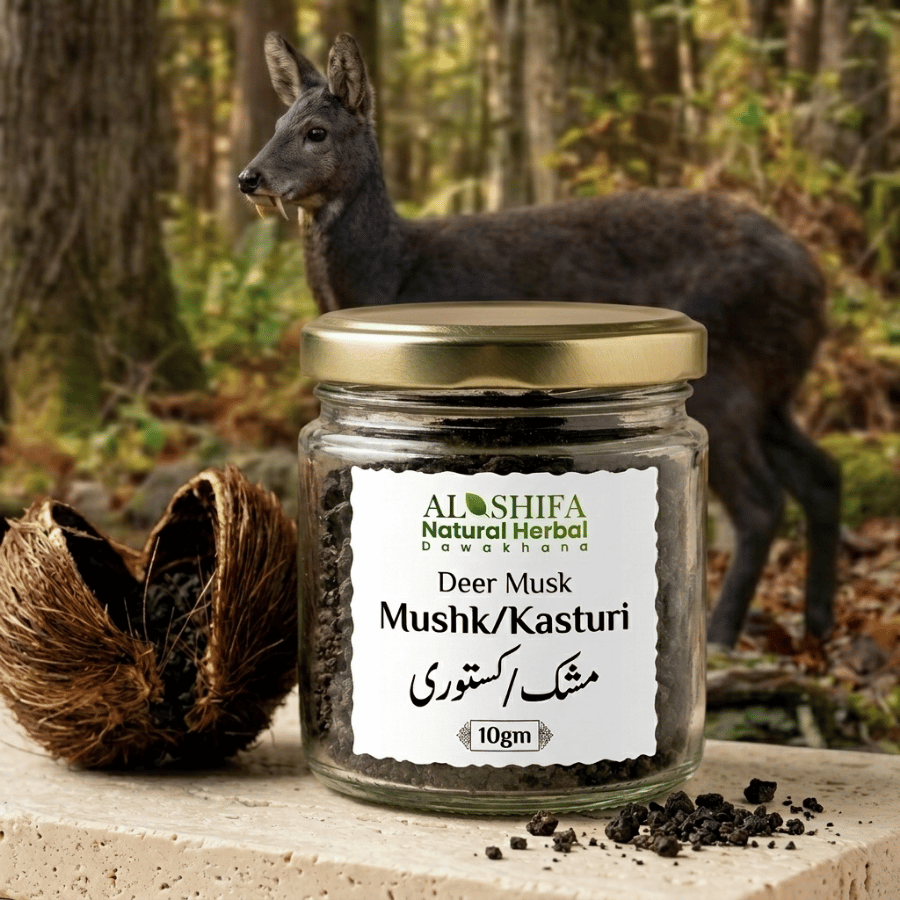
Mushk, commonly known as Kasturi and historically associated with Deer Musk, is a highly valued traditional aromatic material known for its deep, warm and long-lasting fragrance. It has a long history of use in traditional perfumery, attars, aromatic preparations, cultural fragrance practices and selected classical Unani formulations.
Modern products sold as Mushk or Kasturi may be botanical, compounded or synthetic musk preparations and should not automatically be considered genuine deer-derived musk.
Key Features:
Important Note: Genuine natural deer musk is a protected wildlife-derived material subject to conservation and trade restrictions. The name Mushk or Kasturi does not itself confirm deer origin. The actual source, composition and intended use of the supplied product should always be considered.
Mushk, commonly known as Kasturi and traditionally associated with Deer Musk, is a highly aromatic material with a long history in traditional perfumery, cultural practices and classical herbal systems. In Urdu and regional herbal trade, it is commonly known as Mushk or Kasturi .
Historically, true natural deer musk referred to an aromatic secretion obtained from the musk gland of mature male musk deer belonging to the genus Moschus. It became highly valued because of its powerful, warm and persistent fragrance and was historically used in luxury perfumes, traditional aromatic preparations and certain classical medicinal formulations.
Today, however, the term Mushk or Kasturi does not automatically mean genuine natural deer musk. Commercial products sold under these names may be botanical aromatic preparations, compounded traditional products, synthetic musk fragrances or other substitutes intended to reproduce a musk-like aroma.
This distinction is particularly important because musk deer are protected wildlife and international trade in genuine deer-derived musk is strictly controlled or prohibited in many circumstances.
At Al Shifa Natural Herbal Dawakhana, any material sold under the traditional name Mushk or Kasturi should be identified according to its actual declared source and supplied responsibly without representing a substitute as genuine wildlife-derived musk.
Mushk is a traditional aromatic substance known primarily for its strong, warm and long-lasting fragrance.
Historically, natural deer musk was associated with male musk deer of the genus Moschus.
Traditional natural musk was valued in:
Modern commercial Kasturi products may have a very different origin.
Depending on the product, “Mushk” may refer to:
These categories should not be considered interchangeable.
Product Name: Mushk / Kasturi
English Name: Musk / Traditionally Deer Musk
Urdu Name: مشک / کستوری
Roman Name: Mushk / Kasturi
Historical Animal Source: Musk Deer
Genus: Moschus spp.
Historical Material: Aromatic Musk Secretion
Modern Commercial Form: May include botanical, compounded or synthetic musk substitutes
Product Type: Traditional Aromatic Material
Historically, the term Deer Musk referred specifically to the strongly scented secretion produced by mature male musk deer.
Musk deer belong to the family Moschidae and genus Moschus.
They are different from ordinary deer belonging to the family Cervidae.
Natural deer musk became highly prized because even a small quantity could produce a powerful and persistent aroma.
However, historical demand for natural musk contributed to severe pressure on wild musk deer populations.
For this reason, genuine wildlife-derived musk is now subject to major conservation and legal restrictions.
This is an essential distinction for modern buyers.
Several musk deer species are threatened or endangered, and international commercial trade involving musk deer specimens is controlled under wildlife conservation laws and international agreements.
Therefore, a product marketed as “100% genuine natural deer musk” should not be accepted merely on the basis of its name, aroma, appearance or seller claim.
Its:
would need to be established through appropriate lawful documentation.
Al Shifa does not support illegal wildlife collection, poaching or unlawful trade in protected animal materials.
In modern herbal and perfume markets, the names:
may be used for very different products.
Some may contain no animal-derived musk at all.
Modern musk fragrances may be produced from:
Therefore, the traditional name alone does not establish the biological source.
These categories should be clearly separated.
Historical Natural Deer Musk:
Animal-derived aromatic material traditionally obtained from musk deer and now subject to wildlife restrictions.
Botanical Musk Materials:
Plant-derived aromatic materials or herbs that may produce a musk-like fragrance or carry traditional names associated with musk.
Synthetic Musk:
Manufactured fragrance compounds designed to provide musk-like aromatic notes without requiring animal-derived musk.
Compound Kasturi Preparations:
Traditional or commercial mixtures containing several aromatic ingredients.
Information about one category should not automatically be applied to another.
Musk is traditionally valued for its distinctive fragrance.
Descriptions of musk-type aroma may include:
The fragrance profile depends greatly on the actual material.
A synthetic musk perfume, botanical substitute and historical natural deer musk can smell significantly different.
A strong musk-like fragrance alone does not prove that a product contains genuine deer musk.
Mushk has held an important place in traditional fragrance culture for centuries.
Historically, it has been associated with:
These historical uses should be understood within their traditional context.
They do not establish modern clinical effectiveness.
The most established historical role of musk is in perfumery.
Musk-type materials have been valued because they can provide:
Modern perfumery generally uses non-animal alternatives to create musk notes.
Classical Unani literature has historically mentioned Mushk in selected compound formulations.
Traditional preparations may have associated it with:
These historical applications should not be interpreted as proof that Mushk treats heart disease, neurological disorders, sexual dysfunction, infertility or other medical conditions.
Mushk has historically appeared in some highly valued compound preparations intended for general restorative purposes.
The traditional reputation of an ingredient does not establish that it can correct:
Persistent or unexplained weakness requires appropriate medical assessment.
Some classical preparations historically included Mushk in formulations associated with the heart, vitality or general comfort.
Traditional terminology describing an ingredient as beneficial for the heart should not be interpreted as evidence that it treats:
Chest pain, fainting, severe breathlessness or other possible cardiac symptoms require urgent medical assessment.
Musk has also had a major cultural role as a valued fragrance.
Musk-type preparations may be used in:
The exact suitability depends on the ingredients used in the individual product.
Historically, Mushk was often used as one component of complex traditional formulations rather than as an ordinary standalone ingredient.
A compound preparation may contain:
The properties and safety of the finished formulation depend on all ingredients, not merely the presence of something labelled Mushk or Kasturi.
Historical natural deer musk is a chemically complex aromatic material.
One of the compounds strongly associated with its characteristic fragrance is muscone.
However, modern products sold as Kasturi or Musk may not contain natural deer musk or naturally derived muscone.
Their composition depends entirely on the actual source and manufacturing method.
Therefore, chemical information about genuine deer musk should not automatically be applied to commercial musk substitutes.
Muscone is historically associated with the characteristic odour of natural musk.
However, a product smelling like musk does not prove that it contains natural muscone or genuine deer-derived material.
Modern fragrance chemistry can reproduce musk-like notes using other aromatic substances.
Aroma alone is therefore not a reliable authenticity test.
Products labelled “Musk” may include:
Perfume Oils:
Fragrance blends designed for personal use.
Synthetic Musk Compounds:
Manufactured aromatic ingredients.
Botanical Preparations:
Plant-based materials marketed as musk substitutes.
Traditional Compound Kasturi:
Blended preparations containing several ingredients.
Historical Deer Musk:
Protected animal-derived material subject to legal and conservation controls.
The intended use and safety profile can differ considerably between these categories.
Musk is a high-value material, and traditional markets have historically faced substitution and adulteration.
Authenticity cannot reliably be established simply by:
Reliable identification may require documented source information and appropriate analytical testing.
For wildlife-derived material, legal documentation is also essential.
Modern products sold under the names Mushk or Kasturi can differ greatly in composition.
A perfume ingredient or synthetic fragrance material should never automatically be assumed suitable for ingestion.
Before any internal medicinal use, it is necessary to know:
Products intended only for fragrance or external use should not be consumed.
Medicinal internal use of unidentified Mushk or Kasturi preparations during pregnancy or breastfeeding should be avoided unless specifically recommended by an appropriately qualified healthcare professional.
This is especially important because modern commercial products may contain different aromatic or synthetic ingredients.
Traditional historical use does not establish safety during pregnancy or breastfeeding.
Mushk or Kasturi preparations should not be given medicinally to infants or young children without appropriate professional guidance.
Perfume oils and concentrated fragrance preparations should also be kept safely away from children.
Musk-style perfume preparations may contain concentrated aromatic substances capable of causing irritation or allergic reactions in sensitive individuals.
For external fragrance products:
The safety profile depends on the actual ingredients.
People with chronic medical conditions or those taking regular medicines should not use unidentified traditional Mushk preparations medicinally without appropriate professional guidance.
The term “Kasturi” alone does not provide enough information to determine the composition, dose or possible interactions of a product.
A responsible commercial description should clearly distinguish between:
A substitute should not be represented as genuine deer-derived musk.
This protects consumers while supporting responsible wildlife conservation.
Al Shifa Natural Herbal Dawakhana, established in 1999, focuses on responsible sourcing and clear identification of traditional herbal and aromatic materials.
For a product sold under the name Mushk or Kasturi, important quality considerations include:
Wildlife-derived material should never be sourced through illegal or undocumented channels.
The appropriate use of a Mushk or Kasturi product depends entirely on what the product actually contains.
It may be intended for:
A product intended for perfumery should not automatically be used internally.
For traditional medicinal preparations, the exact identity, ingredients and intended grade should first be confirmed and use should follow appropriate professional guidance.
Historically, Deer Musk referred to an aromatic secretion obtained from male musk deer of the genus Moschus.
Musk deer are protected wildlife, and genuine deer-derived musk is subject to significant conservation and trade restrictions.
Modern products sold as Mushk, Kasturi or Musk may instead contain synthetic fragrance ingredients, botanical substitutes or compound aromatic materials.
Therefore:
Al Shifa supports responsible product identification and does not support illegal wildlife trade.
Store Mushk or Kasturi products according to their actual form and intended use.
For most dry or aromatic preparations:
Concentrated fragrance materials should remain securely closed to reduce evaporation and accidental exposure.
Mushk, commonly known as Kasturi, is a traditional aromatic material with a long history in perfumery, cultural fragrance practices and selected classical Unani formulations.
Historically, the term Deer Musk referred to natural aromatic material from musk deer belonging to the genus Moschus. Today, however, commercial Mushk and Kasturi products may be botanical, compounded or synthetic musk preparations, and should not automatically be represented as genuine deer-derived musk.
Customers searching for Mushk Pakistan, Kasturi Pakistan, Musk Pakistan, Deer Musk Pakistan, Mushk Kasturi, traditional Kasturi, Mushk perfume, Kasturi fragrance, Mushk benefits, Kasturi uses, pure Mushk, original Kasturi, Mushk Lahore, Kasturi price in Pakistan, Mushk price in Pakistan, buy Mushk Pakistan, buy Kasturi Pakistan or Mushk online Pakistan should always consider the product’s actual source, composition, intended use and legal status.
Since 1999, Al Shifa Natural Herbal Dawakhana has focused on supplying traditional herbal and aromatic materials with attention to identity, quality, responsible sourcing, clean handling, proper storage and clear product information.
Product Name: Mushk / Kasturi
English Name: Musk / Traditionally Deer Musk
Urdu Name: مشک / کستوری
Roman Name: Mushk / Kasturi
Historical Animal Source: Musk Deer
Scientific Association: Moschus spp.
Historical Material: Aromatic Musk Secretion
Modern Commercial Form: May include botanical, compounded or synthetic musk substitutes
Product Type: Traditional Aromatic Material
Traditional Use: Perfumery, aromatic preparations, cultural fragrance practices and selected classical formulations
Important Note: Genuine natural deer musk is a wildlife-derived material subject to significant conservation and trade restrictions. Modern products sold as Mushk or Kasturi should be described according to their actual source and must not be represented as genuine deer musk without lawful, verifiable documentation.
مشک، جسے کستوری بھی کہا جاتا ہے، ایک مشہور قدرتی خوشبودار حیوانی مادہ ہے۔ اصل قدرتی مشک نر مشک ہرن کی مخصوص غدود ناف سے حاصل ہونے والے مادے سے بنتی ہے۔ خشک ہونے کے بعد اس میں ایک خاص، تیز اور دیر تک قائم رہنے والی خوشبو پیدا ہوتی ہے۔
مشک کا استعمال صدیوں سے مختلف حکیمی طبی ادویات اور خوشبو بنانے میں ہوتا آ رہا ہے۔ طب یونانی اور دوسری روایتی ادویات میں اسے خصوصاً دل و دماغ سے متعلق بعض طبی نسخوں، مردانہ اور جسمانی کمزوری سے متعلق بعض مرکبات، اعصابی امراض سے متعلق ادویات اور دوسرے مرکب دیسی طبی نسخوں میں شامل کیا جاتا ہے۔
اصل قدرتی مشک بہت نایاب اور قیمتی ہے۔ اسی وجہ سے بازار میں مصنوعی مشک، خوشبودار متبادل اور مختلف مرکب مصنوعات بھی مشک یا کستوری کے نام سے دستیاب ہوتی ہیں۔
اس لیے کستوری مشک کی خرید یا طبی استعمال سے پہلے اس کا قدرتی اصلی اور خالص ہونا ضروری ہے۔
اصل قدرتی مشک ایک حیوانی خوشبودار مادہ ہے جو بالغ نر مشک ہرن کی مخصوص غدود ناف سے حاصل ہونے والے مادے سے بنتی ہے۔
یہ کوئی جڑی بوٹی، پھول، بیج، گوند یا نباتاتی مادہ نہیں ہے۔
قدرتی مشک خشک ہونے کے بعد عموماً گہرے براون رنگ کے دانے دار یا خشک مادے کی شکل اختیار کر سکتی ہے اور اس کی خاص پہچان اس کی تیز اور دیرپا خوشبو ہے۔
اس کی ظاہری حالت اور خوشبو کے ذریعہ، عمر، صفائی، خشک کرنے اور محفوظ رکھنے کے طریقے کے مطابق مختلف ہو سکتی ہے۔
نام : مشک
دوسرا معروف نام : کستوری
انگریزی نام : نیچرل مسک/دیر مسک
ماخذ : نر مشک ہرن
جنس : مشک نافہ
حاصل ہونے والا مادہ: مخصوص مشک ناف غدود کا خشک مادہ
قسم: حیوانی خوشبودار قدرتی مادہ
عام شکل: خشک یا دانے دار گہرے رنگ کا مادہ
عام رنگت: بھوری سے گہری بھوری یا سیاہی مائل
خاص پہچان: تیز، مخصوص اور دیرپا خوشبو
مشک کی درست پہچان بہت ضروری ہے کیونکہ بازار میں اصل قدرتی مشک، مصنوعی مشک، خوشبودار مرکبات اور مختلف متبادل جعلی ایک جیسے یا ملتے جلتے ناموں سے فروخت ہو سکتی ہیں۔
صرف رنگ، خوشبو یا ظاہری شکل دیکھ کر اصل قدرتی مشک کی یقینی شناخت کرنا آسان نہیں۔
مشک کے معیار اور اصل ہونے کی پہچان میں اس کے:
کو اہمیت دی جا سکتی ہے۔
صرف بہت تیز خوشبو ہونا کسی چیز کے اصل قدرتی مشک ہونے کا ثبوت نہیں ہے۔
مصنوعی خوشبودار اجزاء شامل کر کے بھی مشک جیسی خوشبو پیدا کی جا سکتی ہے۔
قدرتی مشک:
یہ نر مشک ہرن سے حاصل ہونے والا حیوانی مادہ ہے۔ قدرتی مشک بہت نایاب اور قیمتی ہے اور اس کے ذریعہ اور تجارت پر جنگلی حیات کے تحفظ کے سخت قوانین لاگو ہو سکتے ہیں۔
مصنوعی مشک:
یہ مختلف خوشبودار اجزاء سے تیار کی جاتی ہے اور اس کے لیے قدرتی مشک ہرن سے مادہ حاصل کرنا ضروری نہیں ہوتا۔
خوشبودار کستوری مصنوعات:
بازار میں کستوری یا مشک کے نام سے عطر، خوشبو، سفوف یا دوسری مرکب مصنوعات بھی دستیاب ہو سکتی ہیں۔ یہ ضروری نہیں کہ ان میں اصل قدرتی مشک، کستوری موجود ہو۔
اسی لیے ان تینوں کو ایک ہی چیز نہیں سمجھنا چاہیے۔
مشک کا ذکر طب یونانی اور دوسرے روایتی طبی ادویات میں ملتا ہے۔
طب یونانی میں اسے بعض:
میں شامل کیا جاتا ہے۔
یہ استعمال طبی معلومات پر مبنی ہیں۔
مشک کو طبی نسخوں میں دل و دماغ امراض کے لیے شامل کیا جاتا ہے۔
طب یونانی کے بعض مرکبات میں اسے دوسری جڑی بوٹیوں کے ساتھ ملا کر استعمال کیا جاتا ہے۔
لیکن سینے میں درد، سانس لینے میں دشواری، بے ہوشی، دل کی دھڑکن میں شدید تبدیلی، جسم کے کسی حصے میں اچانک کمزوری یا دوسری سنگین علامات میں فوری معالج سے چیک کروانا چاہیے۔
ایسی علامات میں فوری طبی معائنہ ضروری ہے۔
مشک کو طب یونانی میں مقوی ادویات میں عمومی جسمانی کمزوری کی ادویات میں بھی شامل کیا جاتا ہے۔
لیکن مسلسل جسمانی کمزوری کی بہت سی وجوہات ہو سکتی ہیں، مثلاً:
اس لیے مسلسل یا شدید کمزوری میں معالج کو چیک کروانا چاہیے۔
مشک اپنی خاص اور دیرپا خوشبو کی وجہ سے تاریخی طور پر خوشبو بنانے میں بھی استعمال ہوتی ہے۔
آج کل خوشبو سازی میں قدرتی مشک، کستوری مختلف مصنوعی اور دوسرے متبادل خوشبودار اجزاء استعمال کیے جاتے ہیں۔
عطر یا پرفیوم میں استعمال ہونے والی مشک خوشبو کو اصل قدرتی مشک، کستوری نہیں سمجھنا چاہیے۔
قدرتی مشک کی نمایاں خصوصیت اس کی مخصوص اور دیرپا خوشبو ہے۔
اس میں مختلف قدرتی حیوانی اجزاء پائے جاتے ہیں۔ ان میں مسکون ایک اہم خوشبودار جز ہے جس کا مشک کی مخصوص خوشبو میں اہم کردار ہے۔
قدرتی مشک کی مکمل کیمیائی ساخت پیچیدہ ہوتی ہے، اس لیے صرف مسکون کی موجودگی کو ہر صورت میں اصل قدرتی مشک کی یقینی شناخت نہیں سمجھنا چاہیے۔
قدرتی مشک، کستوری میں مختلف قدرتی کیمیائی اجزاء پائے گئے ہیں۔
تحقیقی معلومات میں ان میں:
کی موجودگی بیان کی گئی ہے۔
ان اجزاء کی مقدار مشک ہرن کی قسم، ماخذ، عمر، قدرتی حالت، جمع کرنے اور محفوظ رکھنے کے طریقے کے مطابق مختلف ہو سکتی ہے۔
قدرتی مشک مختلف شکلوں میں بیان یا فروخت کی جا سکتی ہے۔
قدرتی مشک:
اس میں اصل ماخذ اور شناخت سب سے اہم ہیں۔
مشک کا سفوف یا مرکب:
پسی ہوئی یا مرکب شکل میں اصل مادے کی ظاہری شناخت مشکل ہو جاتی ہے۔ اس میں دوسرے اجزاء یا مصنوعی خوشبو شامل ہونے کا امکان بھی ہو سکتا ہے۔
اسی لیے صرف سفوف کی خوشبو یا رنگت کی بنیاد پر اسے اصل قدرتی مشک قرار نہیں دینا چاہیے۔
اصل قدرتی مشک، کستوری کا تعلق جنگلی حیات کے تحفظ سے ہے۔
مشک ہرن کی کئی آبادیوں کو بین الاقوامی سطح پر تحفظ حاصل ہے اور ان سے حاصل ہونے والی قدرتی مشک کی تجارت پر سخت قانونی پابندیاں یا اجازت نامے لاگو ہو سکتے ہیں۔
اسی لیے:
خواتین کو مشک خود سے کسی اندرونی بیماری، ماہواری کی خرابی، ہارمون کی خرابی، بانجھ پن یا دوسری تولیدی بیماری کے علاج کے لیے استعمال نہیں کرنا چاہیے۔
اگر کسی خاتون کو مسلسل یا غیر معمولی علامات ہوں تو پہلے ان کی اصل وجہ معلوم کرنا ضروری ہے۔
حمل کے دوران قدرتی مشک کو طبی مقدار میں خود سے استعمال نہ کریں۔
حمل کے دوران اس کے محفوظ اندرونی استعمال کے بارے میں قابل اعتماد انسانی معلومات محدود ہیں، جبکہ بعض روایتی استعمال تولیدی نظام سے متعلق بھی بیان کیے گئے ہیں۔
اس لیے حمل کے دوران کسی طبی نسخے میں مشک کا استعمال صرف مستند معالج کی واضح رہنمائی سے ہونا چاہیے۔
دودھ پلانے والی خواتین کو مشک کا طبی اندرونی استعمال خود سے شروع نہیں کرنا چاہیے۔
اس دوران اس کے محفوظ طبی استعمال اور مناسب مقدار کے بارے میں مستند معالج سے رہنمائی حاصل کریں۔
شیر خوار اور چھوٹے بچوں کو مشک خود سے دوا کے طور پر نہ دیں۔
بچوں میں اس کے محفوظ طبی استعمال اور مناسب مقدار کے متعلق مستند معالج سے مشورہ ضروری ہے۔
قدرتی مشک ایک پیچیدہ حیوانی مادہ ہے اور مختلف ادویات کے ساتھ اس کے ممکنہ اثرات کے بارے میں مکمل انسانی معلومات محدود ہیں۔
خصوصاً اگر کوئی شخص:
استعمال کر رہا ہو تو مشک کا طبی استعمال شروع کرنے سے پہلے مستند معالج سے مشورہ کرنا بہتر ہے۔
مشک کی مناسب طبی مقدار اس کی اصل نوعیت، خالص ہونے، تیاری، استعمال کے مقصد، عمر اور صحت کی حالت کے مطابق مختلف ہو سکتی ہے۔
نامعلوم یا غیر مستند مشک کی زیادہ مقدار یا اندرونی استعمال سے اجتناب کریں۔
اگر استعمال کے بعد:
پیدا ہوں تو استعمال بند کریں اور ضرورت کے مطابق مستند معالج سے رابطہ کریں۔
مشک ایک قدرتی حیوانی مادہ ہے۔ قدرتی ہونے کا مطلب یہ نہیں کہ اسے ہر شخص، ہر بیماری یا ہر مقدار میں استعمال کر سکتا ہے۔
اسے خود سے درج ذیل مسائل کا ثابت شدہ علاج نہ سمجھیں:
مشک کے متعدد استعمال مختلف روایتی طبی طریقوں میں بیان کیے گئے ہیں اور اس کے بعض اجزاء پر جدید تحقیق بھی موجود ہے، لیکن بہت سے روایتی استعمال کے لیے مضبوط انسانی طبی تحقیق محدود ہے۔
اگر علامات شدید ہوں، بار بار ہوں یا مسلسل برقرار رہیں تو مستند معالج سے معائنہ کروائیں۔
قدرتی مشک کی نایابی اور زیادہ قیمت کی وجہ سے بازار میں مصنوعی یا مرکب مصنوعات بھی مشک کے نام سے دستیاب ہو سکتی ہیں۔
اس لیے مشک کے معیار کے لیے درج ذیل باتیں اہم ہیں:
واضح ماخذ: یہ معلوم ہو کہ مصنوعات قدرتی مشک، کستوری ہے، مصنوعی مشک ہے یا خوشبودار متبادل۔
قانونی حیثیت: قدرتی مشک، کستوری کی صورت میں قانونی ماخذ اور ضروری دستاویزات موجود ہوں۔
درست شناخت: صرف خوشبو یا رنگ کی بنیاد پر اصل ہونے کا دعویٰ نہ کیا جائے۔
صاف ستھری حالت: غیر ضروری آلودگی اور دوسرے نامعلوم مادوں سے پاک ہو۔
صحیح طریقے سے محفوظ: نمی، بہت زیادہ گرمی اور آلودگی سے محفوظ رکھی گئی ہو۔
الشفاء نیچرل ہربل دواخانہ سنہ ۱۹۹۹ سے قدرتی جڑی بوٹیوں اور روایتی قدرتی اشیاء کی سپلائی کر رہا ہے۔
مشک جیسی نایاب حیوانی مصنوعات کے معاملے میں ہماری ترجیح درج ذیل باتوں پر ہونی چاہیے:
مشک کا ذکر طب یونانی اور دوسرے روایتی طبی طریقوں میں مختلف مرکبات کے ساتھ ملتا ہے، خصوصاً:
لیکن قدرتی مشک کی مناسب مقدار، خالص ہونے، اصل ماخذ اور استعمال کی نوعیت میں بہت فرق ہو سکتا ہے۔
اسی لیے یہاں خود سے دوا کے طور پر کھانے یا پینے کی کوئی مخصوص مقدار تجویز نہیں کی جا رہی۔
طبی استعمال کے لیے پہلے مستند معالج سے مناسب مقدار، مدت اور طریقہ استعمال معلوم کریں۔
مشک کو ٹھنڈی، خشک اور صاف ستھری جگہ پر اچھی طرح کسی جار میں پیک کر کے رکھیں۔
بہتر معیار برقرار رکھنے کے لیے:
اگر مصنوعات کی بو، رنگ یا ظاہری حالت میں غیر معمولی تبدیلی محسوس ہو تو اسے طبی استعمال میں نہ لائیں۔
مشک / کستوری ایک مشہور خوشبودار حیوانی مادہ ہے جس کا ذکر طب یونانی اور دوسرے روایتی طبی طریقوں میں ملتا ہے۔ اصل قدرتی مشک، کستوری نر مشک ہرن سے حاصل ہونے والے مخصوص مادے سے بنتی ہے، جبکہ آج بازار میں مصنوعی مشک اور دوسرے خوشبودار متبادل بھی عام ہیں۔
اگر آپ مشک، کستوری، مشک، کستوری، اصل مشک، خالص مشک، مشک کے فوائد، مشک کے استعمال، کستوری کے فوائد، مشک پاکستان، مشک لاہور، مشک کی قیمت یا کستوری کی قیمت پاکستان کے متعلق معلومات تلاش کر رہے ہیں تو سب سے پہلے یہ معلوم کرنا ضروری ہے کہ متعلقہ مصنوعات قدرتی مشک، کستوری، مصنوعی مشک یا کوئی خوشبودار متبادل ہے۔
قدرتی Deer Musk کی خرید و فروخت میں جنگلی حیات کے تحفظ اور متعلقہ مقامی و بین الاقوامی قوانین کی پابندی ضروری ہے۔
نام: مشک
دوسرا معروف نام: کستوری
انگریزی نام: Deer Musk / Natural Musk
ماخذ: نر مشک ہرن
جنس: Moschus
حاصل ہونے والا مادہ: مخصوص مشک غدود کا خشک مادہ
قسم: حیوانی خوشبودار مادہ
عام شکل: خشک یا دانے دار گہرے رنگ کا مادہ
عام رنگت: بھوری سے گہری بھوری یا سیاہی مائل
اہم قدرتی جز: مسکون
عام روایتی طبی استعمال: دل و دماغ سے متعلق بعض طبی نسخوں، عمومی جسمانی کمزوری، بعض مقوی ادویات، اعصابی کیفیت سے متعلق بعض روایتی مرکبات اور دوسرے دیسی طبی نسخوں میں استعمال۔
اہم نوٹ: اصل قدرتی مشک ایک نایاب حیوانی مادہ ہے اور اسے عام مصنوعی سے الگ سمجھنا ضروری ہے۔ مشک ہرن کی کئی آبادیوں اور ان سے حاصل ہونے والی مصنوعات کی تجارت جنگلی حیات کے تحفظ کے سخت قوانین کے تحت آتی ہے۔ طبی استعمال کے لیے اصل نوعیت، قانونی ماخذ اور معیار معلوم کریں اور مستند معالج سے مناسب رہنمائی حاصل کریں۔