
Berge Arusa, Adhatoda vasica Nees
Contact for Price
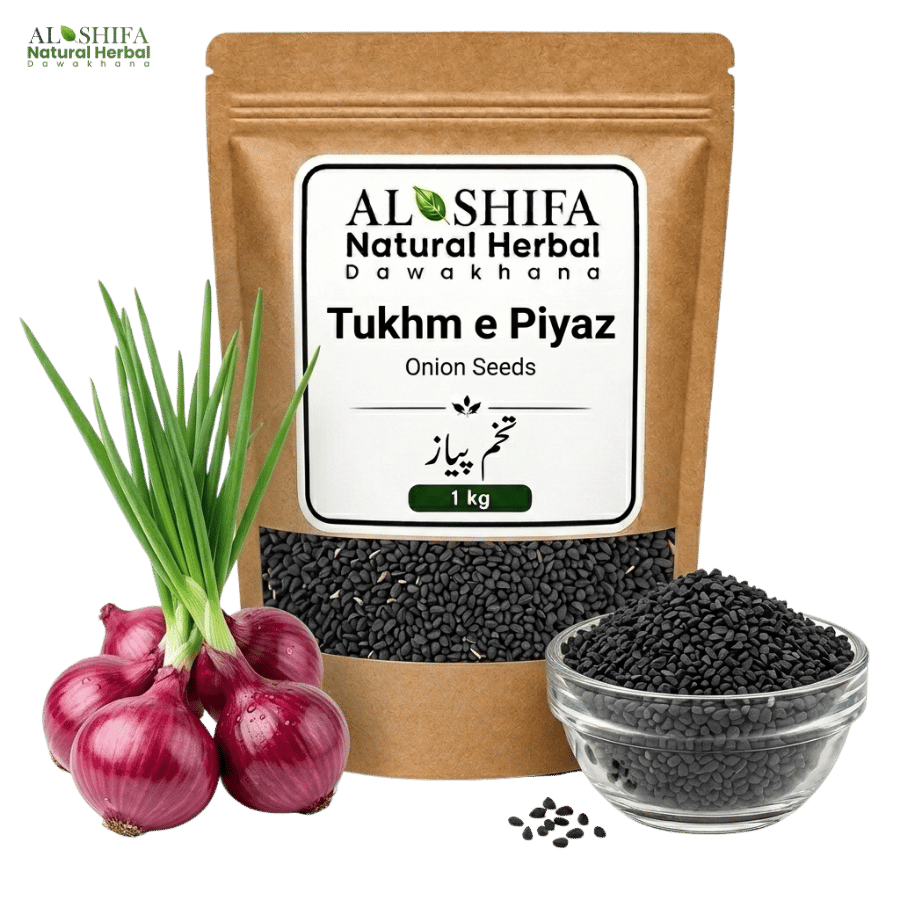
Tukhm e Piyaz (Onion Seeds) are the mature dried seeds of Allium cepa L., traditionally used in Unani and regional herbal preparations. They have historically been associated with general nourishment, physical strength, digestive wellness, restorative vitality, and selected male and female wellness formulations.
Al Shifa Tukhm e Piyaz is carefully selected with attention to true botanical identity, seed maturity, natural appearance, cleanliness, proper drying, and overall raw-material quality.
Key Features:
Important Note: True Onion Seeds come from the Onion plant (Allium cepa) and are not Kalonji (Nigella Seeds). The two are botanically different and should not be confused.
Tukhm e Piyaz (Onion Seeds) are the mature dried seeds obtained from the common onion plant, Allium cepa L. They are small, dark-coloured seeds traditionally recognized in Unani and regional herbal practices as a distinct botanical raw material.
Although onion bulbs are widely used as a culinary vegetable, the mature seeds represent a different part of the plant with their own traditional applications. Tukhm e Piyaz has historically been included in preparations associated with general nourishment, physical strength, digestive wellness, restorative vitality, and selected male and female wellness formulations.
Al Shifa Tukhm e Piyaz is carefully selected with attention to botanical identity, seed maturity, natural appearance, cleanliness, appropriate drying, and overall raw-material quality.
Tukhm e Piyaz consists of the mature seeds produced by the flowering onion plant.
When an onion plant is allowed to complete its flowering cycle, it produces rounded flower clusters containing numerous small seeds. After maturation, these seeds become dark and firm and can be collected, cleaned, and properly dried.
True Onion Seeds are generally:
Natural differences in size, colour, and appearance may occur according to onion variety, growing conditions, maturity, harvesting, and storage.
English Name: Onion Seeds
Urdu Name: تخم پیاز
Roman Name: Tukhm e Piyaz / Tukhm-e-Piyaz
Scientific Name: Allium cepa L.
Family: Amaryllidaceae
Plant Part: Mature Seeds
Product Type: Dried Seeds / Traditional Herbal Raw Material
This is an important product-identification distinction.
True Tukhm e Piyaz are seeds of the Onion plant, Allium cepa.
Kalonji, commonly known as Nigella Seeds or Black Seed, comes from a completely different plant traditionally known as Nigella sativa.
Because Kalonji is sometimes marketed under misleading names such as “Black Onion Seed,” the two products can easily be confused.
They differ in:
Therefore, information about Kalonji should not automatically be applied to true Onion Seeds.
Tukhm e Piyaz should also be distinguished from the familiar Onion bulb.
Onion Bulb: The fleshy underground portion widely consumed as a vegetable and seasoning.
Onion Seeds: Mature seeds produced after the plant flowers.
Both originate from the same species, but their composition, concentration of constituents, culinary use, and traditional applications can differ.
Research involving fresh Onion, Onion juice, Onion extract, Onion oil, or concentrated preparations should therefore not automatically be interpreted as evidence for ordinary dried Onion Seeds.
Tukhm e Piyaz has historically been included in selected Unani and traditional formulations.
Traditional applications have been associated with:
These are descriptions of traditional use and do not establish Onion Seeds as a clinically proven treatment for any diagnosed condition.
Like many mature seeds, Onion Seeds naturally contain a combination of nutritional and plant-derived constituents.
Depending on variety and growing conditions, these may include:
The exact nutritional profile can vary according to seed variety, maturity, cultivation, processing, and storage.
Whole seeds should also not be considered nutritionally or medicinally identical to concentrated extracts or seed oils.
Tukhm e Piyaz has traditionally appeared in nourishing and strengthening herbal formulations.
Historical use may associate it with:
Such traditional use does not mean Onion Seeds independently treat chronic weakness, anaemia, hormonal disorders, nutritional deficiencies, or other medical causes of fatigue.
Persistent or unexplained weakness should be medically evaluated.
Traditional herbal practice has also associated Tukhm e Piyaz with digestive preparations.
It may historically be included in formulations intended for:
However, Onion Seeds should not be marketed as a treatment for ulcers, inflammatory bowel disease, irritable bowel syndrome, gastrointestinal infections, or other diagnosed digestive disorders.
Tukhm e Piyaz has a historical reputation in some Unani formulations associated with male nourishment, strength, and reproductive wellness.
Traditional formulations may include it for:
This traditional reputation does not establish Onion Seeds as a proven treatment for:
Male fertility and sexual-health concerns can have numerous causes and may require appropriate clinical evaluation.
Tukhm e Piyaz may also appear in selected traditional formulations associated with female nourishment and general reproductive wellness.
However, traditional use should not be interpreted as evidence that Onion Seeds treat:
Women who are pregnant, breastfeeding, trying to conceive, or undergoing fertility treatment should obtain professional guidance before regular medicinal use.
Traditional herbal literature may describe Tukhm e Piyaz as an ingredient in compound preparations intended for reproductive strength or general vitality.
Such historical use does not guarantee:
Fertility depends on many factors involving both partners.
Anyone experiencing difficulty conceiving should consider appropriate medical evaluation rather than relying exclusively on a single traditional ingredient.
Onions and different parts of the Onion plant contain naturally occurring phenolic and flavonoid-related compounds.
These compounds have attracted scientific interest because of their antioxidant properties.
However, several important distinctions must be maintained:
Therefore, antioxidant-related information should be viewed as part of the plant’s natural composition rather than as a claim that Tukhm e Piyaz prevents or cures disease.
Onion and various Onion-derived preparations have been studied for possible metabolic effects.
This does not establish ordinary dried Tukhm e Piyaz as a treatment for:
People using medicines for blood sugar, blood pressure, or other chronic conditions should not discontinue or adjust prescribed treatment based on traditional herbal claims.
Onion has a longstanding reputation as a nutritious plant and has been studied in relation to cardiovascular health.
However, evidence relating to Onion bulbs, juices, extracts, or isolated compounds should not automatically be attributed to whole Onion Seeds.
Tukhm e Piyaz should not be presented as a medicine for:
A balanced diet and appropriate medical management remain important for cardiovascular health.
Different products derived from Onion Seeds are not automatically equivalent.
Whole Seeds: Mature dried seeds collected after flowering.
Seed Powder: Ground material made from dried seeds.
Seed Oil: Oil obtained from the seeds.
Extract: A preparation concentrating selected seed constituents.
Onion Bulb Extract: A preparation derived from the bulb rather than the seeds.
Their composition, concentration, intended use, and safety considerations can differ substantially.
Research involving one form should not automatically be applied to another.
At Al Shifa Natural Herbal Dawakhana, Tukhm e Piyaz is selected with attention to:
Botanical Identity – True Onion Seeds consistent with the characteristics of Allium cepa.
Seed Maturity – Properly developed mature seeds.
Natural Appearance – Characteristic dark colour, shape, and physical condition.
Cleanliness – Carefully handled to minimize unnecessary dirt and foreign matter.
Proper Drying – Appropriately dried for responsible storage.
Quality Selection – Material showing significant mould, infestation, excessive moisture, or deterioration is avoided.
Al Shifa Natural Herbal Dawakhana, established in 1999, supplies carefully selected traditional herbs, seeds, roots, fruits, peels, gums, resins, spices, powders, oils, and other natural raw materials throughout Pakistan.
Our Tukhm e Piyaz is selected for customers seeking genuine Onion Seeds for appropriate Unani, nourishing, restorative, digestive, vitality, and traditional wellness formulations.
We focus on:
Tukhm e Piyaz may be incorporated into different traditional preparations depending on the intended purpose and formulation.
The appropriate form and amount can depend on:
There is no single universal medicinal dosage appropriate for every person or every traditional preparation.
For regular medicinal, reproductive, or condition-specific use, guidance from a qualified healthcare professional or registered Unani practitioner is recommended.
Normal food-related exposure to Onion is familiar to many people, but concentrated or medicinal use of Onion Seeds should still be approached responsibly.
Professional advice is particularly appropriate for:
People with a known allergy to Onion or related plants should avoid the product.
Anyone experiencing significant swelling, breathing difficulty, widespread allergic reaction, or other severe symptoms should seek urgent medical attention.
Tukhm e Piyaz is a traditional botanical raw material and should not be presented as a proven treatment for:
Traditional use and scientific investigation provide useful context but do not replace appropriate diagnosis, professional medical advice, or established treatment.
Store Tukhm e Piyaz in a cool, clean, and dry place in a tightly closed container.
For better preservation:
Tukhm e Piyaz (Onion Seeds) are the mature dried seeds of Allium cepa, traditionally used in selected Unani preparations associated with general nourishment, physical strength, digestive wellness, restorative vitality, and male and female wellness.
Customers searching for Tukhm e Piyaz Pakistan, Onion Seeds Pakistan, true Onion Seeds, pure Tukhm e Piyaz, original Tukhm e Piyaz, Tukhm e Piyaz Lahore, Onion Seeds benefits, Tukhm e Piyaz benefits, Tukhm e Piyaz uses, Tukhm e Piyaz price in Pakistan, Onion Seeds price in Pakistan, buy Tukhm e Piyaz Pakistan, or Onion Seeds online Pakistan can choose Al Shifa Natural Herbal Dawakhana for carefully selected traditional raw material.
Since 1999, Al Shifa Natural Herbal Dawakhana has focused on providing traditional natural ingredients with attention to identity, cleanliness, appropriate drying, natural quality, responsible storage, and accurate product information.
Product Name: Tukhm e Piyaz / Onion Seeds
English Name: Onion Seeds
Urdu Name: تخم پیاز
Roman Name: Tukhm e Piyaz / Tukhm-e-Piyaz
Scientific Name: Allium cepa L.
Family: Amaryllidaceae
Plant Part: Mature Seeds
Product Type: Dried Seeds / Traditional Herbal Raw Material
Traditional Use: General nourishment, digestive wellness, restorative strength, vitality, and selected male and female wellness formulations
Important Note: True Onion Seeds are obtained from Allium cepa and should not be confused with Kalonji, which comes from a different plant.
تخم پیاز عام پیاز کے پودے سے حاصل ہونے والے پختہ اور خشک بیج ہیں۔ پیاز ہماری روزمرہ غذا میں ایک معروف سبزی ہے، لیکن اس کے پختہ بیج پیاز کی گانٹھ سے مختلف نباتاتی حصہ ہیں اور روایتی طب میں انہیں ایک الگ خام جزو کے طور پر استعمال کیا جاتا رہا ہے۔
طبِ یونانی اور مختلف مقامی روایات میں تخم پیاز کو عمومی غذائیت، جسمانی قوت، نظامِ ہضم کی آسودگی، نقاہت کے بعد بحالی، قوت و نشاط اور منتخب مردانہ و زنانہ صحت کے مرکبات میں شامل کیا جاتا رہا ہے۔
الشفاء نیچرل ہربل دواخانہ میں تخم پیاز کو درست شناخت، بیج کی پختگی، قدرتی ظاہری حالت، صفائی، مناسب خشکی اور مجموعی معیار کو مدنظر رکھتے ہوئے منتخب کیا جاتا ہے۔
تخم پیاز وہ پختہ بیج ہیں جو پیاز کے پودے پر پھول آنے کے بعد بنتے ہیں۔
جب پیاز کے پودے کو مکمل نشوونما اور پھول بننے کا موقع ملتا ہے تو اس پر گول پھول دار گچھے بنتے ہیں۔ ان پھولوں میں چھوٹے چھوٹے بیج بنتے ہیں جو مکمل پختگی کے بعد گہرے رنگ کے اور سخت ہو جاتے ہیں۔
ان بیجوں کو مناسب وقت پر جمع کرکے، صاف کرکے اور اچھی طرح خشک کرنے کے بعد محفوظ کیا جاتا ہے۔
تخم پیاز عموماً:
قسم، علاقے، آب و ہوا، کاشت، پختگی اور ذخیرے کے مطابق ان کے رنگ، جسامت اور ظاہری حالت میں قدرتی فرق ہو سکتا ہے۔
تخم پیاز اسی پودے کے پختہ بیج ہیں جس سے عام پیاز حاصل کیا جاتا ہے۔
اردو نام: تخم پیاز
معروف نام: پیاز کے بیج
مستعمل حصہ: پختہ خشک بیج
نباتاتی خاندان: نرگسی خاندان
قسم: خشک نباتاتی بیج اور روایتی خام جزو
درست شناخت بہت اہم ہے کیونکہ بازار میں بعض اوقات دوسرے سیاہ بیجوں کو بھی غلط طور پر پیاز کے بیج کہا جاتا ہے۔
یہ فرق خاص طور پر سمجھنا ضروری ہے۔
تخم پیاز اصل پیاز کے پودے سے حاصل ہونے والے بیج ہیں۔
کلونجی ایک بالکل مختلف پودے کے بیج ہیں۔
دونوں بیج ظاہری طور پر گہرے رنگ کے ہونے کی وجہ سے بعض اوقات ایک دوسرے سے خلط ملط کیے جاتے ہیں، لیکن ان کی:
ایک دوسرے سے مختلف ہیں۔
اس لیے کلونجی کے فوائد، استعمال یا خصوصیات کو تخم پیاز سے منسوب کرنا درست نہیں۔
الشفاء میں تخم پیاز کو اس کی اصل نباتاتی شناخت کے مطابق ہی پیش کیا جاتا ہے۔
تخم پیاز کو روزمرہ استعمال ہونے والی پیاز کی گانٹھ سے بھی الگ سمجھنا چاہیے۔
عام پیاز: پودے کا گوشت دار زیرِ زمین حصہ ہے جسے سبزی، مصالحے اور غذا کے طور پر استعمال کیا جاتا ہے۔
تخم پیاز: پھول آنے کے بعد تیار ہونے والے پختہ بیج ہیں۔
اگرچہ دونوں ایک ہی پودے سے حاصل ہوتے ہیں، لیکن ان کی:
میں فرق ہو سکتا ہے۔
اسی لیے عام پیاز، پیاز کے رس، پیاز کے روغن یا کسی مرتکز عصارے سے متعلق معلومات کو براہِ راست تخم پیاز پر لاگو نہیں کرنا چاہیے۔
تخم پیاز کو مختلف روایتی یونانی مرکبات میں استعمال کیا جاتا رہا ہے۔
تاریخی طور پر اس کا تعلق:
سے بیان کیا جاتا ہے۔
یہ تمام استعمال روایتی طبی تجربات اور تاریخی استعمال کی نمائندگی کرتے ہیں۔ انہیں کسی تشخیص شدہ بیماری کے ثابت شدہ علاج کے طور پر نہیں سمجھنا چاہیے۔
پختہ تخم پیاز میں مختلف قدرتی غذائی اور نباتاتی اجزاء پائے جا سکتے ہیں۔
قسم، کاشت اور پختگی کے مطابق ان میں:
موجود ہو سکتے ہیں۔
ان اجزاء کی مقدار پیاز کی قسم، زمین، آب و ہوا، پختگی، خشک کرنے کے طریقے اور ذخیرے کے مطابق مختلف ہو سکتی ہے۔
مکمل تخم پیاز کو ان کے مرتکز عصارے یا روغن کے برابر نہیں سمجھنا چاہیے۔
تخم پیاز کو روایتی طور پر بعض مقوی اور غذائیت بخش مرکبات میں شامل کیا جاتا رہا ہے۔
ان کا تاریخی استعمال:
میں بیان کیا جاتا ہے۔
تاہم جسمانی کمزوری کی مختلف وجوہات ہو سکتی ہیں، مثلاً:
اس لیے مسلسل یا غیر معمولی کمزوری کو صرف تخم پیاز کے استعمال سے دور ہونے والی کیفیت نہیں سمجھنا چاہیے۔
طبِ یونانی اور روایتی طریقوں میں تخم پیاز کو بعض ہاضم مرکبات میں بھی شامل کیا جاتا رہا ہے۔
روایتی طور پر ان کا استعمال:
میں کیا جاتا رہا ہے۔
تاہم تخم پیاز کو معدے کے زخم، آنتوں کی سوزش، آنتوں کے جراثیمی امراض یا دیگر تشخیص شدہ ہاضم بیماریوں کا ثابت شدہ علاج قرار نہیں دینا چاہیے۔
تخم پیاز کو بعض روایتی یونانی مرکبات میں مردانہ غذائیت، قوت اور تولیدی صحت سے متعلق شامل کیا جاتا رہا ہے۔
تاریخی طور پر ان کا تعلق:
سے بیان کیا جاتا ہے۔
لیکن یہ روایتی شہرت اس بات کا ثبوت نہیں کہ تخم پیاز:
کا ثابت شدہ علاج ہیں۔
مردانہ تولیدی یا ازدواجی صحت کے مسائل کی مختلف وجوہات ہو سکتی ہیں اور مناسب طبی معائنہ ضروری ہو سکتا ہے۔
تخم پیاز بعض روایتی مرکبات میں خواتین کی عمومی غذائیت اور تولیدی صحت کے حوالے سے بھی شامل کیے جاتے رہے ہیں۔
تاہم اس روایتی استعمال کو:
کے علاج کے طور پر نہیں سمجھنا چاہیے۔
حمل کی منصوبہ بندی کرنے والی، تولیدی علاج حاصل کرنے والی، حاملہ یا دودھ پلانے والی خواتین کو باقاعدہ طبی استعمال سے پہلے مستند معالج سے مشورہ کرنا چاہیے۔
بعض روایتی نسخوں میں تخم پیاز کو عمومی تولیدی قوت، غذائیت اور ازدواجی صحت کے مرکبات میں شامل کیا جاتا ہے۔
یہ روایتی استعمال حمل ٹھہرنے، مادۂ تولید بڑھنے یا ہارمون بہتر ہونے کی ضمانت نہیں ہے۔
تولیدی صحت بہت سے عوامل سے متاثر ہوتی ہے، جن میں:
شامل ہیں۔
حمل ٹھہرنے میں دشواری کی صورت میں دونوں شریکِ حیات کا مناسب طبی معائنہ اہم ہو سکتا ہے۔
پیاز اور اس کے مختلف حصوں میں قدرتی نباتاتی مرکبات پائے جاتے ہیں جن پر غذائی اور سائنسی تحقیق کی گئی ہے۔
تاہم یہ فرق ضروری ہے کہ:
اس لیے تخم پیاز کے قدرتی نباتاتی اجزاء کو عمومی غذائی خصوصیت کے طور پر بیان کرنا زیادہ مناسب ہے۔
پیاز اور اس سے حاصل ہونے والی مختلف تیاریوں پر جسمانی استحالہ سے متعلق تحقیق موجود ہے۔
لیکن عام خشک تخم پیاز کو:
کی دوا قرار دینا درست نہیں۔
جو افراد پہلے سے خون میں شکر، فشارِ خون یا کسی دائمی بیماری کی ادویات استعمال کر رہے ہوں وہ روایتی اجزاء کی بنیاد پر اپنی دوا بند یا تبدیل نہ کریں۔
پیاز ایک معروف غذائی پودا ہے اور اس کے مختلف اجزاء پر دل اور دورانِ خون سے متعلق تحقیق بھی کی گئی ہے۔
تاہم عام پیاز، اس کے رس یا مرتکز عصارے سے حاصل ہونے والے نتائج کو تخم پیاز پر براہِ راست لاگو نہیں کرنا چاہیے۔
تخم پیاز کو:
کا علاج یا یقینی حفاظتی ذریعہ قرار دینا مناسب نہیں۔
تخم پیاز سے مختلف اقسام کی تیاری بنائی جا سکتی ہیں۔
مکمل تخم: پیاز کے پھول سے حاصل ہونے والے پختہ خشک بیج۔
سفوف: خشک بیجوں کو پیس کر حاصل ہونے والی شکل۔
روغن: بیجوں سے حاصل ہونے والا روغنی حصہ۔
عصارہ: بیج کے مخصوص اجزاء کو مرتکز کرکے تیار کی جانے والی شکل۔
پیاز کا عصارہ: پیاز کی گانٹھ سے تیار ہونے والی الگ شکل۔
ان تمام تیاریوں کی ترکیب، قوت، مقدار اور استعمال ایک دوسرے سے مختلف ہو سکتے ہیں۔
کسی مرتکز عصارے پر ہونے والی تحقیق کو مکمل تخم پیاز پر براہِ راست لاگو نہیں کرنا چاہیے۔
الشفاء نیچرل ہربل دواخانہ میں تخم پیاز کے انتخاب کے دوران درج ذیل امور کو اہمیت دی جاتی ہے:
درست شناخت: اصل پیاز کے پودے سے حاصل ہونے والے بیج۔
پختگی: مکمل طور پر تیار شدہ اور پختہ بیج۔
قدرتی ظاہری حالت: بیجوں کی معروف رنگت، شکل اور ساخت۔
صفائی: غیر ضروری مٹی، گرد اور بیرونی مواد کو کم سے کم رکھنے کا خیال۔
مناسب خشکی: بہتر ذخیرے کے لیے مناسب طور پر خشک خام مال۔
معیار: پھپھوندی، کیڑوں، غیر معمولی نمی یا نمایاں خرابی والے بیجوں سے اجتناب۔
الشفاء نیچرل ہربل دواخانہ سنہ ۱۹۹۹ سے جڑی بوٹیوں، بیجوں، جڑوں، پھلوں، چھالوں، گوند، قدرتی رال، مصالحہ جات، سفوف، روغنی اجزاء اور دیگر روایتی خام اجزاء کی فراہمی سے وابستہ ہے۔
تخم پیاز کے انتخاب میں ہم:
کو بنیادی اہمیت دیتے ہیں۔
تخم پیاز مختلف روایتی مرکبات میں مطلوبہ مقصد کے مطابق استعمال کیے جا سکتے ہیں۔
مناسب طریقۂ استعمال اور مقدار کا انحصار درج ذیل عوامل پر ہو سکتا ہے:
ہر فرد اور ہر روایتی تیاری کے لیے ایک ہی عمومی طبی مقدار مقرر کرنا مناسب نہیں۔
مسلسل طبی، تولیدی یا کسی مخصوص جسمانی مقصد کے لیے استعمال سے پہلے مستند معالج یا رجسٹرڈ طبیب سے رہنمائی حاصل کرنا بہتر ہے۔
درج ذیل صورتوں میں باقاعدہ طبی استعمال سے پہلے مستند معالج سے مشورہ کرنا مناسب ہے:
پیاز یا اس سے متعلق نباتاتی اجزاء سے شدید حساسیت رکھنے والے افراد تخم پیاز کے استعمال سے گریز کریں۔
استعمال کے بعد شدید خارش، سوجن، سانس لینے میں دشواری یا غیر معمولی حساسیت کی علامات ظاہر ہوں تو فوری طبی مدد حاصل کریں۔
تخم پیاز ایک روایتی نباتاتی خام جزو ہیں اور انہیں:
کا ثابت شدہ علاج نہیں سمجھنا چاہیے۔
روایتی استعمال اور سائنسی تحقیق معلومات فراہم کر سکتے ہیں، لیکن یہ مستند طبی تشخیص، معالج کے مشورے یا تجویز کردہ علاج کا متبادل نہیں ہیں۔
تخم پیاز کو صاف، ٹھنڈی اور خشک جگہ پر اچھی طرح بند برتن میں محفوظ رکھیں۔
بہتر حفاظت کے لیے:
تخم پیاز عام پیاز کے پودے سے حاصل ہونے والے پختہ خشک بیج ہیں جنہیں طبِ یونانی اور روایتی طریقوں میں عمومی غذائیت، جسمانی قوت، نظامِ ہضم کی آسودگی، نقاہت کے بعد بحالی، قوت و نشاط اور منتخب مردانہ و زنانہ صحت کے مرکبات میں استعمال کیا جاتا رہا ہے۔
اگر آپ تخم پیاز پاکستان، پیاز کے بیج، خالص تخم پیاز، اصل تخم پیاز، قدرتی تخم پیاز، تخم پیاز لاہور، تخم پیاز کے فوائد، پیاز کے بیج کے فوائد، تخم پیاز کے استعمال، جسمانی طاقت کے لیے تخم پیاز، تخم پیاز کی قیمت، تخم پیاز کی قیمت پاکستان، پیاز کے بیج کی قیمت، تخم پیاز آن لائن یا تخم پیاز خریدیں تلاش کر رہے ہیں تو الشفاء نیچرل ہربل دواخانہ احتیاط سے منتخب روایتی خام اجزاء فراہم کرتا ہے۔
سنہ ۱۹۹۹ سے الشفاء نیچرل ہربل دواخانہ قدرتی اور روایتی خام اجزاء کی فراہمی میں درست شناخت، صفائی، مناسب خشکی، قدرتی معیار، ذمہ دارانہ ذخیرے اور درست معلومات کو بنیادی اہمیت دیتا آ رہا ہے۔
نام: تخم پیاز
معروف نام: پیاز کے بیج
مستعمل حصہ: پختہ خشک بیج
نباتاتی خاندان: نرگسی خاندان
قسم: خشک نباتاتی بیج اور روایتی خام جزو
روایتی استعمال: عمومی غذائیت، جسمانی قوت، نظامِ ہضم کی آسودگی، قوت و نشاط اور منتخب مردانہ و زنانہ صحت کے مرکبات
اہم وضاحت: اصل تخم پیاز اور کلونجی دو مختلف پودوں کے بیج ہیں۔ تخم پیاز کو کلونجی نہ سمجھا جائے، اور دونوں کے فوائد یا استعمال کو ایک دوسرے سے منسوب نہ کیا جائے۔