
Gule Babuna,Chamomile
Contact for Price
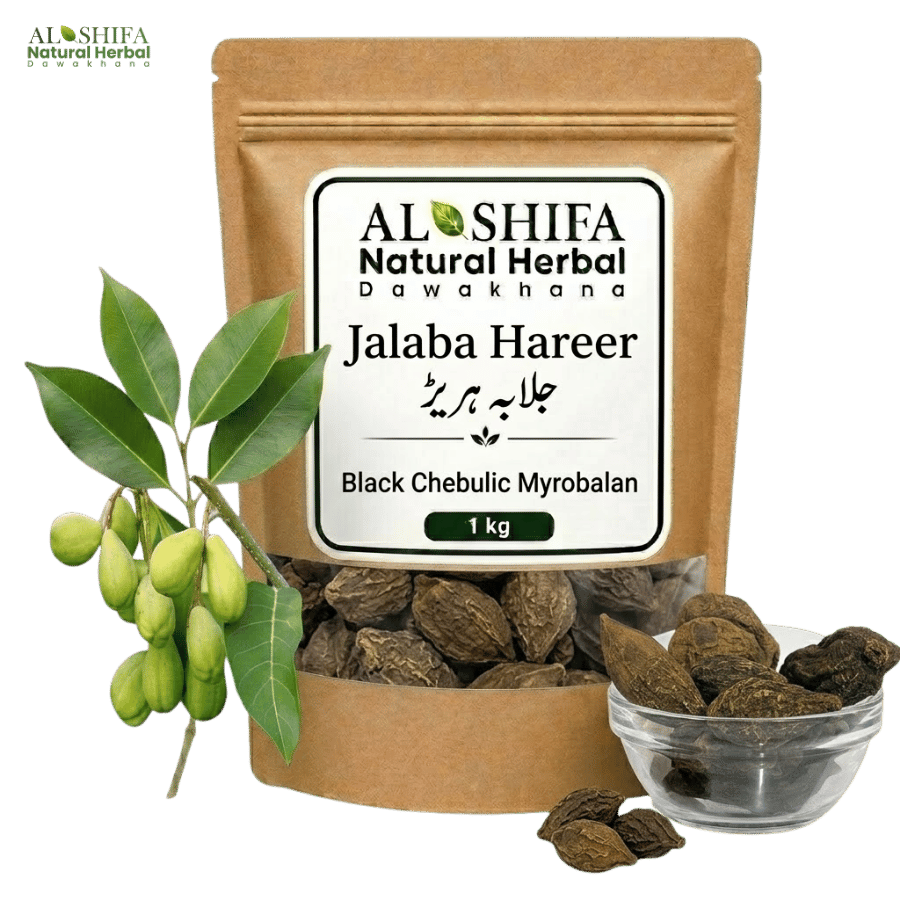
Jalaba Hareer (Black Chebulic Myrobalan) is a traditional dried fruit of Terminalia chebula, widely valued in Unani and Ayurvedic herbal practices. Naturally rich in tannins, polyphenols, and other plant compounds, it is traditionally used in preparations associated with digestive wellness, bowel regularity, intestinal comfort, and general restorative care.
Al Shifa Jalaba Hareer is carefully selected with attention to botanical identity, natural appearance, cleanliness, proper drying, and overall quality.
Key Features:
Important Note: Black Chebulic Myrobalan generally represents a traditional form or commercial grade of Terminalia chebula rather than a separate botanical species. Traditional digestive use should not be considered a substitute for medical treatment of persistent gastrointestinal conditions.
Jalaba Hareer (Black Chebulic Myrobalan / Haritaki) is a traditional dried fruit material obtained from Terminalia chebula Retz., an important medicinal tree long valued in Unani, Ayurvedic, and other South Asian herbal traditions.
Chebulic Myrobalan is especially known for its naturally astringent character and tannin-rich composition. The dried fruit has traditionally been incorporated into formulations associated with digestive wellness, bowel regularity, intestinal comfort, and general restorative care.
The terms Hareer, Haritaki, and Chebulic Myrobalan may be used for different commercial forms, grades, maturity stages, or preparations of the same botanical fruit. Therefore, the trade description Black Chebulic Myrobalan should not automatically be interpreted as a separate plant species.
Al Shifa Jalaba Hareer is carefully selected with attention to botanical identity, characteristic appearance, cleanliness, appropriate dryness, and natural quality.
Jalaba Hareer is a traditional commercial form of the dried fruit of the Chebulic Myrobalan tree.
The tree produces oval to somewhat elongated fruits that change in appearance as they mature and dry. Depending on maturity, processing, storage, and commercial grading, dried Hareer may vary in:
This natural variation is one reason several traditional and commercial names are encountered for Chebulic Myrobalan.
English Name: Black Chebulic Myrobalan / Chebulic Myrobalan
Urdu Name: جلابہ ہریڑ
Roman Name: Jalaba Hareer / Jalaba Harir
Scientific Name: Terminalia chebula Retz.
Family: Combretaceae
Plant Part: Dried Fruit
Product Type: Traditional Dried Herbal Fruit
Terminalia chebula is widely known as Haritaki in Ayurvedic tradition and Hareer / Halela under various regional and Unani naming systems.
Black Chebulic Myrobalan should not automatically be treated as a botanically separate species from ordinary Haritaki.
Traditional herbal markets may distinguish Hareer products according to:
These distinctions can be important within traditional systems, but the underlying botanical source may still be Terminalia chebula.
For accurate product identification, botanical source and actual supplied plant material are more reliable than colour terminology alone.
Hareer has an established place in traditional Unani medicine and appears in numerous classical formulations.
Traditionally, it has been associated with:
Its traditional role can vary according to the particular form of Hareer, the complete formulation, and the other ingredients with which it is combined.
Terminalia chebula is also one of the best-known fruits in Ayurvedic herbal practice, where it is commonly called Haritaki.
It is notably one of the three fruits traditionally used in Triphala, together with:
Although Triphala is an important traditional formulation, Jalaba Hareer alone should not be considered nutritionally or therapeutically identical to the complete three-fruit combination.
Chebulic Myrobalan fruit is naturally rich in tannin-related compounds and other polyphenolic constituents.
Reported constituents of Terminalia chebula fruit include various:
The exact composition can vary according to maturity, geographical origin, processing, extraction method, and storage.
Its tannin content contributes significantly to the fruit’s characteristic astringent taste.
Jalaba Hareer is naturally astringent.
Astringency is the dry, puckering sensation produced by certain plant compounds, particularly tannins.
This characteristic helps explain why Hareer has historically appeared in traditional formulations associated with:
However, astringency itself does not prove that the ingredient can treat gastrointestinal or infectious diseases.
Digestive use is among the most established traditional applications of Hareer.
Depending on the traditional formulation and method of preparation, it has historically been incorporated into preparations intended to support:
The traditional description of Hareer can appear unusual because it may occur in different formulations intended for different bowel-related purposes.
This does not mean that the raw fruit has a predictable laxative or anti-diarrhoeal effect in every person. Preparation, quantity, maturity, accompanying ingredients, and individual response can all influence its effects.
Hareer is particularly well known in traditional systems for its association with bowel regulation.
It is sometimes included in formulations intended for occasional constipation or digestive sluggishness, while its astringent constituents have also contributed to its historical use in other intestinal preparations.
For responsible use, Jalaba Hareer should not be marketed as a guaranteed laxative or as a treatment for chronic constipation, diarrhoea, dysentery, inflammatory bowel disease, intestinal obstruction, or other gastrointestinal disorders.
Persistent changes in bowel habits require appropriate medical assessment.
Terminalia chebula contains naturally occurring polyphenolic compounds that have demonstrated antioxidant activity in laboratory research.
This makes the fruit scientifically interesting and helps explain ongoing research into its phytochemistry.
However, laboratory antioxidant activity does not establish that ordinary dried Hareer can:
It is more accurate to describe Jalaba Hareer as a traditional botanical ingredient naturally containing polyphenolic and antioxidant plant compounds.
Hareer has also appeared historically in selected traditional oral-care preparations because of its tannin-rich, astringent nature.
Traditional uses should not replace normal oral hygiene or professional dental care.
Persistent:
should be appropriately assessed by a dental professional.
In classical herbal practice, Hareer has often been included in broader restorative formulations.
Its reputation in these traditions extends beyond one isolated use and reflects its longstanding place in compound herbal preparations.
Such traditional descriptions should not be interpreted as evidence that Jalaba Hareer can independently treat weakness caused by anaemia, endocrine disease, infection, malnutrition, cancer, or another underlying medical condition.
Chebulic Myrobalan should not be confused with Belleric Myrobalan.
They are different fruits:
Chebulic Myrobalan: Terminalia chebula
Belleric Myrobalan: Terminalia bellirica
Both are used in traditional medicine and both are ingredients of Triphala, but they are botanically distinct materials.
Correct identification is therefore important when purchasing raw herbal ingredients.
At Al Shifa Natural Herbal Dawakhana, Jalaba Hareer is selected with attention to:
Botanical Identity – Material associated with genuine Terminalia chebula fruit.
Characteristic Appearance – Appropriate natural colour, shape, texture, and traditional commercial characteristics.
Cleanliness – Carefully handled to minimize unnecessary dust and foreign matter.
Proper Dryness – Adequately dried material suitable for responsible storage.
Natural Quality – Attention to characteristic appearance and condition without unnecessary alteration.
Quality Selection – Excessively mouldy, damp, insect-affected, decomposed, or otherwise unsuitable fruit is avoided.
Responsible Storage – Protection from moisture, excessive heat, direct sunlight, insects, and contamination.
Al Shifa Natural Herbal Dawakhana, established in 1999, supplies carefully selected herbs, fruits, seeds, roots, peels, gums, resins, kernels, spices, powders, oils, and other traditional natural raw materials across Pakistan.
Our Jalaba Hareer is selected for customers seeking quality Terminalia chebula fruit for appropriate Unani, Ayurvedic, digestive, restorative, and compound herbal preparations.
We focus on identity, cleanliness, proper drying, natural quality, responsible storage, and accurate product information.
Jalaba Hareer has traditionally been used in different forms and compound herbal formulations.
The appropriate preparation and amount can vary significantly according to:
For this reason, there is no single universal medicinal dose appropriate for every person.
When using Jalaba Hareer medicinally rather than as part of an established formulation under professional guidance, advice from a qualified healthcare professional or experienced registered practitioner is recommended.
Use Jalaba Hareer responsibly, particularly in concentrated or regular medicinal preparations.
Professional guidance is advisable for:
Because bowel symptoms can have many different causes, prolonged constipation or diarrhoea should not be self-treated indefinitely with herbal preparations.
Seek appropriate medical care for symptoms such as:
These symptoms may require diagnosis rather than herbal self-treatment.
Jalaba Hareer is a traditional herbal raw material with a long history of use in Unani and Ayurvedic practice.
It should not be promoted as a proven cure for:
Traditional use and laboratory research should be distinguished from clinically established treatment.
Store Jalaba Hareer in a cool, clean, and dry place in a tightly closed container.
For better preservation:
Proper drying and storage are especially important for maintaining the quality of dried herbal fruits.
Jalaba Hareer (Black Chebulic Myrobalan) is a traditional form of dried Terminalia chebula fruit valued in Unani, Ayurvedic, and South Asian herbal practice.
It is particularly known for its naturally astringent character, tannin-rich composition, and traditional use in digestive, bowel-regulating, intestinal, and restorative herbal preparations.
Customers searching for Jalaba Hareer Pakistan, Black Chebulic Myrobalan Pakistan, Hareer Pakistan, Haritaki Pakistan, Terminalia chebula Pakistan, Jalaba Hareer Lahore, Jalaba Hareer price in Pakistan, Black Hareer price in Pakistan, pure Jalaba Hareer, original Hareer, or Jalaba Hareer online can choose Al Shifa Natural Herbal Dawakhana for carefully selected traditional herbal raw material.
Since 1999, Al Shifa Natural Herbal Dawakhana has focused on providing natural and traditional ingredients with attention to identity, cleanliness, proper drying, natural quality, responsible storage, and accurate product information.
Product Name: Jalaba Hareer / Black Chebulic Myrobalan
English Name: Black Chebulic Myrobalan / Chebulic Myrobalan
Urdu Name: جلابہ ہریڑ
Roman Name: Jalaba Hareer / Jalaba Harir
Scientific Name: Terminalia chebula Retz.
Family: Combretaceae
Plant Part: Dried Fruit
Product Type: Traditional Dried Herbal Fruit
Traditional Use: Digestive wellness, bowel regulation, intestinal comfort, astringent preparations, and general restorative herbal formulations
Important Note: Black Chebulic Myrobalan is generally a traditional form or commercial grade of Terminalia chebula and should not automatically be considered a separate botanical species.
جلابہ ہریڑ ایک معروف روایتی خشک پھل ہے جو ہریڑ کے درخت سے حاصل کیا جاتا ہے۔ طبِ یونانی، آیورویدی اور برصغیر کے دیگر روایتی طریقہ ہائے علاج میں ہریڑ کو صدیوں سے اہم مقام حاصل ہے۔
جلابہ ہریڑ اپنی قدرتی قابض کیفیت اور کثیر فینولی و نباتاتی مرکبات کی وجہ سے پہچانی جاتی ہے۔ روایتی طور پر اسے نظامِ ہضم کی عمومی نگہداشت، آنتوں کی تندرستی، اجابت کی باقاعدگی، معدے کی عمومی صحت اور مقوی و اصلاحی مرکبات میں شامل کیا جاتا رہا ہے۔
ہریڑ کی مختلف اقسام اور تجارتی درجات اس کے پھل کی پختگی، جسامت، رنگ، علاقے اور تیاری کے طریقے کے مطابق مختلف ناموں سے معروف ہو سکتے ہیں۔ اسی لیے جلابہ ہریڑ کو صرف رنگ کی بنیاد پر کسی الگ نباتاتی نوع کا پھل سمجھنا درست نہیں۔
الشفاء نیچرل ہربل دواخانہ میں جلابہ ہریڑ کو اصل نباتاتی شناخت، مخصوص قدرتی شکل، صفائی، مناسب خشکی اور مجموعی معیار کو مدنظر رکھتے ہوئے منتخب کیا جاتا ہے۔
جلابہ ہریڑ ہریڑ کے درخت سے حاصل ہونے والے خشک پھل کی ایک روایتی اور تجارتی شکل ہے۔
ہریڑ کے پھل عموماً بیضوی یا قدرے لمبوتری شکل کے ہوتے ہیں۔ پکنے اور خشک ہونے کے مختلف مراحل میں ان کی ظاہری شکل تبدیل ہو سکتی ہے۔
پختگی، علاقے، خشک کرنے کے طریقے اور ذخیرے کے مطابق ہریڑ کے پھلوں میں درج ذیل فرق قدرتی طور پر پایا جا سکتا ہے:
انہی قدرتی اور تجارتی اختلافات کی وجہ سے روایتی بازاروں میں ہریڑ کی مختلف شکلیں اور نام ملتے ہیں۔
جلابہ ہریڑ ہریڑ کے معروف درخت کا خشک پھل ہے۔
یہ درخت ایک ایسے نباتاتی خاندان سے تعلق رکھتا ہے جس کی متعدد انواع روایتی ادویات اور نباتاتی تیاریوں میں استعمال ہوتی رہی ہیں۔
مستعمل حصہ بنیادی طور پر خشک پھل ہے۔
طبِ یونانی اور برصغیر کے مختلف علاقوں میں ہریڑ کے لیے ہلیلہ اور دیگر مقامی نام بھی استعمال ہوتے رہے ہیں۔
جلابہ ہریڑ کو لازماً ہریڑ سے بالکل مختلف نباتاتی پودا نہیں سمجھنا چاہیے۔
روایتی بازاروں میں ہریڑ کی مختلف اقسام کو درج ذیل خصوصیات کی بنیاد پر الگ نام دیا جا سکتا ہے:
یہ فرق طبِ قدیم اور تجارتی شناخت میں اہم ہو سکتے ہیں، لیکن بنیادی نباتاتی ماخذ ایک ہی ہریڑ کا درخت ہو سکتا ہے۔
اسی لیے درست شناخت کے لیے صرف رنگ کے بجائے اصل خام مال اور نباتاتی ماخذ کو اہمیت دینی چاہیے۔
ہریڑ کو طبِ یونانی میں خاص اہمیت حاصل ہے اور یہ متعدد قدیم مرکبات میں شامل کی جاتی رہی ہے۔
روایتی طور پر جلابہ ہریڑ کو:
میں استعمال کیا جاتا رہا ہے۔
اس کا روایتی کردار ہریڑ کی قسم، مقدار، تیاری کے طریقے اور نسخے میں شامل دوسرے اجزاء کے مطابق مختلف ہو سکتا ہے۔
ہریڑ کو آیورویدی طریقۂ علاج میں بھی نہایت اہم مقام حاصل ہے۔
اس روایت میں ہریڑ کو ایک معروف مقوی اور ہاضمی نباتاتی جزو کے طور پر استعمال کیا جاتا رہا ہے۔
یہ تین معروف پھلوں پر مشتمل ایک قدیم مرکب کا بھی اہم حصہ ہے۔ اس مرکب میں ہریڑ کے ساتھ بہیڑہ اور آملہ شامل کیے جاتے ہیں۔
تاہم صرف جلابہ ہریڑ کو ان تینوں پھلوں سے تیار ہونے والے مکمل مرکب کے برابر نہیں سمجھنا چاہیے، کیونکہ ہر پھل کی اپنی الگ نباتاتی اور کیمیائی خصوصیات ہوتی ہیں۔
ہریڑ کے پھل میں قدرتی طور پر قابض نباتاتی اجزاء کی قابلِ ذکر مقدار پائی جاتی ہے۔
ان کے علاوہ اس میں مختلف اقسام کے:
پائے جا سکتے ہیں۔
ان اجزاء کی مقدار پھل کی پختگی، زمین، موسم، علاقے، خشک کرنے کے طریقے اور ذخیرے کے مطابق مختلف ہو سکتی ہے۔
جلابہ ہریڑ کا ذائقہ قدرتی طور پر قابض محسوس ہو سکتا ہے۔
قابض کیفیت سے مراد وہ احساس ہے جس میں منہ میں عارضی خشکی اور کھنچاؤ محسوس ہوتا ہے۔
یہ کیفیت بنیادی طور پر پھل میں موجود قدرتی قابض اجزاء سے وابستہ ہے۔
اسی خصوصیت کی وجہ سے ہریڑ کو روایتی طور پر:
میں شامل کیا جاتا رہا ہے۔
تاہم صرف قابض کیفیت کی موجودگی یہ ثابت نہیں کرتی کہ جلابہ ہریڑ کسی معدے، آنت یا جراثیمی بیماری کا علاج ہے۔
جلابہ ہریڑ کا سب سے معروف روایتی استعمال نظامِ ہضم سے متعلق ہے۔
طبِ یونانی اور دیگر روایتی طریقوں میں مختلف تیاریوں کے ذریعے اسے:
سے متعلق مرکبات میں شامل کیا جاتا رہا ہے۔
اس کا اثر استعمال کی جانے والی شکل، مقدار، تیاری اور ساتھ شامل دیگر اجزاء کے مطابق مختلف ہو سکتا ہے۔
ہریڑ کو روایتی طور پر اجابت کی باقاعدگی سے خاص طور پر منسلک کیا جاتا ہے۔
دلچسپ بات یہ ہے کہ مختلف روایتی تیاریوں میں اسے قبض اور آنتوں کی مختلف کیفیات سے متعلق الگ الگ مقاصد کے لیے شامل کیا جاتا رہا ہے۔
اس کی وجہ خام مال کی شکل، تیاری، مقدار اور مرکب میں شامل دوسرے اجزاء کا فرق ہو سکتا ہے۔
اس لیے خام جلابہ ہریڑ کو ہر شخص کے لیے یکساں طور پر کام کرنے والی مسہل یا قابض دوا سمجھنا مناسب نہیں۔
اسے:
کا ثابت شدہ علاج قرار نہیں دینا چاہیے۔
ہریڑ کے پھل میں مختلف کثیر فینولی مرکبات موجود ہوتے ہیں جن میں تجربہ گاہ کی سطح پر ضدِ تکسیدی سرگرمی دیکھی گئی ہے۔
یہ خصوصیت ہریڑ کی نباتاتی ساخت کے سائنسی مطالعے میں اہمیت رکھتی ہے۔
تاہم قدرتی ضدِ تکسیدی اجزاء کی موجودگی کا یہ مطلب نہیں کہ جلابہ ہریڑ:
جلابہ ہریڑ کو قدرتی کثیر فینولی اور دیگر نباتاتی اجزاء رکھنے والے ایک روایتی خام جزو کے طور پر بیان کرنا زیادہ مناسب ہے۔
ہریڑ اپنی قابض نوعیت کی وجہ سے بعض قدیم منہ اور دانتوں کی نگہداشت کی تیاریوں میں بھی استعمال ہوتی رہی ہے۔
تاہم اس کا روایتی استعمال:
کا متبادل نہیں ہے۔
دانت میں مسلسل درد، مسوڑھوں سے خون، سوجن، منہ کے مسلسل زخم یا پیپ جیسی علامات کی صورت میں دندان ساز سے رجوع کرنا چاہیے۔
قدیم طبی روایات میں ہریڑ کو بعض جامع مقوی اور اصلاحی مرکبات میں بھی شامل کیا جاتا رہا ہے۔
یہ روایتی مقام کسی ایک مخصوص فائدے تک محدود نہیں بلکہ مختلف مرکبات میں اس کے تاریخی استعمال سے متعلق ہے۔
تاہم اسے خون کی کمی، شدید غذائی کمی، جراثیمی بیماری، ہارمون کی خرابی، سرطان یا کسی دوسری بیماری کی وجہ سے پیدا ہونے والی جسمانی کمزوری کا یقینی علاج نہیں سمجھنا چاہیے۔
ہریڑ اور بہیڑہ ظاہری اور روایتی استعمال کے اعتبار سے بعض لوگوں کو ایک جیسے محسوس ہو سکتے ہیں، لیکن یہ دو مختلف نباتاتی پھل ہیں۔
دونوں کو طبِ یونانی اور آیورویدی روایات میں استعمال کیا جاتا ہے اور دونوں بعض مشترکہ مرکبات میں بھی شامل ہو سکتے ہیں۔
اس کے باوجود ان کی نباتاتی شناخت اور قدرتی ساخت مختلف ہے۔
اس لیے خام جڑی بوٹی خریدتے وقت ہریڑ اور بہیڑہ کی درست شناخت ضروری ہے۔
الشفاء نیچرل ہربل دواخانہ میں جلابہ ہریڑ کے انتخاب کے دوران درج ذیل خصوصیات کو اہمیت دی جاتی ہے:
اصل شناخت: حقیقی ہریڑ کے خشک پھل کا انتخاب۔
قدرتی ظاہری حالت: مناسب رنگ، شکل، بناوٹ اور روایتی تجارتی خصوصیات۔
صفائی: غیر ضروری گرد اور بیرونی مواد کو کم سے کم رکھنے کی کوشش۔
مناسب خشکی: محفوظ ذخیرے کے لیے مناسب طور پر خشک خام مال۔
قدرتی معیار: غیر ضروری تبدیلی کے بغیر پھل کی قدرتی حالت اور معیار پر توجہ۔
معیاری انتخاب: بہت زیادہ نم، پھپھوندی زدہ، کیڑوں سے متاثر یا خراب شدہ پھل سے گریز۔
محفوظ ذخیرہ: نمی، شدید گرمی، براہِ راست دھوپ، کیڑوں اور آلودگی سے مناسب حفاظت۔
الشفاء نیچرل ہربل دواخانہ سنہ ۱۹۹۹ سے جڑی بوٹیوں، پھلوں، بیجوں، جڑوں، چھلکوں، گوند، قدرتی رال، مغزیات، مصالحہ جات، سفوف، روغنی اجزاء اور دیگر روایتی قدرتی خام اجزاء کی فراہمی سے وابستہ ہے۔
ہماری جلابہ ہریڑ ایسے صارفین کے لیے منتخب کی جاتی ہے جو اسے مناسب طبِ یونانی، آیورویدی، ہاضمی، اصلاحی اور مرکب روایتی تیاریوں میں استعمال کرنا چاہتے ہیں۔
ہم اصل شناخت، صفائی، مناسب خشکی، قدرتی معیار، محفوظ ذخیرے اور ذمہ دارانہ معلومات کو بنیادی اہمیت دیتے ہیں۔
جلابہ ہریڑ کو روایتی طور پر مختلف شکلوں اور مرکب نسخوں میں استعمال کیا جاتا رہا ہے۔
اس کے استعمال کا مناسب طریقہ اور مقدار مختلف عوامل کے مطابق تبدیل ہو سکتی ہے، مثلاً:
اسی لیے ہر شخص کے لیے ایک ہی طبی مقدار مقرر کرنا مناسب نہیں۔
طبی مقصد کے لیے باقاعدہ استعمال سے پہلے مستند معالج یا تجربہ کار رجسٹرڈ طبیب کی رہنمائی بہتر ہے۔
جلابہ ہریڑ کو خصوصاً مسلسل یا مرتکز طبی استعمال میں ذمہ داری کے ساتھ استعمال کرنا چاہیے۔
درج ذیل صورتوں میں مستند معالج کی رہنمائی مناسب ہے:
قبض یا دست کی متعدد مختلف وجوہات ہو سکتی ہیں، اس لیے ایسی علامات کا طویل عرصے تک خود سے علاج کرتے رہنا مناسب نہیں۔
درج ذیل علامات کی صورت میں مستند معالج سے رجوع کرنا چاہیے:
ایسی علامات میں صرف روایتی جڑی بوٹیوں پر انحصار کرنے کے بجائے اصل وجہ کی تشخیص ضروری ہو سکتی ہے۔
جلابہ ہریڑ ایک معروف روایتی نباتاتی خام جزو ہے جسے طبِ یونانی اور آیورویدی طریقوں میں طویل عرصے سے استعمال کیا جاتا رہا ہے۔
تاہم اسے:
کا ثابت شدہ علاج قرار دینا مناسب نہیں۔
روایتی استعمال اور جدید طبی طور پر ثابت شدہ علاج میں فرق برقرار رکھنا ضروری ہے۔
جلابہ ہریڑ کو صاف، ٹھنڈی اور خشک جگہ پر اچھی طرح بند برتن میں محفوظ رکھیں۔
بہتر حفاظت کے لیے:
خشک نباتاتی پھلوں کے قدرتی معیار کو برقرار رکھنے کے لیے مناسب خشکی اور ذخیرہ نہایت اہم ہے۔
جلابہ ہریڑ ہریڑ کے درخت سے حاصل ہونے والے خشک پھل کی ایک معروف روایتی شکل ہے جسے طبِ یونانی، آیورویدی اور برصغیر کی دیگر طبی روایات میں طویل عرصے سے استعمال کیا جاتا رہا ہے۔
یہ اپنی قدرتی قابض کیفیت، نباتاتی مرکبات اور نظامِ ہضم، آنتوں کی عمومی نگہداشت، اجابت کی باقاعدگی اور مقوی و اصلاحی مرکبات میں روایتی استعمال کی وجہ سے معروف ہے۔
اگر آپ جلابہ ہریڑ پاکستان، خالص جلابہ ہریڑ، اصل جلابہ ہریڑ، کالی ہریڑ، ہریڑ پاکستان، جلابہ ہریڑ لاہور، جلابہ ہریڑ کے فوائد، جلابہ ہریڑ کے استعمال، جلابہ ہریڑ کی قیمت پاکستان یا جلابہ ہریڑ آن لائن تلاش کر رہے ہیں تو الشفاء نیچرل ہربل دواخانہ احتیاط سے منتخب روایتی خام اجزاء فراہم کرتا ہے۔
سنہ ۱۹۹۹ سے الشفاء نیچرل ہربل دواخانہ روایتی قدرتی اجزاء کی فراہمی میں اصل شناخت، صفائی، مناسب خشکی، قدرتی معیار، محفوظ ذخیرے اور ذمہ دارانہ معلومات کو بنیادی اہمیت دیتا آ رہا ہے۔
نام: جلابہ ہریڑ
معروف نام: کالی ہریڑ / ہریڑ
مستعمل حصہ: خشک پھل
قسم: روایتی خشک نباتاتی پھل
روایتی استعمال: نظامِ ہضم کی عمومی نگہداشت، اجابت کی باقاعدگی، آنتوں کی تندرستی، قابض مرکبات اور مقوی و اصلاحی تیاریوں میں استعمال
اہم نوٹ: جلابہ ہریڑ عموماً ہریڑ کے خشک پھل کی ایک روایتی یا تجارتی شکل ہے؛ اسے صرف رنگ یا تجارتی نام کی بنیاد پر کسی الگ نباتاتی نوع کا پھل نہیں سمجھنا چاہیے۔