
Brahmi Buti, Bacopa monniera
Contact for Price
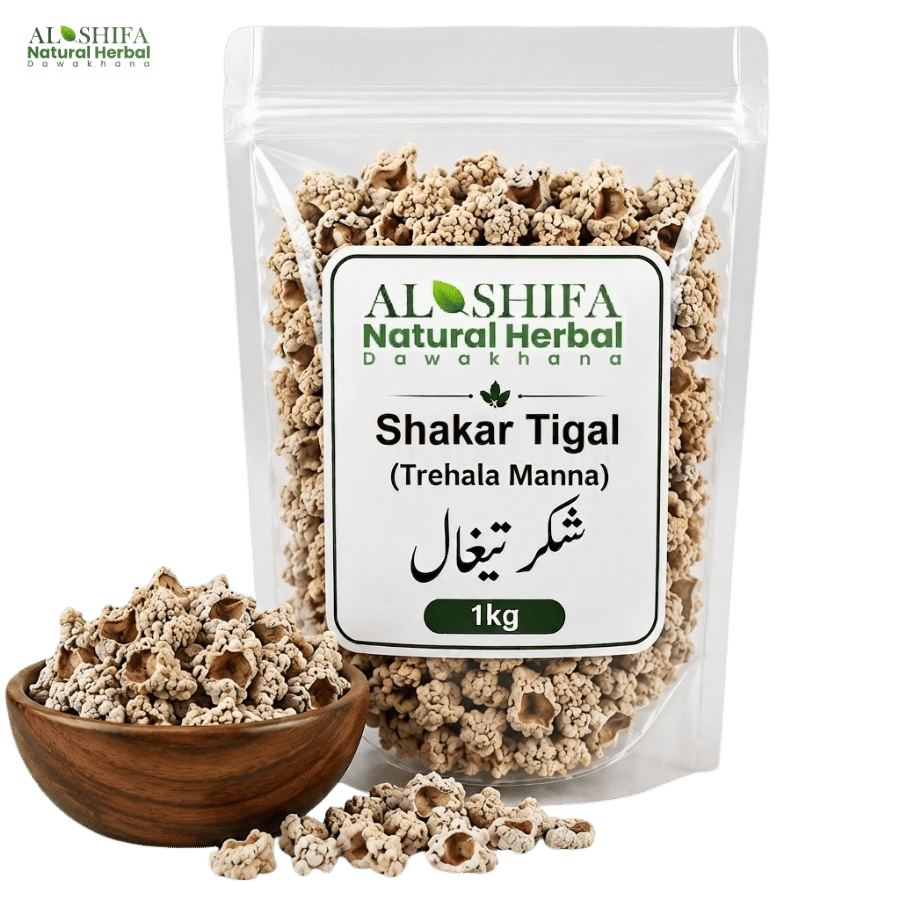
Shakar Tigal (Trehala Manna) is a unique traditional natural material associated with Larinus insects and their host plants, historically valued in Unani practice for specialized soothing and throat-related preparations.
How to Use: Use according to traditional preparation directions or under appropriate professional guidance.
Important Note: Shakar Tigal is not ordinary sugar or plant gum. Traditional uses are not established medical treatments, and medicinal use should follow appropriate professional guidance.
Shakar Tigal, also written as Shakar Tighal, Shakar-e-Tighal, or Trehala Manna (شکر تیغال), is an unusual traditional natural material used historically in Unani and regional herbal practice. Unlike ordinary herbs, roots, seeds, or plant gums, Shakar Tigal is traditionally associated with insect-formed structures found on certain host plants, particularly structures connected with Larinus weevils and plants associated with Echinops. Modern research also describes Shakar Tigal as a sweet, edible Larinus cocoon material. (AWAFI MILL)
This distinction is important because Shakar Tigal is sometimes incorrectly described commercially as an ordinary plant gum or tree secretion. An official Unani formulary source classifies Shakar Tighal as Tegal fly cocoon/honeydew associated with certain trees, while contemporary descriptions and research connect Trehala manna more specifically with insect-formed cocoon or pupal structures. (PCIMH)
It has a distinctive light-colored, hollow or shell-like appearance and has traditionally been incorporated into specialized Unani preparations, particularly those associated historically with throat and respiratory comfort.
Good-quality Shakar Tigal should be carefully selected, properly cleaned, naturally dry, and protected from moisture, insects, dust, and other foreign material.
English Name: Trehala Manna
Urdu Name: شکر تیغال
Roman Name: Shakar Tigal / Shakar Tighal
Other Names: Shakar-e-Tighal, Trehala, Trehala Manna
Biological Association: Larinus species
Host Plant Association: Commonly associated with Echinops species
Material Type: Insect-formed natural cocoon/pupal chamber material
Traditional System: Unani and regional traditional practice
Shakar Tigal is a fascinating example of a traditional medicinal material that cannot accurately be classified simply as a herb.
Certain insects interact with their host plants during their developmental cycle. Traditional Trehala material is associated with naturally formed structures resulting from this insect–plant relationship.
Contemporary commercial descriptions of authentic Trehala manna identify it as hollow pupal chambers formed through the larval activity of certain Larinus weevils on Echinops plants. Recent scientific research has likewise referred to Shakar Tigal as a sweet, edible Larinus cocoon. (AWAFI MILL)
This unusual biological origin distinguishes Shakar Tigal from ordinary:
Shakar Tigal is sometimes marketed as a “natural gum,” but this description can be misleading.
A true plant gum is generally an exudate produced directly by plant tissues. Traditional Shakar Tigal, by contrast, has an insect-associated origin.
Therefore:
Shakar Tigal ≠ ordinary plant gum
and
Shakar Tigal ≠ simple crystallized plant sugar
Some commercial sources describe it differently, including as tree-derived gum, which is why correct raw-material identification is particularly important. (Hafiz Pansar and Dry Fruit Store)
Modern descriptions of Trehala Manna frequently associate its formation with beetles or weevils belonging to the genus Larinus.
During their developmental cycle on suitable host plants, larvae may produce characteristic protective chambers. The resulting dry structures are collected as the traditional material known as Trehala or Shakar Tigal.
For this reason, it is better described as an insect-associated natural product rather than simply calling it a medicinal herb.
Shakar Tigal is commonly associated with certain plants belonging to the Echinops genus, which includes globe-thistle-type plants.
The host plant is important because the insect and plant together contribute to the formation and characteristics of the traditional material.
However, commercial Shakar Tigal should not automatically be assigned to one exact Echinops species unless the source has been botanically verified.
Authentic Trehala material may have a distinctive appearance.
Typical characteristics can include:
Appearance may vary according to biological source, host plant, maturity, collection, cleaning, and storage. Contemporary descriptions of Trehala Manna similarly characterize it as hollow, rounded or cup-shaped natural pupal chambers. (AWAFI MILL)
The composition of Shakar Tigal is unusual because it reflects a complex natural material associated with both insect activity and its host plant.
Modern research has investigated Shakar Tigal for naturally occurring constituents, including polysaccharide fractions and antioxidant-related compounds, but extraction method has an important influence on what is recovered and measured. (ResearchGate)
Depending on the material and analytical method, researchers may investigate groups such as:
The presence of these constituents should not be interpreted as proof that ordinary Shakar Tigal can prevent or treat a disease.
Shakar Tigal has a recognized place among specialized materials used in traditional Unani medicine. It continues to appear in formal Unani educational material dealing with substances such as galls, cocoons, and other unusual traditional medicinal materials. (NCISM India)
Historically, it has been incorporated into preparations associated with:
These are traditional uses, not established treatment claims.
One of the best-known traditional associations of Shakar Tigal is with preparations intended to provide soothing support for the throat and respiratory system.
Traditional practitioners have used it in formulations associated with:
These uses describe historical practice.
Shakar Tigal should not be presented as a scientifically established treatment for:
Persistent cough, coughing blood, chest pain, significant wheezing, breathing difficulty, high fever, or low oxygen symptoms require appropriate medical evaluation.
Its mild sweetness and unusual natural composition may help explain why Shakar Tigal became associated historically with soothing preparations.
However, the term “soothing” should be understood as a traditional or sensory description, rather than evidence that it treats an underlying infection or respiratory disease.
A preparation may temporarily feel soothing without treating the medical cause of symptoms.
Some traditional sources also associate Shakar Tigal with digestive preparations.
Such historical use should not be converted into claims that it treats:
Digestive effects may also depend on the amount and preparation used.
Modern scientific research on Shakar Tigal remains considerably more limited than research on common medicinal plants.
A recent study specifically investigated extraction of polysaccharides and antioxidant-related material from Shakar Tigal, describing it as a sweet and edible Larinus cocoon. Importantly, this kind of laboratory extraction research does not establish that ordinary whole Shakar Tigal treats a disease in humans. (ResearchGate)
A distinction must therefore be maintained between:
Results obtained from one preparation should not automatically be applied to another.
Shakar Tigal has attracted research interest for extractable antioxidant-related compounds.
However:
Laboratory antioxidant activity ≠ proven clinical treatment
Antioxidant measurements made in a laboratory do not demonstrate that eating Shakar Tigal will prevent or cure cancer, cardiovascular disease, liver disease, diabetes, inflammatory disorders, or other chronic conditions.
Such claims require appropriate human clinical evidence.
Despite the word “Shakar” in its traditional name and its mildly sweet character, Shakar Tigal should not be confused with ordinary refined sugar.
It is a complex traditional natural material rather than standard sucrose crystals.
Therefore:
Shakar Tigal ≠ Table Sugar
Shakar Tigal ≠ Rock Sugar
Shakar Tigal ≠ Mishri
Shakar Tigal ≠ Ordinary Plant Gum
Its traditional name refers to the distinctive character of the material rather than indicating that it is simply a type of household sugar.
It is also technically inaccurate to classify Shakar Tigal as a simple herb.
Unlike a root, leaf, flower, bark, or seed collected directly from a medicinal plant, Shakar Tigal is associated with an insect–plant biological interaction.
This distinction is particularly important for accurate product descriptions and scientific classification.
Shakar Tigal may be available as:
Whole material can be easier to inspect visually for characteristic structure and foreign matter.
Once finely powdered, identification becomes considerably more difficult. Therefore, authentication before grinding is particularly valuable.
Shakar Tigal has historically been used internally as part of traditional preparations.
For responsible modern use, attention should be given to:
Traditional use does not mean unlimited consumption is appropriate.
The method of using Shakar Tigal depends on the intended traditional formulation.
It may be incorporated into:
For medicinal use, follow the product directions or guidance of an appropriately qualified healthcare or Unani practitioner.
Do not use experimental doses from concentrated extracts or laboratory studies as a guide for consuming ordinary Shakar Tigal.
Because Shakar Tigal has a naturally sweet character and contains carbohydrate-related material, people who need to carefully manage carbohydrate or sugar intake should not assume that it has no effect simply because it is a natural traditional product.
Individuals with:
should seek appropriate professional advice before regular medicinal consumption.
“Natural” does not automatically mean suitable for unrestricted use.
Reliable modern safety information for medicinal quantities of Shakar Tigal during pregnancy and breastfeeding is limited.
Pregnant or breastfeeding women should therefore avoid self-directed medicinal use unless advised by an appropriately qualified healthcare professional.
Historical use alone does not establish safety during pregnancy.
Because Shakar Tigal has traditionally appeared in soothing preparations, it may also be encountered in formulations intended for younger individuals.
However, medicinal use in children should be age-appropriate and professionally guided.
Extra caution is particularly important for:
A persistent or severe cough in a child requires proper assessment rather than repeated self-treatment with traditional remedies.
Because Shakar Tigal is an unusual biological material associated with both insect activity and plant hosts, people with known sensitivities should use additional caution.
Stop use and seek appropriate advice if symptoms such as:
occur after use.
Severe allergic reactions require urgent medical attention.
Good-quality Shakar Tigal should be selected with attention to:
Because the material itself is insect-associated, the presence of its characteristic chamber structure should not automatically be confused with ordinary storage-insect contamination. However, new insect infestation during storage is undesirable and should be distinguished from the original biological structure.
Claims such as:
should only be used when supported by appropriate evidence.
The traditional or natural origin of Shakar Tigal does not itself prove purity or absence of contamination.
To maintain quality:
Do not use material showing obvious mold, abnormal moisture, unpleasant deterioration, unusual discoloration, or evidence of storage-related contamination.
Shakar Tigal is especially vulnerable to inaccurate descriptions because it is neither an ordinary herb nor a conventional food ingredient.
Different commercial sources describe it inconsistently. Some call it plant gum, some honeydew, while contemporary research and specialist descriptions identify traditional Trehala material with Larinus-associated cocoon or pupal structures. Official Unani material also recognizes Shakar Tighal among cocoon/honeydew-type traditional substances rather than ordinary botanical plant parts. (PCIMH)
For a professional product listing, it is therefore better to avoid assigning an unsupported single plant species as its “scientific name.”
Product Name: Shakar Tigal / Trehala Manna
English Name: Trehala Manna
Urdu Name: شکر تیغال
Roman Name: Shakar Tigal / Shakar Tighal
Other Names: Shakar-e-Tighal, Trehala Manna
Biological Association: Larinus spp.
Host Plant Association: Commonly associated with Echinops spp.
Material Type: Traditional insect-associated natural cocoon/pupal chamber material
Appearance: Light beige to brownish, hollow or chamber-like pieces
Traditional System: Unani and regional traditional practice
Traditional Use: Specialized soothing and compound traditional preparations
Storage: Cool, dry, protected from moisture and contamination
It would be misleading to give Shakar Tigal the scientific name of an ordinary medicinal plant without confirming its exact biological source.
The most responsible description is:
Biological Source: Larinus species, traditionally associated with Echinops host plants
rather than assigning the product itself a single botanical species.
This distinction also prevents confusion with unrelated plants whose names may resemble “Tigal” or “Tagal.”
Shakar Tigal / Trehala Manna (شکر تیغال) is a specialized traditional natural material with a history of use in Unani and regional traditional preparations.
Traditional references to cough, throat, chest, digestive, or general wellness applications represent historical use and should not be interpreted as scientifically established treatments for disease.
Research on extracted polysaccharides, antioxidant-related compounds, laboratory preparations, or other concentrated fractions should not automatically be applied to ordinary whole Shakar Tigal.
People with diabetes or other metabolic conditions, pregnant or breastfeeding women, children, individuals with chronic illness, and people taking regular medication should seek appropriate professional guidance before medicinal use. Persistent cough, breathing difficulty, chest pain, high fever, coughing blood, or other serious symptoms require proper medical assessment rather than reliance on a traditional product. (ResearchGate)
شکر تیغال ایک منفرد اور قدیم روایتی قدرتی مادہ ہے جسے یونانی اور برصغیر کے روایتی طریقوں میں طویل عرصے سے استعمال کیا جاتا رہا ہے۔ اسے بعض علاقوں میں ترہالا منا اور شکر تیغال سے ملتے جلتے دوسرے ناموں سے بھی جانا جاتا ہے۔ یہ عام جڑی بوٹی، بیج، جڑ، چھال یا نباتاتی گوند نہیں، بلکہ ایک خاص حشراتی اور نباتاتی تعلق کے نتیجے میں بننے والا قدرتی مادہ ہے۔
شکر تیغال کی تشکیل عموماً لارینس جنس سے تعلق رکھنے والے مخصوص حشرات اور ان کے میزبان پودوں، خصوصاً ایکنوپس جنس کے بعض پودوں، کے ساتھ منسوب کی جاتی ہے۔ حشرے کی نشوونما کے دوران بننے والی مخصوص حفاظتی خول نما یا کوکون نما ساخت بعد میں خشک ہو کر وہ روایتی مادہ فراہم کرتی ہے جسے شکر تیغال کہا جاتا ہے۔
یہ اپنی ہلکی رنگت، کھوکھلی ساخت، نسبتاً ہلکے وزن اور قدرتی طور پر قدرے میٹھے مزاج کی وجہ سے پہچانا جاتا ہے۔ روایتی طور پر اسے خصوصاً گلے اور نظامِ تنفس کو سکون دینے والی مخصوص تیاریوں میں اہمیت حاصل رہی ہے۔
مصنوعات کا نام: شکر تیغال
معروف نام: شکر تیغال، ترہالا منا
دیگر روایتی نام: شکر تیغال، ترہالا
حیاتیاتی نسبت: لارینس جنس کے حشرات
میزبان پودوں کی معروف نسبت: ایکنوپس جنس
مادے کی نوعیت: حشراتی و نباتاتی تعلق سے بننے والی قدرتی خول نما ساخت
روایتی نظام: یونانی اور علاقائی روایتی طریقے
روایتی استعمال: گلے، سینے اور سکون بخش مرکب تیاریوں میں
شکر تیغال ایک ایسا روایتی قدرتی مادہ ہے جس کی اصل عام جڑی بوٹیوں سے مختلف ہے۔
عام نباتاتی مصنوعات براہ راست کسی پودے کے:
سے حاصل ہوتی ہیں، جبکہ شکر تیغال کی تشکیل میں پودے اور حشرے کے باہمی حیاتیاتی تعلق کا کردار ہوتا ہے۔
مخصوص حشرات اپنے میزبان پودوں پر نشوونما کے دوران حفاظتی خول یا حجرہ نما ساخت بناتے ہیں۔ یہی خشک اور مخصوص ساخت روایتی طور پر شکر تیغال کے نام سے پہچانی جاتی ہے۔
اسی وجہ سے اسے صرف ایک عام جڑی بوٹی کہنا سائنسی طور پر مکمل وضاحت نہیں۔
شکر تیغال کی تشکیل کا تعلق عموماً لارینس جنس کے مخصوص حشرات سے بیان کیا جاتا ہے۔
ان حشرات کی ابتدائی نشوونما میزبان پودے کے ساتھ وابستہ ہوتی ہے۔ اس دوران ایک مخصوص حفاظتی ساخت بنتی ہے جس کے اندر حشرے کی نشوونما کا مرحلہ مکمل ہو سکتا ہے۔
بعد میں یہی ساخت:
شکل اختیار کر سکتی ہے۔
اسی قدرتی مادے کو جمع، صاف اور خشک کرکے روایتی استعمال کے لیے محفوظ کیا جاتا ہے۔
شکر تیغال کی تشکیل کو عموماً ایکنوپس جنس کے بعض پودوں کے ساتھ منسوب کیا جاتا ہے۔
یہ پودے عموماً گول اور کانٹے دار پھولوں والی ساخت کی وجہ سے پہچانے جاتے ہیں۔
تاہم شکر تیغال کے لیے کسی ایک مخصوص ایکنوپس نوع کا نام بغیر خام مال کی تصدیق کے دینا مناسب نہیں، کیونکہ جغرافیائی علاقے اور حیاتیاتی ماخذ کے مطابق میزبان پودے میں فرق ممکن ہے۔
اسی لیے مصنوعات کی پیشہ ورانہ شناخت میں حشرے اور میزبان پودے دونوں کے ماخذ کو اہمیت دینی چاہیے۔
شکر تیغال کو بعض اوقات بازار میں قدرتی گوند سمجھ لیا جاتا ہے، لیکن یہ وضاحت مکمل طور پر درست نہیں۔
نباتاتی گوند عموماً پودے کے اپنے بافتوں سے خارج ہونے والا مادہ ہوتی ہے، جبکہ شکر تیغال کی تشکیل میں حشراتی سرگرمی اور میزبان پودے کے تعلق کا کردار ہوتا ہے۔
لہٰذا:
شکر تیغال عام نباتاتی گوند نہیں ہے۔
اسی طرح اسے کسی درخت سے نکلنے والی عام رطوبت یا سادہ خشک شدہ نباتاتی رس بھی نہیں سمجھنا چاہیے۔
نام میں لفظ شکر موجود ہونے اور اس کے قدرے میٹھے مزاج کی وجہ سے اسے عام چینی سے بھی نہیں ملانا چاہیے۔
شکر تیغال:
بلکہ ایک مخصوص قدرتی حیاتیاتی مادہ ہے۔
اس کے نام میں موجود لفظ شکر اس کی روایتی شناخت اور قدرے میٹھے کردار سے وابستہ ہے۔
اصلی شکر تیغال کی ظاہری شکل اس کے حیاتیاتی ماخذ، پختگی، جمع کرنے کے طریقے اور صفائی کے مطابق مختلف ہو سکتی ہے۔
عام طور پر اس میں درج ذیل خصوصیات دیکھی جا سکتی ہیں:
قدرتی مادہ ہونے کی وجہ سے ہر ٹکڑا ایک جیسا ہونا ضروری نہیں۔
شکر تیغال کی ساخت عام نباتاتی خام مال سے مختلف ہے کیونکہ اس کی تشکیل میں میزبان پودے اور حشراتی سرگرمی دونوں شامل ہیں۔
اس میں تحقیق کے دوران مختلف قدرتی اجزاء اور مرکبات کا جائزہ لیا گیا ہے، جن میں شامل ہو سکتے ہیں:
ان اجزاء کی مقدار خام مال، جغرافیائی ماخذ، صفائی، تیاری اور تجزیاتی طریقے کے مطابق مختلف ہو سکتی ہے۔
کسی مخصوص مرکب کی موجودگی کو کسی بیماری کے علاج کا ثبوت نہیں سمجھنا چاہیے۔
شکر تیغال کو یونانی طریقۂ علاج میں مخصوص قدرتی مادوں میں شمار کیا جاتا رہا ہے۔
اس کا روایتی استعمال خصوصاً ایسی مرکب تیاریوں میں ملتا ہے جو درج ذیل مقاصد سے منسوب رہی ہیں:
یہ تمام استعمال تاریخی اور روایتی اہمیت کو ظاہر کرتے ہیں، انہیں کسی بیماری کا سائنسی طور پر ثابت شدہ علاج نہیں سمجھنا چاہیے۔
شکر تیغال کی سب سے معروف روایتی نسبت گلے کو سکون دینے والی تیاریوں سے ہے۔
قدیم روایتی استعمال میں اسے خصوصاً:
کے لیے تیار کیے جانے والے مرکبات میں شامل کیا جاتا رہا ہے۔
یہاں لفظ سکون سے مراد روایتی اور حسی آرام ہے۔
کسی چیز سے گلے کو وقتی سکون محسوس ہونا اس بات کا ثبوت نہیں کہ وہ گلے یا پھیپھڑوں کی بنیادی بیماری کا علاج کر رہی ہے۔
شکر تیغال کو مختلف روایتی نسخوں میں سانس اور سینے سے متعلق عمومی آرام کے لیے بھی استعمال کیا جاتا رہا ہے۔
تاہم اسے درج ذیل بیماریوں کا ثابت شدہ علاج نہیں سمجھنا چاہیے:
اگر کھانسی مسلسل جاری رہے، سانس لینے میں دشواری ہو، سینے میں شدید درد ہو، کھانسی کے ساتھ خون آئے، تیز بخار ہو یا آکسیجن کی کمی کی علامات ہوں تو طبی معائنہ ضروری ہے۔
شکر تیغال کی قدرتی ساخت اور قدرے میٹھا مزاج ممکنہ طور پر اس کے تاریخی سکون بخش استعمال کی ایک وجہ ہو سکتا ہے۔
روایتی تیاریوں میں اسے ایسے دوسرے اجزاء کے ساتھ بھی شامل کیا جاتا رہا ہے جو حلق اور سینے کے لیے نرم اور خوشگوار محسوس ہوتے ہیں۔
تاہم اس روایتی خصوصیت کو جراثیم، وائرس یا کسی دوسری بیماری کے علاج کے دعوے میں تبدیل نہیں کرنا چاہیے۔
بعض روایتی حوالوں میں شکر تیغال کو ہاضمے سے متعلق مخصوص تیاریوں سے بھی منسوب کیا جاتا ہے۔
اس روایتی استعمال کا مطلب یہ نہیں کہ شکر تیغال:
مسلسل یا شدید ہاضمے کے مسائل میں مناسب طبی تشخیص ضروری ہے۔
شکر تیغال پر جدید سائنسی تحقیق عام معروف جڑی بوٹیوں کے مقابلے میں محدود ہے۔
موجودہ تحقیقی دلچسپی میں اس سے حاصل کیے جانے والے مختلف قدرتی اجزاء، خصوصاً:
کا مطالعہ شامل ہو سکتا ہے۔
لیکن تحقیق کی مختلف شکلوں میں واضح فرق رکھنا ضروری ہے، مثلاً:
ایک شکل پر حاصل ہونے والے نتائج کو دوسری شکل پر خودکار طور پر لاگو نہیں کیا جا سکتا۔
شکر تیغال سے حاصل کیے جانے والے بعض اجزاء پر ضدِ تکسیدی سرگرمی کے حوالے سے تحقیق کی گئی ہے۔
تاہم تجربہ گاہ میں کسی عرق کا ضدِ تکسیدی سرگرمی دکھانا اس بات کا ثبوت نہیں کہ عام شکر تیغال کھانے سے کوئی مخصوص بیماری روکی یا ختم کی جا سکتی ہے۔
اس قسم کی تحقیق کو:
جیسے دعووں میں تبدیل نہیں کرنا چاہیے۔
پورے شکر تیغال، اس کے سفوف اور اس سے تیار کیے گئے مرتکز عرق کی ترکیب ایک جیسی نہیں ہوتی۔
مرتکز عرق میں بعض اجزاء پورے خام مادے کے مقابلے میں کہیں زیادہ مقدار میں موجود ہو سکتے ہیں۔
لہٰذا:
پورا شکر تیغال، اس کا سفوف، مرتکز عرق اور الگ کیا گیا مرکب ایک دوسرے کے برابر نہیں ہیں۔
تحقیقی نتائج کو مصنوعات کی اصل شکل اور مقدار کے مطابق سمجھنا ضروری ہے۔
شکر تیغال کو تاریخی طور پر مختلف روایتی تیاریوں میں اندرونی طور پر بھی استعمال کیا جاتا رہا ہے۔
موجودہ دور میں علاجی استعمال کرتے وقت درج ذیل امور اہم ہیں:
قدرتی یا روایتی ہونے کا مطلب یہ نہیں کہ اسے کسی بھی مقدار میں استعمال کیا جا سکتا ہے۔
شکر تیغال کے استعمال کا طریقہ مطلوبہ روایتی تیاری کے مطابق مختلف ہو سکتا ہے۔
اسے روایتی طور پر بعض صورتوں میں شامل کیا جا سکتا ہے:
علاجی مقصد کے لیے مقدار اور طریقۂ استعمال مستند معالج یا مصنوعات کی مناسب ہدایات کے مطابق ہونا چاہیے۔
تجربہ گاہ میں مرتکز عرق پر استعمال ہونے والی مقدار کو عام شکر تیغال کی خوراک نہیں سمجھنا چاہیے۔
شکر تیغال میں قدرتی طور پر میٹھا کردار اور کاربوہائیڈریٹ سے متعلق اجزاء موجود ہو سکتے ہیں۔
اس لیے ایسے افراد جو اپنی شکر یا کاربوہائیڈریٹ کی مقدار کو احتیاط سے محدود رکھتے ہیں، اسے صرف قدرتی ہونے کی وجہ سے بے فکر ہو کر استعمال نہ کریں۔
خصوصاً:
باقاعدہ علاجی استعمال سے پہلے مناسب طبی رہنمائی حاصل کریں۔
حمل اور دودھ پلانے کے دوران شکر تیغال کی علاجی مقدار کے محفوظ استعمال کے متعلق جدید قابل اعتماد معلومات محدود ہیں۔
اس لیے حاملہ اور دودھ پلانے والی خواتین کو خود سے علاجی مقدار استعمال کرنے سے گریز کرنا چاہیے۔
روایتی استعمال کی طویل تاریخ حمل کے دوران مکمل حفاظت کا ثبوت نہیں۔
شکر تیغال گلے اور کھانسی سے متعلق روایتی تیاریوں میں استعمال ہونے کی وجہ سے بچوں کے بعض نسخوں میں بھی پایا جا سکتا ہے۔
تاہم بچوں کے لیے مقدار عمر اور حالت کے مطابق ہونی چاہیے۔
خصوصاً درج ذیل صورتوں میں اضافی احتیاط ضروری ہے:
بچے کی مسلسل یا شدید کھانسی کو صرف روایتی نسخے سے بار بار دبانے کے بجائے اس کی وجہ معلوم کرنا ضروری ہے۔
چونکہ شکر تیغال ایک منفرد حیاتیاتی مادہ ہے جس کی تشکیل حشرے اور میزبان پودے کے تعلق سے ہوتی ہے، اس لیے حساس افراد کو احتیاط کرنی چاہیے۔
استعمال کے بعد درج ذیل علامات ظاہر ہوں تو استعمال روک دیں:
شدید الرجی، چہرے یا گلے کی سوجن یا سانس لینے میں دشواری کی صورت میں فوری طبی مدد حاصل کریں۔
اچھے معیار کے شکر تیغال کے انتخاب میں درج ذیل عوامل اہم ہیں:
چونکہ شکر تیغال کی اصل تشکیل ہی حشراتی سرگرمی سے وابستہ ہے، اس لیے اس کی قدرتی خول نما ساخت کو ذخیرہ کے دوران ہونے والی نئی کیڑوں کی خرابی سے الگ سمجھنا ضروری ہے۔
شکر تیغال پورے ٹکڑوں، ٹوٹے ہوئے ٹکڑوں یا سفوف کی شکل میں دستیاب ہو سکتا ہے۔
پورے شکر تیغال میں:
کا مشاہدہ نسبتاً آسان ہوتا ہے۔
باریک سفوف بن جانے کے بعد اصلیت کی ظاہری شناخت مشکل ہو جاتی ہے۔
اس لیے جہاں ممکن ہو خام مال کی شناخت سفوف بنانے سے پہلے کرنا زیادہ بہتر ہے۔
درج ذیل دعوے صرف مناسب ثبوت کی موجودگی میں کیے جانے چاہئیں:
صرف قدرتی یا روایتی ہونا خالص پن اور آلودگی سے مکمل حفاظت کا ثبوت نہیں۔
شکر تیغال کا معیار برقرار رکھنے کے لیے:
اگر مصنوعات میں پھپھوندی، غیر معمولی نمی، خراب بو، غیر معمولی رنگت یا ذخیرہ کے دوران پیدا ہونے والی واضح آلودگی نظر آئے تو استعمال نہ کریں۔
شکر تیغال کی درست شناخت خاص اہمیت رکھتی ہے کیونکہ یہ نہ تو عام جڑی بوٹی ہے اور نہ ہی روایتی نباتاتی گوند۔
بازار میں اسے بعض اوقات گوند، میٹھا نباتاتی مادہ یا دوسرے ناموں سے بیان کیا جا سکتا ہے، جبکہ اس کی معروف روایتی شناخت حشراتی اور نباتاتی تعلق سے بننے والے مخصوص قدرتی مادے کے طور پر زیادہ مناسب ہے۔
اسی وجہ سے اسے کسی ایک پودے کا عام نباتاتی حصہ قرار دینا درست نہیں۔
پیشہ ورانہ مصنوعات کی معلومات میں اس کی شناخت کو لارینس جنس کے حشرات اور ایکنوپس جنس کے میزبان پودوں سے معروف نسبت رکھنے والا قدرتی مادہ بیان کرنا زیادہ محتاط طریقہ ہے۔
مصنوعات کا نام: شکر تیغال
معروف نام: ترہالا منا
دیگر روایتی نام: شکر تیغال، ترہالا
حیاتیاتی نسبت: لارینس جنس کے حشرات
میزبان پودوں کی معروف نسبت: ایکنوپس جنس
مصنوعات کی نوعیت: حشراتی و نباتاتی تعلق سے بننے والا روایتی قدرتی مادہ
ظاہری شکل: ہلکے خاکی سے بھورے، کھوکھلے اور خول نما ٹکڑے
روایتی نظام: یونانی اور علاقائی روایتی طریقے
روایتی استعمال: حلق، سینے اور سکون بخش مخصوص روایتی تیاریوں میں
ذخیرہ: ٹھنڈی، خشک، نمی اور آلودگی سے محفوظ جگہ
شکر تیغال ایک مخصوص روایتی قدرتی مادہ ہے جسے یونانی اور علاقائی روایتی طریقوں میں طویل عرصے سے استعمال کیا جاتا رہا ہے۔ گلے، کھانسی، سینے، نظامِ تنفس، ہاضمے یا عمومی تندرستی سے متعلق اس کے استعمال تاریخی اور روایتی معلومات ہیں اور انہیں کسی بیماری کا سائنسی طور پر ثابت شدہ علاج نہیں سمجھنا چاہیے۔
شکر تیغال سے حاصل کیے گئے پولی سیکرائیڈز، مرتکز عرق، الگ کیے گئے مرکبات یا تجربہ گاہی تحقیق کے نتائج کو عام پورے شکر تیغال پر براہ راست لاگو نہیں کیا جا سکتا۔
ذیابیطس یا دوسرے طبی مسائل رکھنے والے افراد، حاملہ یا دودھ پلانے والی خواتین، بچے اور مستقل ادویات استعمال کرنے والے افراد علاجی استعمال سے پہلے مستند طبی یا یونانی معالج سے رہنمائی حاصل کریں۔
مسلسل کھانسی، سانس لینے میں دشواری، سینے میں شدید درد، تیز بخار، کھانسی کے ساتھ خون یا دوسری سنگین علامات کی صورت میں روایتی مصنوعات پر انحصار کرنے کے بجائے مناسب طبی معائنہ ضروری ہے۔