
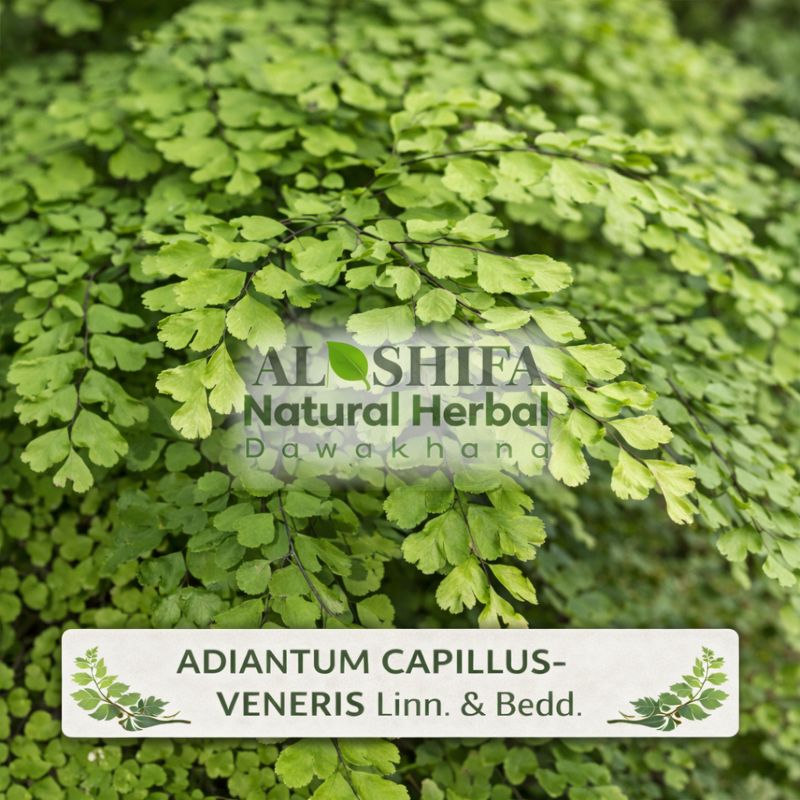
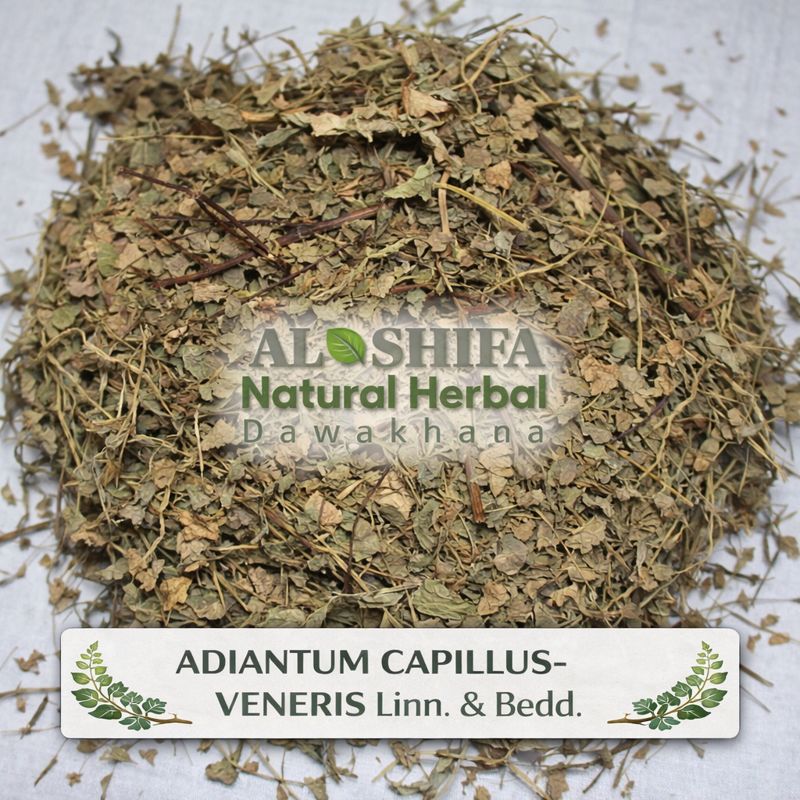


| Language | Roman / English Name | Native Script | Urdu |
|---|---|---|---|
| Scientific Name | Adiantum capillus-veneris | Adiantum capillus-veneris | ایڈیانٹم کیپیلس وینیرس |
| Botanical Name | Maidenhair Fern | Adiantum | میڈن ہیئر فرن |
| Latin Name | Adiantum capillus-veneris | Adiantum capillus-veneris | ایڈیانٹم کیپیلس وینیرس |
| Family Name | Pteridaceae | Pteridaceae | پیٹریڈیسی |
| Genus Name | Adiantum | Adiantum | ایڈیانٹم |
| English Name | Maidenhair Fern, Hair of Venus | Maidenhair Fern | وینس کے بال |
| Urdu Name | Parsiaonshan | پارسیاؤنشاں | پارسیاؤنشاں |
| Arabic Name | Kuzbarat al-bi’r, Sha’r al-jinn | كزبرة البئر / شعر الجن | شعر الجن |
| Persian Name | Parsiaonshan | پارسیاؤشن | پارسیاؤنشاں |
| Punjabi Name (Pakistan) | Khooh Buti, Gunkiri | کھوہ بوٹی | کھوہ بوٹی |
| Sindhi Name | Hansraj | هنسراج | ہنسراج |
| Pashto Name | Hansraj | هنسراج | ہنسراج |
| Balochi Name | Hansraj | ہنسراج | ہنسراج |
| Saraiki Name | Hansraj | ہنسراج | ہنسراج |
| Hindko Name | Hansraj | ہنسراج | ہنسراج |
| Brahui Name | Hansraj | ہنسراج | ہنسراج |
| Kashmiri Name | Gew Theer | گیو تھیئر | گیو تھیئر |
| Hindi Name | Hansraj, Samalpatti | हंसराज | ہنسراج |
| Bengali Name | Goeliya Lata | গোয়েলিয়া লতা | گوئیلیا لتا |
| Gujarati Name | Hansraj | હંસરાજ | ہنسراج |
| Marathi Name | Hansraj | हंसराज | ہنسراج |
| Kannada Name | Pursha | ಪುರ್ಷ | پرشا |
| Tamil Name | Mayiladi | மயிலாடி | مئیلاڈی |
| Telugu Name | Hansapadi | హంసపాది | ہنسپاڈی |
| Malayalam Name | Mayiladi | മയിലാടി | مئیلاڈی |
| Odia Name | Hansaraja | ହଂସରାଜ | ہنسراج |
| Assamese Name | Hansraj | হংসৰাজ | ہنسراج |
| Nepali Name | Hansraj | हंसराज | ہنسراج |
| Sinhala Name | Hansaraja | හංසරජ | ہنسراج |
| Sanskrit Name | Hansraj | हंसराज | ہنسراج |
| Chinese Name | T’ieh sien ts’ao | 铁线草 | تھیے شین کاؤ |
| Japanese Name | Kujakushida | クジャクシダ | کوجاکوشیڈا |
| Korean Name | Cheolseoncho | 철선초 | چول سن چو |
| Thai Name | Phak kut venas | ผักกูดวีนัส | فک کُود وینس |
| Indonesian Name | Suplir | Suplir | سوپلر |
| Malay Name | Suplir | Suplir | سوپلر |
| Vietnamese Name | Tóc thần vệ nữ | Tóc thần vệ nữ | وینس کے بال |
| Turkish Name | Venüs saçı | Venüs saçı | وینس کے بال |
| Russian Name | Adiantum | Адиантум | ایڈیانٹم |
| German Name | Venushaar, Frauenfarn | Venushaar | وینس ہائر |
| French Name | Cheveux-de-Vénus | Capillaire | شوو دو وینس |
| Spanish Name | Culantrillo de pozo | Culantrillo | کولانٹریلو |
| Portuguese Name | Avenca | Avenca | اوینکا |
| Italian Name | Capelvenere | Capelvenere | کیپل وینیرے |
| Greek Name | Polytricho | Πολύτριχο | پولی ٹریکو |
| Latin Name (Classical) | Capillus-Veneris | Capillus-Veneris | وینس کے بال |
| Swahili Name | Venushaar fern | Venushaar | وینس ہائر |
Description
This plant has been used medicinally since ancient times and is recorded in early classical texts. It exhibits antihyperglycaemic, antimicrobial, antirheumatic, antitussive, antiviral, astringent, demulcent, depurative, diuretic, emmenagogue, emollient, expectorant, galactagogue, refrigerant, resolvent, stimulant, sudorific, tonic, and vermifuge properties.
It is traditionally used in chronic cough, asthma, bronchitis, pleurisy, catarrh, sore throat, nasal congestion, shortness of breath, and various types of fevers. It is also beneficial in jaundice, diarrhoea, and haemoptysis. The herb promotes urination and menstrual flow and is traditionally believed to help dissolve calculi in the bladder, kidneys, and spleen. It is further used as a detoxifying agent in alcoholism and for expelling intestinal worms.
The plant is also widely used worldwide for hair care. When applied externally, it helps reduce hair fall, removes dandruff, improves hair texture, adds natural shine, and supports darker hair colour. Its long-standing use as a natural hair tonic makes it valuable in alopecia and dull, lifeless hair.
Recommended Dosage
-
Powder: 5–7 g daily
Contraindications & Precautions
This herb has been shown in studies to lower blood glucose levels. Individuals with diabetes or hypoglycaemia should use it with caution and monitor blood sugar regularly. As it stimulates the uterus and promotes menstruation, it is contraindicated during pregnancy. Animal studies suggest anti-implantation effects; therefore, couples planning pregnancy or undergoing fertility treatment should avoid its use. Due to possible estrogen-like activity, it should also be avoided in estrogen-positive cancers.
Useful in the Following Conditions
| Amenorrhoea | Asthma | Bronchitis |
| Catarrh | Common Cold | Cough |
| Dandruff | Diabetes Mellitus | Diarrhoea |
| Dull Hair | Dysentery | Dysuria |
| Eczema | Fevers | Flu |
| Haemoptysis | Hair Loss | Intestinal Worms |
| Jaundice | Kidney Stones | Pharyngitis |
| Pleurisy | Sore Throat | Suppressed Lactation |

